
What does Xi Jinping want?
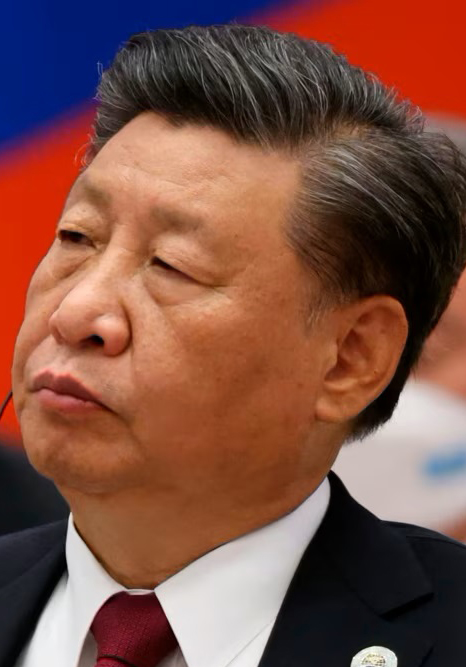
Chapter 6 Will Xi Jinping’s Road Work? (1)
Li Weidong points out that “Xi Jinping’s path to the Red Empire shows how old the knowledge of a great power’s ruling clique is, how it has missed the mark on the world’s trends, how blind it is to its own self-confidence, how realistically designed its future goals are and how selfish and self-serving it is at a major historical turning point. Neither the economy nor the hearts of the people can support the realization of this dream anymore. The path of the Red Empire is doomed to fail and is likely to bring disaster to the country and its people.” I agree with Li Weidong’s judgment for the following reasons:
First, China no longer has a historical background of totalitarianism
The emergence of totalitarianism is generally associated with a historical context of national distress, charismatic leaders and a population that has been brainwashed by long-term propaganda but these no longer exist in China today. It is difficult for Xi Jinping to use the invasion of China by Western powers a century ago to awaken the Chinese people’s sense of national suffering because today they live in peaceful times and are relatively affluent. The blurred historical memory and the objective interpretation of the truth of the century of shame by many scholars over the years have dissipated the passion of Chinese people to “save the country and survive”. Xi Jinping’s inheritance of power from his predecessor Hu Jintao has prevented him from attaining the prestige of Mao and Deng Xiaoping.
Forty years of reform and opening up policy have opened the wisdom of the Chinese people and official lies are difficult to deceive. As Xu Ben has said: Since the public increasingly does not believe these ideological lies, these lies can only be maintained by coercive means. Such lies have a kind of cynical “transparency”, the listener knows it well and the liar knows it well to that the listener knows; both sides play the “fool’s game” with great care, as long as no one says it openly.
Second, China’s economy cannot support his dreams of empire
China is certainly the world’s second largest economy but the Chinese economy has entered a period of stagnation and is in urgent need of structural adjustment and reform of the political system. Xi’s nine-year rule has accelerated China’s economic crisis. The private sector, which supported China’s economic rise, has become unsustainable. In short, China’s economic strength simply cannot support Xi’s totalitarian dream of a red empire.
According to economist Cheng Xiaonong, “China’s economic growth in the past 20 years or so was built on a one-time “export boom” and “civil engineering boom” that cannot be replicated, so that boom was also a one-time event and never sustainable. On the other hand, the Chinese economy has accumulated a series of serious and almost insurmountable difficulties that make it difficult for the CCP to pursue economic prosperity again.
First of all, local governments rely heavily on the revenue from the sale of land and taxes from the sale of houses bought by real estate development for their fiscal revenues. On June 4 this year, the Ministry of Finance of the Communist Party of China (CPC) ordered that local governments’ income from land sales will be changed to taxation, which will be held by the central government; starting from July 1 this year, it will be implemented in Shanghai, Zhejiang, Hebei, Inner Mongolia, Anhui, Yunnan and other provinces and cities first; starting from January 1 next year, the whole country will do so uniformly. This measure taken by the central government for lack of money is a fatal blow to local governments. The huge amount of bonds issued by local governments for infrastructure and real estate development will not be repaid and will cause shocks in the securities market.
Secondly, the above policy of the central finance will also shake up the real estate market. Commercial banks have already invested huge amounts of money in civil engineering, or become home purchase loans for home buyers. Banks are very afraid of the bursting of the real estate bubble, otherwise their bad debts will rise sharply and jeopardize the safety of banks.
Next, high housing prices have squeezed the working class to scrimp and save to pay their mortgage. It is difficult for the younger generation to buy a house and start a family just by scrimping and saving; at the same time, many industries have laid off a large number of employees because of the recession. Those who remain have taken pay cuts, so the average income of the employed labor force is declining; coupled with the accelerating trend of population aging and the limited consumption of the elderly. These three factors together make the consumption power of more than one billion people no longer able to boom the economy.
continue to read:Chapter 6 Will Xi Jinping’s Road Work? (2)
 正义钟声 Voice of Justice