
What does Xi Jinping want?
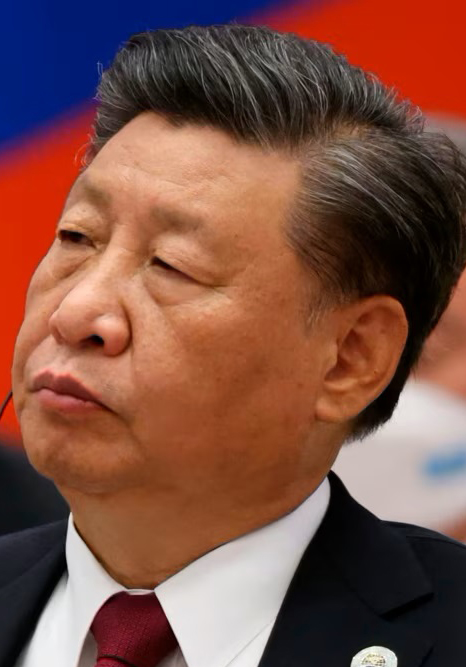
Chapter 5 Reason Analysis: Situation Misjudgment and Totalitarian Personality (1)
Why does Xi Jinping want to return to totalitarianism? My view is that Xi’s learning disability personality, and his cognitive ability determine his dependence on the path of totalitarianism.
First, three serious misjudgments:
First is a misjudgment of China’s economic strength. Xi Jinping’s view of China’s economic strength is too optimistic. It is true that China’s GDP has surpassed Japan’s and has become the world’s second-largest economy. But the rise of China’s economy is not based on its economic strength and the capabilities of technological innovation but mainly on the business opportunities brought by globalization of the economy. China was pushed into the WTO by the US and thus it became the world’s factory and relied on non-compliance with WTO rules with high pollution, high energy consumption, low welfare and low human rights to reap huge profits. The year 2009 was the turning point of China’s economic boom and bust with the country’s threefold economy: investment, domestic demand and foreign trade all went into trouble. The advantages of Deng Xiaoping’s reform and opening-up policy had been exhausted in the Hu Jintao era. So a comprehensive reform of the political system became necessary.
Second, is the misjudgment of the international situation. In the 1990s, Deng Xiaoping had always stressed the importance of hiding one’s own strength. He especially exhorted the third generation for collective leadership. He said, “we should not brag, the more we develop, the more modest we should be”, “do not casually criticize others, accuse others, do not overstate the words, do not overdo things”. “Hiding one’s own strength should continue for 50 years, not to be the leader, not to be the number one”. Xi Jinping arrogantly abandoned Deng Xiaoping’s foreign policy and even thought that the world trend was “rising in the east and falling in the west” and that the “time and trend” were on China’s side. After the 19th National Congress, he began to change his diplomacy to that of an aggressive war-wolf one.
Third, is a misjudgment of public opinion. Xi Jinping does not know what the Chinese think and he thinks he can make the Chinese obey his leadership by brainwashing propaganda and rules (strict law) as long as the economy develops. But he does not know that the Chinese people are not what they used to be and have seen the world. The actual idea of the Chinese people is to live and work in peace, not to toss and turn, not to engage in political movements. Of course, the reform of the political system can come slowly and democratization is not rushed. But in their hearts, they agree with freedom and democracy and universal values.
Xi Jinping has been in power for nine years. Still, whether it is the cult of the individual, the advancement of the State-owned enterprises and the retreat of the private enterprises, or the dilution of the Cultural Revolution, China is still the China of Deng Xiaoping’s time. The Chinese train is still moving slowly on Deng Xiaoping’s track. Some Chinese friends say that in today’s China, as long as politics is not involved, the people’s lives are not very different from the Deng Xiaoping era. This phenomenon shows that Xi Jinping’s return to totalitarianism is not complete, nor can it be. Even the hatred of the West that has emerged in China today is the result of nationalism. It, however, is very different from that of the Mao era.
 正义钟声 Voice of Justice