
What does Xi Jinping want?
Chapter 4 What Exactly Is Xi Jinping Up To? (2)
The Fifth View: Post-Totalitarianism Returns to Totalitarianism
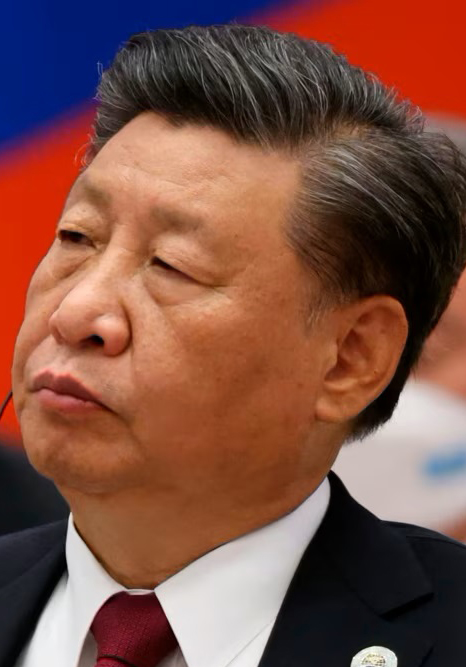
Professor Feng Chongyi of the University of Technology, Sydney, Australia, argues that Xi Jinping’s line is the return of totalitarianism in China. He points out that the current Chinese Communist regime or the power structure and operating mechanism of Chinese society are not beyond the scope of totalitarianism or post-totalitarianism and do not qualify as a new regime type. Therefore, there is no need to use the vague concept of “neo-totalitarianism” to describe it. Moreover, defining the current Chinese regime as a “new totalitarian” exaggerates its innovative capacity and stability. Even the combination of one-party dictatorship and a semi-market economy was practiced by the fascist regimes in Italy and Germany. Although the former communist regimes in Soviet Eastern Europe did not adopt a “socialist market economy”, the main manifestations of the “return of totalitarianism” in Xi Jinping’s era are at least the following three things: First, the return of the leader system from the “collective leadership” system. Second, the re-establishment of the ideological unity of the party and state. Third, the re-establishment of the party’s “monolithic leadership,” that is, the re-establishment of a political system in which the dictatorial party is above the law and intervenes in all areas of society at will causing the pain of the “lost paradise”, the fear of constitutional transformation and the dream of permanent control and monopoly of power. Xi Jinping and the Red second Generation are trying to stop the historical process of China’s move toward constitutionalism and in fact pulling China back from a post-totalitarian society to a totalitarian society.
Second, what is totalitarianism?
The above ideas relate to the concepts of totalitarianism, post-totalitarianism, and neo-totalitarianism. It is necessary to give a brief overview of the theory of totalitarianism.
According to Karl Popper, Plato’s doctrine is the one that advocates totalitarianism. Sparta in ancient Greece also had the main characteristics of totalitarianism. But Arendt and Talmon argue that totalitarianism emerged in the eighteenth century in the course of human modernization and that the development of modern capitalism, liberal democracy has provided favorable conditions for its formation and development. Thus, the ideology of totalitarianism also has the idea of liberal democracy as its constituent element.
Totalitarianism has followed the tradition of the French Revolution but gradually diverged in the first half of the 19th century to form Bolshevik left-wing totalitarianism, represented by Lenin and Stalinism; and right-wing totalitarianism, represented by Hitler’s Nazism. In his book “The Myth of the Nation and the Intention of Revolution”, Talmon has pointed out that Lenin expounded the universal will of the proletariat; while Hitler emphasized the nation and race. Thus, communism and nationalism became the right and left arms of totalitarianism, like two wings, but sharing the same qualities and merging with each other, culminating in a terrible scene of the twentieth century.
Totalitarianism, also known as “totalism,” is a form of government in which an all-powerful government exercises total control over all individuals. Conquest defines it as “a totalitarian polity in which the state recognizes no limits and seeks to control every aspect of public and private life to the best of its ability.” Arendt points out that totalitarianism is a new form of domination that human history has never seen. Totalitarianism is not for the benefit of one part of humanity but is utterly opposed to society as a whole, all humanity and all civilization. “Totalitarianism is one of the most profound political revolutions in human history whose original purpose was to transform human nature by means of a state apparatus. Before that, any government – whether democratic or authoritarian – focused only on regulating the people’s behavior. Totalitarianism also had to regulate the thoughts and beliefs of the people. Whereas ordinary authoritarian rule only governs ‘actions,’ totalitarian politics governs ‘minds.’” “Totalitarianism is a modern phenomenon that differs from the imperial, dynastic rule; at the same time, the emphasis on its modernity is also on the might of its power. It’s a logical arrogance; it is what Hayek has called a fatal self importance. It is expressed in the omnipotence of power, from the material to the spiritual, from the body to the mind. We can see the so-called triumph of the will of Nazi Germany in the totalitarian states of history, the movement to transform the human spirit, the soul, and the creation of the new man that took place in Nazi Germany, the former Soviet Union, and China. This utopian ideal design is based on the virtues: selflessness, forgetfulness, altruism, devotion and sacrifice, of a man which we can feel has taken on a religious character, and it’s completely contrary to liberalism based on individualism.”
continue to read:Chapter 4 What Exactly Is Xi Jinping Up To? (3)
 正义钟声 Voice of Justice