
What does Xi Jinping want?
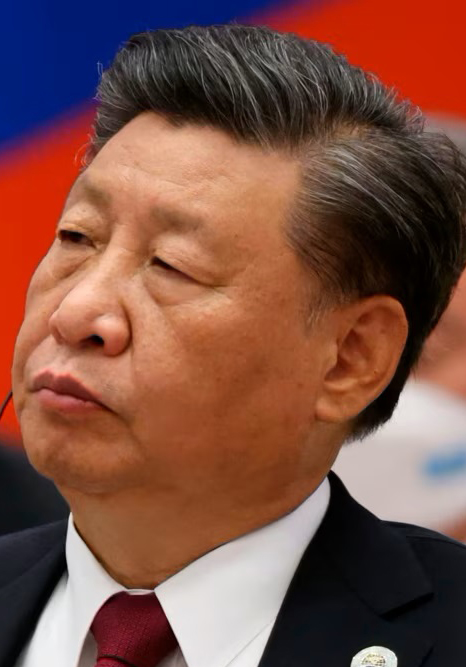
Chapter 1 Xi Jinping’s Rise to Power: A Bursting Soap Bubble
In November 2012, the 18th National Congress of the Communist Party of China (CPC) was held and the baton of power was passed on to Xi Jinping who had just entered the era of the second generation in power then. “In fact, the predecessors were very dissatisfied with the state of affairs in the last decade. In their view, the country that their fathers built had been ruined by eunuchs, butlers, secretaries and administrative bureaucrats including the regimented gang and thus corruption had become very serious. Like the Soviet Union, the Party and the country will die. Therefore, it is necessary to reorganize and re-establish the good traditions of the Party. The Party’s fine traditions restore the faith of Marx, Lenin, and Mao, and will save the CCP from collapse because ‘the baton is now in our hands’.”
It was not easy for Xi Jinping to get the baton of power in the CCP and it can be said that every step was frightening and saber-rattling. First of all, Xi Jinping benefited from Jiang Zemin’s “next-generational designation”. Jiang Zemin chose Xi Jinping not because of his outstanding political performance but precisely because of his inaction; not because of his remarkable intelligence but precisely because of his seeming stupidity. This inaction and seeming stupidity have allowed Xi Jinping to gain access to a wide range of forces in the CCP. Secondly, Xi Jinping is carefully disguised. He disguises himself as a nobody so that Jiang Zemin thinks he is not a threat to him so that he can manipulate him with ease. Xi’s disguise comes from the ancient Chinese practice of “hiding one’s light”. The King Goujian of kingdom Zhao during the Spring and Autumn Period and Emperor Yang Guang of the Sui Dynasty, who were both masters of disguise. Once again, Xi Jinping was challenged by Bo Xilai who was also a second-red generation in the final stage of the power transition. Hu Jintao and Wen Jiabao took advantage of Wang Lijun’s defection to capture Bo Xilai allowing Xi Jinping to ascend to the pinnacle of power in China as he wished.
Xi Jinping, while he was delighted, was also anxious about this hot potato. On the surface, the “Golden Decade” of the “Hu-Wen New Deal” showed a prosperous scene but there were crises in the substance, reflected in:
Stagnant economic development.
Corrupt officials.
Unchecked administrative power.
Judicial injustice.
The disparity between the rich and the poor.
Frequent mass incidents.
Deepening ethnic conflicts.
As stated in Charter 08: “The existence of law but no rule and the existence of a constitution but no constitutional government, remains a political reality for all to see. The ruling group continues to insist on maintaining authoritarian rule and rejecting political change, which has led to official corruption, difficulty in establishing the rule of law, lack of human rights, moral degradation, social polarization, abnormal economic development, double destruction of the natural and human environment, lack of institutionalized protection for citizens’ freedom, property and the pursuit of happiness, accumulation of various social contradictions, and continuous rise of discontent, especially the confrontation between the government and the people. The intensification and proliferation of mass incidents are showing a disastrous trend of loss of control, and the outdated nature of the current system has reached the point where it must be changed.” //
China has come to a crossroads and so has the CCP also. Xi Jinping has two roads in front of him: the new road leads to constitutional democracy and the old road leads to Mao Zedong’s totalitarianism.
When Xi Jinping stepped into power, all sectors of the Chinese population were optimistic. The Red second-generation was optimistic because they had finally taken control of the Red Empire established by their parents. Those with the “red family gene” expected Xi Jinping to retain the permanent ruling position of the CCP. The democrats were optimistic because Xi’s father, Xi Zhongxun, was a reformist figure in the CCP. They expected Xi Jinping to achieve a constitutional democratic transformation of China like Gorbachev and Chiang Ching-Kuo. Others were optimistic because China had become the world’s second-largest economy. They expected Xi Jinping to follow Deng Xiaoping’s reform and opening-up line. They expected him to carry out steady political reform, “not to make a fuss,” and to continue to “make a big fortune in silence”.
Some Chinese public intellectuals have developed a theory of “socialist constitutionalism” for Xi Jinping. This theory was represented by Tong Zhiwei of East China University of Political Science and Law, Zhang Qianfan of Peking University, Xu Chongde and Han Dayuan of the Renmin University of China, Hua Bingxiao of Northwestern University and Qin Qianhong of Wuhan University. Their core proposition is to gradually realize constitutionalism by improving the CCP inner system and achieving relative separation of powers. They advocate democratic elections and protection of civil rights without changing the ruling status of the CCP.
There are overseas democrats who are convinced that Xi Jinping will move toward constitutional democracy, even issuing several open letters; there is a defense of Xi Jinping’s centralization of power as a stage condition for change.
But this beautiful soap bubble will soon burst.
In December 2012, Xi Jinping gave a closed-door speech to the local officials in Shenzhen. He sighed at the collapse of the Soviet Union in 1991 and the dramatic changes in the Eastern Europe, saying that “no one is a man”. In April 2013, the General Office of the Communist Party of China (CPC) issued a circular on the current situation in the ideological field, specifying the “seven no’s”, i.e., no talk about universal values, freedom of the press, civil society, civil rights, historical mistakes of the CPC, powerful capitalism, and judicial independence. In April, On April 24, 2014, prominent journalist Gao Yu was arrested on charges of leaking the document and on November 26, 2015, she was sentenced to five years in prison by the Beijing High Court.
At this point, most Chinese democrats have abandoned their illusions about Xi Jinping’s constitutional reforms.
continue to read:Chapter 2 Political Regression and Social Hooliganism
 正义钟声 Voice of Justice