
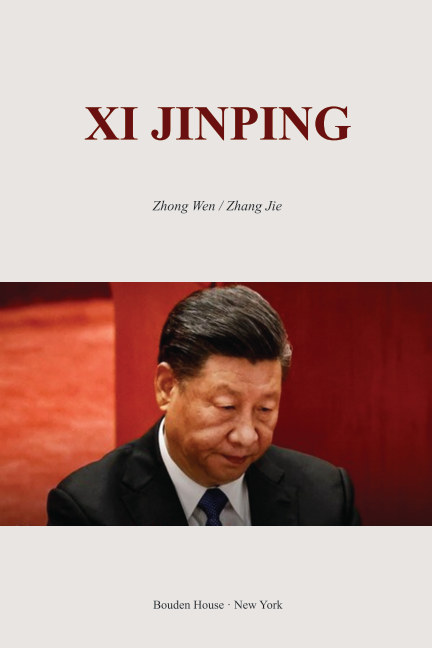
XI JINPING: a BIOGRAPHY
Chapter 06 South China Sea Hegemony and U.S. Rivalry (1)
The ownership of the reefs islands in the South China Sea have historically been disputed by China and neighboring countries such as Vietnam, Malaysia and the Philippines but this has not affected navigation and peace. Deng Xiaoping proposed “setting aside disputes and joint development” and this policy continued under Jiang Zemin and Hu Jintao.
In 2012, Xi Jinping quickly extended his fist and changed Deng Xiaoping’s policy of “setting aside disputes and joint development”. He brutally proposed that “the South China Sea is my lifeline”, “core interests”, and “where sovereignty lies”. In spite of the reactions of the neighboring countries, they have militarized and occupied the South China Sea, built artificial islands, airports, naval ports and missile bases on these artificial islands. This threatened the safety of the free shipping lanes in the South China Sea and caused strong reactions from the neighboring countries, such as Vietnam, Malaya and the Philippines.
In July 2016, the five arbitrators of the international arbitration tribunal unanimously ruled that China did not have the historical rights he claimed, after the Philippines filed the South China Sea Arbitration case in 2013 accusing China of violating the UN Convention on the Law of the Sea. The arbitration also found that China’s land reclamation had caused irreparable damage to the environment and demanded China to stop its activities in the South China Sea but the Chinese government refused to accept the arbitration.
Xi Jinping is spending tens of billions of dollars to build a military base in the South China Sea in order to control the international shipping lane connecting the Indian Ocean and the Pacific Ocean, the southernmost point of the South China Sea where this shipping lane must pass. Xi Jinping built a military base there in an attempt to control the maritime lifeline of Japan, South Korea and Taiwan, who have a large number of merchant ships passing through this essential shipping lane every day. This very important international shipping lane has been patrolled by the U.S. Navy since the 1940s to prevent pirate infestation and attacks. Xi Jinping is ambitious to choke the throat of this lifeline and has spent $50 to $100 billion or even more.
In the light of Xi’s frenzied military expansion in the South China Sea which has begun to threaten the safety of international shipping lanes, the United States has announced its Asia-Pacific strategy in 2015 opposing the CCP’s militarized actions in the South China Sea ; and the U.S. Navy has stepped up its cruises near the Freedom Passage, not recognizing the CCP’s claimed rights in the sea. But Xi Jinping insists on his military actions in the South China Sea to unilaterally push the U.S. out of the South China Sea. He has called out publicly that “the Pacific Ocean is big enough to accommodate both China and the U.S. ”. He wants to bifurcate the Pacific Ocean, with the East Pacific dominated by the CCP and the U.S. squeezed out to the West Pacific.
The Chinese Communist Party has built military bases on artificial islands in the South China Sea threatening the safety of shipping lanes and threatening all countries. There are constant rumors that the U.S. is going to open up and destroy those military facilities of the Chinese Communist Party. On June 1, 2018, Kenneth Mckenzie, head of the U.S. Joint Chiefs of Staff was asked by reporters, “If the U.S. is going to destroy (Blow apart) the Chinese Communist Party in the South China Sea, how much combat power does the United States have?” He answered: “I can only tell you that the U.S. military is experienced in capturing small islands in the Pacific.” This shows that the U.S. military does not deny that it is ready to carry out the task of destroying those man-made islands.
On July 13, 2020, U.S. Secretary of State Mike Pompeo has said that the Chinese Communist Party’s claim to security in the South China Sea is illegitimate and has denied the unjustified claim that the South China Sea is an internal sea.
continue to read:Chapter 06 South China Sea Hegemony and U.S. Rivalry (2)
 正义钟声 Voice of Justice