
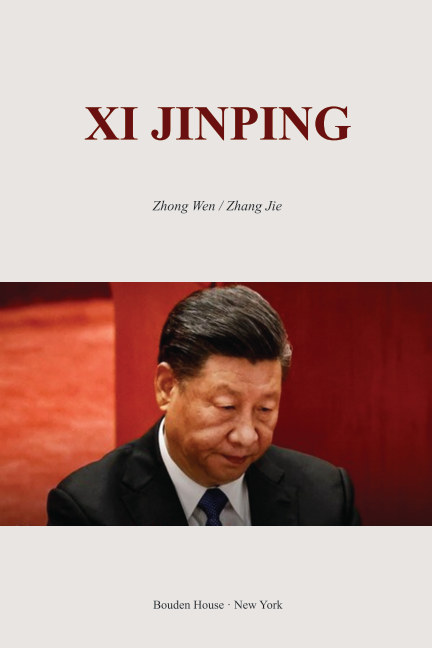
XI JINPING: a BIOGRAPHY
Chapter 02 Fake Respect for Confucius, Real Support for Mao
As soon as Xi Jinping came to power in 2013, he put on a new face, breaking the tradition, not by making a pilgrimage to Xibaipo or Yan’an but by visiting Qufu in Shandong province, the hometown of Confucius where the party leaders had never been before, although the party media reported that he was “on a study tour.”. Hong Kong newspapers were very excited by this news, saying that President Xi was going to respect Confucius.
In fact, Xi Jinping made an exception visiting Qufu out of a speculative mentality. The social atmosphere at the time was more enlightened due to Hu Jintao’s liberalization of Confucius propaganda. Yu Dan’s lectures on Confucius which had a wide impact for several years at home and abroad forming a social trend to resume learning of traditional culture. Xi Jinping knew that it was not possible to go against the current, so he also took advantage of this trend to put a feather in his hat.
Xi Jinping went to Qufu to seemingly honor Confucius, but also out of payback to Hu Jintao, as a gesture to make Hu Jintao happy. In 2012, Hu Jintao to got rid of Bo Xilai, Xi Jinping’s rivals. Hu removed Xi’s biggest barrier and paved the way for Xi Jinping and completely handed over, once for all, the two big positions of President and Chairman of the Military Commission to Xi. Xi then owned sole control of power. He, therefore, was grateful to Hu.
Hu Jintao was so angry, but he could not eliminate Jiang Zemin’s influence. He had a lot of grievances. He erected a statue of Confucius in 2011 in the east of Tiananmen Square. The statue of Confucius in the east of Tiananmen Square was approved by Hu Jintao but only after three months, it had to be dismantled and removed by Jiang Zemin. Xi Jinping was a member of the Standing Committee at the time and he understood Hu Jintao’s grievances and so he made a special trip to Qufu to let Hu Jintao take the load off.
Shortly after Qufu visit, Xi Jinping went to the Central Party School and gave lecture specifically about the traditional ideas of Confucius: like cultivating oneself, sincerity, righteousness, cultivation, family, ruling the country and pacifying the world; like the way of the ruling law, the path of democracy, the path of righteousness and profit.
Of course, these were only the Confucius thoughts written on textbooks, it was not Xi Jinping’s intention to apply them in real world. He was only making a gesture, temporarily in line with the trend of public opinion, and also let Hu Jintao know he is on his side, so that Hu Jintao could be happy. President Hu really intended to promote Confucius philosophy. He strongly supported to make a movie on Confucius.
When public opinion at home and abroad saw Xi Jinping’s gesture, they thought for a moment that he was juxtaposing Confucius with Marx, using the Confucian tradition to remedy Marx’s flaws. But as many people know, Mao Zedong said: “If we have to invite Confucius back, it means that the Communist Party is no longer viable and will soon be finished.” Mao was at odds with Confucius. It is hard to believe that Xi Jinping would go against Mao’s words and really invite Confucius back.
Sure enough. Soon afterwards Xi Jinping turned around, he held a national conference on philosophy and social sciences completely reversing the direction of Confucius and praising Mao Zedong. He not only restored Mao’s four greats (leader, mentor, commander-in-chief, helmsman), but also newly invented three titles for Mao and put on three new hats on Mao’s head: great philosopher, great thinker, great social scientist. With Lin Biao’s four greats plus Xi Jinping’s three greats, Mao Zedong would have 7 great titles. Xi Jinping’s philosophical and social science speech was 15,000 words long in which Confucius completely disappeared, and his name was not even mentioned. Xi Jinping finally summarized his speech as “three self-confidence”: theoretical self-confidence, road self-confidence, institutional self-confidence, adherence to the ideals of communism and began to form his own “Xi Jinping thought system “. The highest social science conference was attended by all Marxist leftists and none of the 150 people were liberals which was thus the “dismissal of a hundred schools of thought and the reverence for one”. Xi Jinping also elevated Marx to the top position of “the thinkers of the millennium”.
Xi Jinping, with the launch of his “two non-objections”—didn’t not object the history of pre-Cultural Revolution nor the post-Cultural Revolution, never mentioned the anti-rightist Maoist era, the Great Leap Forward, the great famine from 1959-1961. He also declines Deng Xiaoping’s claim that the Cultural Revolution was a catastrophe. Instead, Xi Jinping said that the Cultural Revolution was a “difficult exploration”. He whited-out the disaster caused by Mao’s mistakes with “two non-objections” and opened the way for the restoration of Mao Zedong’s thoughts.
continue to read:Chapter 03 From Bun Xi to Emperor Xi (1)
 正义钟声 Voice of Justice