
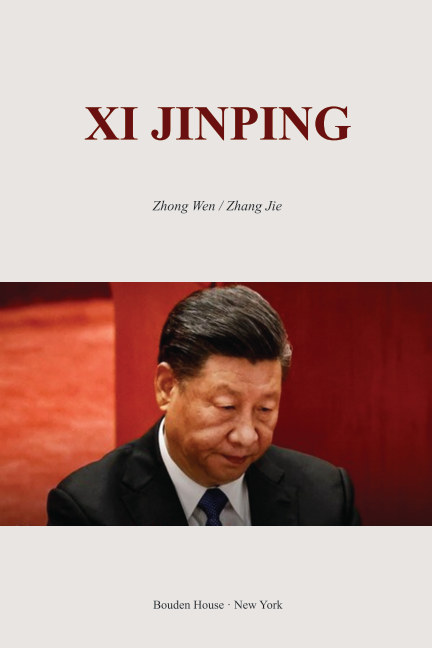
XI JINPING: a BIOGRAPHY
Chapter 01 Xi Jinping’s Path to Rise (2)
In 1982, Xi was once again arranged by his father to Zhengding county, Hebei as deputy secretary of the county party committee. Originally, Xi Jinping was expected to be the chief secretary of Zhengding county, but Gao Yang, the CCP Chief secretary of Hebei Province said Xi’s had shown up just like something was suddenly parachuted into the county, so he should be the deputy secretary first. Until today, he still hates Gao Yang for that. Gao Yang later became the president of the CCP Central Party School. When Gao Yang died, Xi Jinping was the president of the CCP Central Party School. Xi Jinping refused to attend Gao Yang’s memorial service.
In the second year after the came to Zhengding, Xi Jinping was promoted to the position of chief secretary of the CCP of Zhengding county, and he met Li Zhanshu, the CCP secretary of the neighboring county Wuji. Li Zhanshu was later promoted by Xi Jinping to the Central Committee as a member of the Standing Committee, Director of the Central Office and Chairman of the National People’s Congress.
In April 1985, Xi Jinping was appointed as the head of a delegation from Hebei Province to the United States to study corn products processing. He spent ten days in Ohio, USA. Xi is said to have been so unimpressed with the U.S. When boarding a plane in San Francisco to return home, he finally cursed: “Fuck you, motherfucking America!”
In 1985, Xi Jinping asked to be transferred to Xiamen, where there were more opportunities as one of the special economy zones in China. He was appointed vice mayor of Xiamen, but Xi’s political performance in Xiamen was very poor. His reputation was not good either. Xi received less than 50% of the votes in the Xiamen Municipal People’s Congress election and was transferred out of Xiamen to Ningde City. In 1990, he was promoted to the CCP Chief Secretary of Fuzhou City. Six years later, in 1996, he was promoted to the position of the CCP Deputy Secretary of Fujian Province, in 2000 to Governor of Fujian Province, and in 2002 to Vice Governor of Zhejiang Province.
During this period, he studied Marxism, ideological and political education at the School of Humanities and Social Sciences of Tsinghua University. This is an on-the-job study program; he got a PhD degree after two to three years of study. However, he thought the Ph. D in Marxism was too hypocritical. He asked Tsinghua University to change it to a doctorate in law. Tsinghua University agreed to give whatever he requested. Anyway, the purpose of having this Ph. D was just to put on a doctoral gown and made him look good.
In 2007, Xi Jinping’s chance to become a member of the Central Committee came when he was first transferred to Shanghai as secretary in March and then to Beijing in the fall for the 17th Communist Party Congress, where he was nominated by Jiang Zemin to become a member of the Standing Committee, one of the 9 Standing Committees, secretary of the Secretariat, head of the Hong Kong and Macau Coordination Group and president of the Central Party School. In 2008, he became the president of the country, and in 2010, the vice chairman of the military commission. His power was only under Hu Jintao. He was the hidden successor of Hu Jintao, approved by Jiang Zemin. Originally Hu Jintao intended to let Li Keqiang take over. However, Jiang Zemin preferred the second generation of the red cadres. Hu Jintao had no choice but to accept. In November of 2012, the Chinese Communist Party opened the 18th National Congress, Hu Jintao handed over full power to Xi Jinping, including the General Secretary of the CCP and Chairman of the Military Commission. Xi thus got a monopoly of power.
Not only he owned the political power, he also owned the financial power. In the year 2012, Bloomberg reported that Xi Jinping’s family had assets worth 379 millions yuan. The Xi family holds 38 percent of the $11.7 billion as assets of China Rare Earths Corporation which is indirectly owned by the Xi family. The Xi family has another $90 million in technology holdings and seven properties in Hong Kong worth $7.5 million. They are owned by Xi Jinping’s sister Qi Qiaoqiao, brother Xi Yuanping and brother-in-law Wu Longchang. In addition, Qi Qiaoqiao, brother-in-law Deng Jiagui owns a large number of shares in Wanda Group but the shares were later transferred to an old friend Xu Zaisheng to conceal the Xi family’s assets.
Xi Jinping’s first wife, Ke Lingling, is daughter of a senior Chinese diplomat Ke Hua, married Xi in 1979 after graduating from Tsinghua University. Three years after their marriage, Ke went to England to study and asked Xi to go with her. But Xi was keen to be a government official at home and did not go to England. They divorced in 1982. Ke stayed in England and Xi went to Zhengding County, Hebei Province.
continue to read:Chapter 01 Xi Jinping’s Path to Rise (3)
 正义钟声 Voice of Justice