
400 Years of United States Content
Preface I: The Great Success of Puritan Pioneering by Yu Jinshan
Preface II: Entering the Broad Path of Governance through Non-Interference by Xu Wenli
Preface III: Understanding America’s Past and Present by Ye Yongkang
Preface IV: A Fine Guide to American History by Cai Kefeng
Introduction: Why Is America Powerful? (1) (2) (3) (4) (5) (6)
Prelude: Columbus Discovers the New World, 1492
Colonial Period, 1607–1773
Early Failures of British Colonization, 1584–1590
The First North American Colony, 1607
The Mayflower and the Covenant, 1620
The Origin of Thanksgiving, 1621
Colonists and Native American Conflicts, 1622–1676
Wars Between the United States and Native Americans, 1774–1890
Today’s Native Americans: 1924–Present
From the Revolutionary War to the Founding of the Nation: 1774–1789
Social Conditions in America Before Independence
The Start of the Revolutionary War: The First Continental Congress, 1774
The Declaration of Independence, 1776
Public Support for Independence, 1774
Victory in the Revolutionary War: France’s Contribution, 1783
Empress of China, 1784
What the United States Was Like After Independence, 1784–1787
Constitutional Convention: Deadlock and Compromise, 1787–1789
Bill of Rights, 1791
America’s Founding Grandfather: Benjamin Franklin, 1706–1790
President George Washington: A Leader Unattached to Power, 1732–1799
The Spirit of Independence: President John Adams, 1735–1826
The Pen of Independence: Thomas Paine, 1737–1809
The God of Wealth: Alexander Hamilton, 1755–1804
Successful American Expansion and Industrialization, 1803–1880
The Declaration and the University: President Thomas Jefferson, 1743–1826
President Turned Congressman, Died on the House Floor — John Quincy Adams 1767–1848
A President Who Fought Duels — President Andrew Jackson 1767–1845
The Anglo-American War of 1812
The Mexican–American War: President Polk’s Achievement 1846–1848
The United States’ Emancipation of Black Slaves and the Founding of Liberia in Africa 1847
The Civil War: Bloody and Brutal 1861—1865
Reconsidering the American Civil War
The Purchase of Alaska 1867
Transcontinental Railroad: Contributions of Chinese Laborers 1869
Western Gold Rush 1865
Western Cowboys 1865
Go West, Go West! Western Expansion 1865
Industrialization and the Gilded Age 1870
Railroad Tycoon Vanderbilt 1794–1877
Railroad Hero Leland Stanford 1824–1893
Steel Magnate Andrew Carnegie 1835–1919
Financial Titan J.P. Morgan 1837–1913
Oil Tycoon John D. Rockefeller 1839–1937
Chemical Tycoon Pierre DuPont 1870–1954
Inventor Extraordinaire Thomas Edison 1847–1931
Inventor Genius Nikola Tesla 1856–1943
The United States Becomes the World’s Leading Economy, 1880
Urbanization Coordinated with Industrialization, 1830–1920
American Missionaries in China, 1850–
Bowing to Confucius – William Alexander Parsons Martin, 1827–1916
Founding the Globe Magazine and the Chinese-Western Academy – Young John Allen 1836–1907
Establishing Over 40 Primary Schools – Hunter Corbett 1835–1920
Founding Yenching University – John Leighton Stuart 1876–1962
Assassinated at Home During His Campaign: President William McKinley 1843–1901
The United States Becomes the World’s Decisive Power 1900–
Theodore Roosevelt and the Panama Canal 1904–1914
Roosevelt Pushes the United States onto the World Stage 1905
Roosevelt and Empress Dowager Cixi 1904—1908
Roosevelt Runs Again and Survives an Assassination Attempt 1911—1912
Roosevelt’s South American Expedition, Severe Illness, and a Shortened Life 1913
President and Then Chief Justice: Taft 1858—1931
The Establishment and Development of the American Automobile Industry 1890—1920
Victory in World War I: Wilson Promotes the Paris Peace Conference 1918
Wilson’s League of Nations Fails, America Turns Inward 1920
Harding Elected, a Hands-Off President and an Era of Freedom and Prosperity 1920
The Washington Conference: The United States Steps onto the World Stage 1921
Calvin Coolidge: The Model of a Conservative President, “Silent Cal” 1923—1928
The Conservative Decade: America Focused Inward, 1920—1929
The Great Depression and President Hoover, 1929—1932
Did Hoover Lose Because of His Own Fault? 1932
Roosevelt’s New Deal, 1933
Roosevelt’s Second New Deal Provides Economic Security, 1935
Roosevelt’s Neutral Diplomacy, 1933–1940
Japan’s Attack on Pearl Harbor, U.S. Enters World War II, 1941
U.S. Flying Tigers Aid China Against Japan, 1941–1945
The United States Defeats Germany, 1944–1945
The United States Defeats Japan, 1945
Was Roosevelt Truly Great?
United States After World War II
Tightening Life During Wartime Postwar Prosperity 1945—
Aid to European Recovery, Containment of Communism 1948—1952
Truman’s Airlift Breaks the Soviet Blockade of Berlin 1948
Truman’s Whistle-Stop Campaign and His Surprise Victory 1948
Mao’s CCP “Leans to One Side” Toward the Soviet Union — The United States Is Forced to Withdraw from China 1949
The Korean War: Sino–American Confrontation 1950
The United States Opposes a Soviet Nuclear Strike on China, 1969
The Vietnam War and the U.S. Withdrawal, 1965—1975
Nixon’s Visit to China: The Thaw in Sino–U.S. Relations, 1972
Deng Xiaoping’s Visit to the United States: Sino–U.S. Friendship, 1979
The Reagan Era: The U.S.–Soviet Arms Race, 1981–1991
The Fall of the Berlin Wall, the Dissolution of the Soviet Union, and George H. W. Bush’s Presidency, 1989–1991
Fiscal Surplus and Scandals: Bill Clinton, 1993–2001
9/11 Terrorist Attacks and the Two Wars on Terror: George W. Bush, 2001–2011
President Barack Obama and the Nobel Peace Prize, 2009
Steve Jobs: Hero of the Digital Age, 1955–2011
Bill Gates: America’s Wealthiest Entrepreneur, 1955–
The Internet: From U.S. Innovation to Global Connectivity, 1970–1990
Warren Buffett: The Oracle of Omaha, 1930—
Paul Allen: Microsoft Co-Founder and Philanthropist, 1953—2018
Daring Innovator: Elon Musk, 1971—
Facebook Billionaire: Mark Zuckerberg, 1984—
Illegal Immigration and Undocumented Residents in the United States, 1950–2020
The Happy Amish: Preserving Conservative and Ancient Traditions, 1700–2020
The Foundations of the United States
The White House, the Capitol, and the Washington Monument, 1800–
Every U.S. President, One Cornerstone 1970—
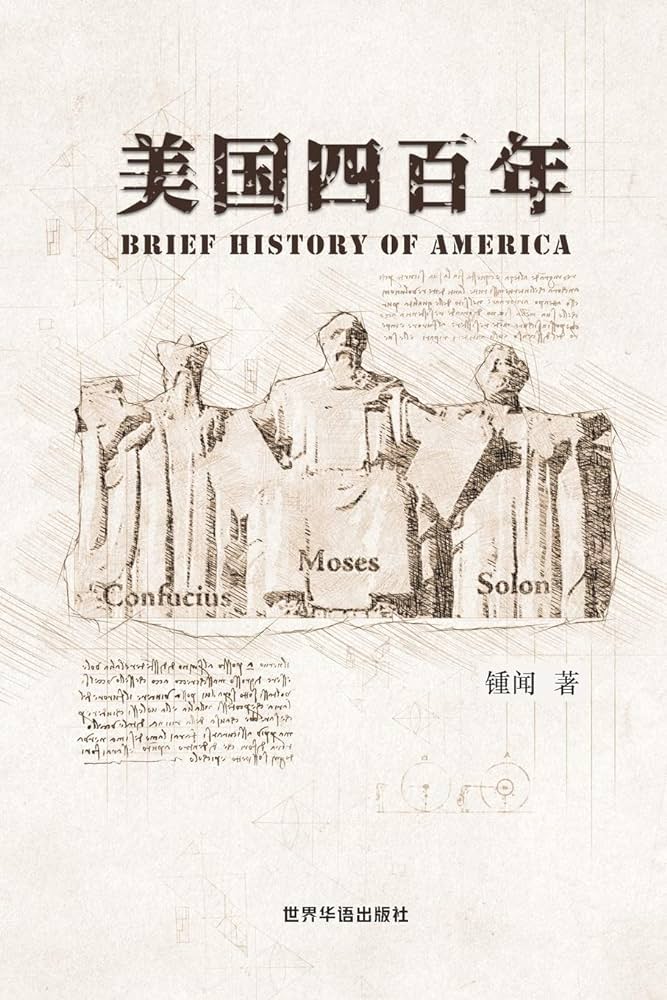
The Three Sages Reveal the Foundations of the United States
It Is Not Easy to Be President of the United States 1790—
The Last Words of U.S. Presidents 1790—
The Vitality of Democracy: Advancing Step by Step
America’s Future
The Future of the United States and the World, 2020
Christian Civilization Continues to Lead the World
The United States Launches a Comprehensive Condemnation of the Chinese Communist Party
The United States Faces a Fourth Great War
The United States Determines the World
Exerting America’s Moral Force
Constitutional Crisis in the United States
Hoping for the Return of a Wilsonian-Style President
Attachment
I. Qianlong’s Six Journeys to the South (1784)
II. A Century Later: Honoring the Chinese Railroad Workers’ Graves
III. Comparison of Railroad Construction: China and the U.S., 1830–2010
IV. China’s “Urbanization” Surpasses the U.S.
V. Matteo Ricci (1552–1610): The First Bridge Between East and West
VI. Zheng He’s Voyages to the Western Seas (1405–1433)
VII. Spanish Conquest of Mexico (1521)
VIII. Spanish Conquest of the Inca Empire (1532)
Afterword
 正义钟声 Voice of Justice