
400 Years of United States Content
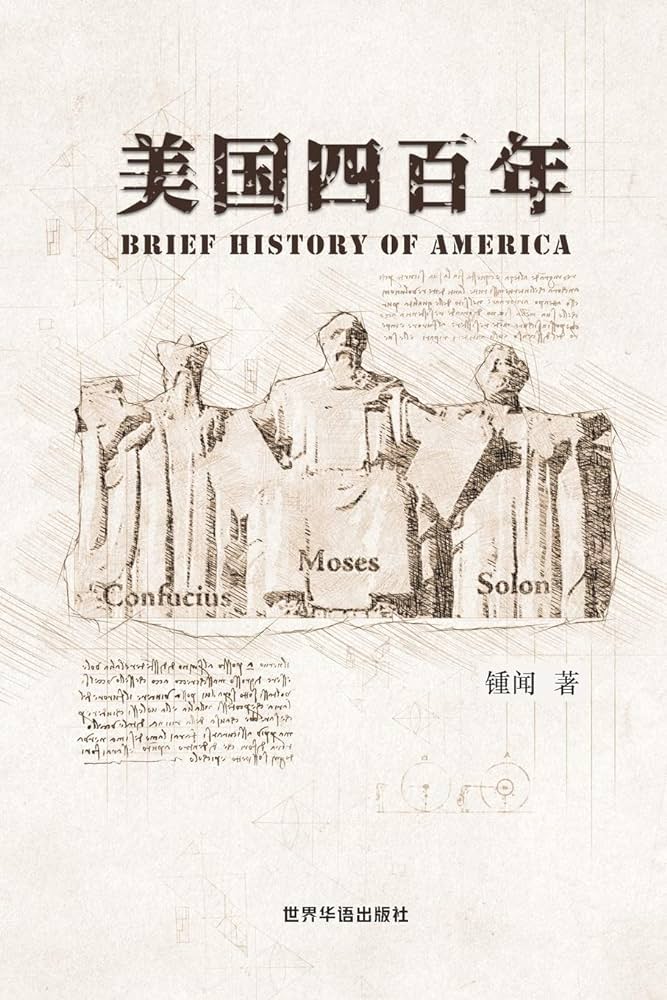
Successful American Expansion and Industrialization, 1803–1880
Founding Yenching University – John Leighton Stuart 1876–1962
In January 1919, John Leighton Stuart was appointed as the first president of Yenching University. At that time, the university was no bigger than a modern elementary school. It was located in an inconspicuous area of Beijing and consisted of only five classrooms, three dormitory rows, one library, one faculty office, one kitchen, and one bathhouse, with nearly 100 students and a few teachers. The school faced serious financial difficulties, with half of its funding uncertain.
Despite the hardships, Stuart raised funds for the school and searched for a new campus. He traveled to the suburbs on donkeys, bicycles, and on foot, eventually finding the current site across from Tsinghua University. Using the funds he had raised, he purchased the land and hired American architects to design the university buildings.
Regarding fundraising, Stuart made more than ten trips to the United States, reaching out to wealthy and influential people. Finally, an aluminum industry tycoon donated $2 million, and combined with other contributions, a total of $2.5 million was secured for the construction of the new campus. Stuart requested that the American architects design the campus according to traditional Chinese palace-style architecture, so the current campus, which people now recognize as Peking University’s, features Chinese-style architecture rather than Western-style.
Completion of the New Campus
The new campus was completed in 1926, with Stuart personally overseeing the work and hanging the “Yenching University” plaque, photos of which show him climbing ladders and working alongside laborers.
Upon completion, Stuart invited renowned scholars from China and abroad, including Wu Leichuan, Xu Dishan, Deng Zhi-cheng, Guo Shaoyu, Gu Jiegang, Zhao Zichen, Rong Geng, Qian Mu, and Wu Wenzao, to teach at Yenching, elevating the university’s reputation and academic standing.
In 1927, Yenching University collaborated with Harvard University to establish the famous Harvard-Yenching Institute, promoting cultural exchange between China and the United States.
By the 1930s, Yenching had developed into one of China’s most academically prestigious universities. Stuart was essentially the founder of today’s Peking University; without him, it would not exist.
Stuart advocated academic freedom and interacted closely with students and staff. He was kind and approachable to students and warm and enthusiastic with faculty, leaving a lasting impression on many.
After the “September 18 Incident,” Stuart personally led Yenching students into the city to protest and loudly oppose Japanese aggression.
In 1933, President Roosevelt of the United States personally met Stuart to hear his opinions on China’s situation.
U.S. Ambassador to China
When the Pearl Harbor attack occurred in 1941 and the U.S.-Japan war broke out, Stuart was captured by the Japanese and sent to a concentration camp in Weifang, Shandong, remaining there until the end of World War II. After his release, he returned to serve as the president of Yenching University.
In 1946, he was appointed U.S. Ambassador to China. He traveled to Chongqing and participated in peace negotiations involving Chiang Kai-shek and Mao Zedong. He tried to bring them together, but was unsuccessful.
Farewell, John Leighton Stuart
In April 1949, when the Communist forces captured Nanjing, Stuart refused to go south to Guangzhou and stayed at the U.S. Embassy in Nanjing. He was forced to leave China on August 2. Before leaving, he secretly contacted high-level officials of the Chinese Communist Party, planning to go to Beijing to discuss U.S. recognition of the new China, but this did not happen. On August 8, Xinhua News Agency published Mao Zedong’s article “Farewell, John Leighton Stuart.”
After returning to the U.S., Stuart was harassed by McCarthyists. He suffered from cerebral thrombosis, partial paralysis, and aphasia, and was cared for by his former secretaries in China, Mr. and Mrs. Fu Jingbo. He passed away in Washington, D.C., on September 19, 1962. He had always hoped to have his ashes buried on the Yenching University campus alongside his wife. He considered himself more Chinese than American.
Stuart essentially made China his home, having been born and raised there. His wish was never realized, but on November 18, 2008, his ashes were reinterred in Anxianyuan, Hangzhou, China.
 正义钟声 Voice of Justice