
400 Years of United States Content
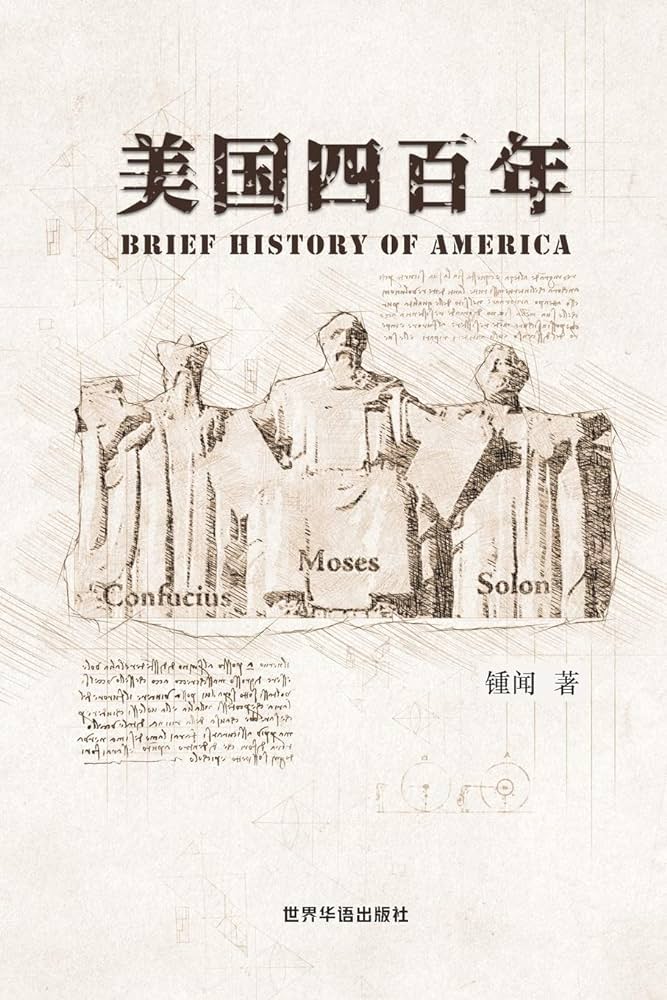
America’s Future
The United States Determines the World
The United States is the decisive power in the world.
Since the 19th century, as the four oceans and five continents became interconnected, countries have interacted frequently, and no nation can exist in isolation. With some 200 countries in the world, maintaining global order requires a leader. Only with a leader can the world move forward in an orderly fashion; without one, chaos ensues, and the disorderly are brought back into line.
Since the early 1900s, the United States has been this decisive force—the world’s leader. Its every move not only influences but often determines the fate of other nations.
The U.S. is widely recognized by other countries for three main reasons: first, its true strength—military and economic—tops the world. Second, it has no aggressive ambitions toward other nations. Third, the U.S. follows the ethical traditions of New Puritanism, giving it moral authority and credibility, earning the trust of other countries. This moral standing is extremely important; military and economic power alone are insufficient.
History shows this clearly:
World War I: Europe was mired in conflict. When the U.S. entered, the outcome was decided in just over a year. America committed decisive effort, suffering 110,000 casualties—yet gained virtually nothing.
World War II: After 2–3 years of stalemate, the U.S. joined and ended the war in three years, determining the outcome by its involvement. Forty thousand U.S. soldiers died, but the country gained almost nothing; even the Philippines, previously under U.S. control, was granted independence.
The Cold War (post-WWII, or “the third war”): The Soviet Union collapsed, and the United States emerged victorious.
U.S.–China confrontation (“the fourth war”): Early indicators show that the Chinese Communist Party will lose, and the U.S. will prevail.
For over a century, the United States has remained the world’s decisive force.
Lessons from history: Three great evils arose due to American mistakes
Failure to heed Wilson led to Hitler and WWII:
After WWI, the U.S. withdrew from global affairs. Congress rejected President Wilson’s proposal to join the League of Nations, allowing European turmoil to continue unchecked. Hitler rose in this vacuum, triggering WWII. Had Wilson’s plan been followed, with the U.S. mediating disputes and maintaining peace, Hitler might never have emerged.
Roosevelt empowered Stalin:
Hitler and Stalin colluded to start WWII. Roosevelt mistakenly assisted Stalin against Hitler, pumping vast resources to strengthen Stalin’s power. Two years after the war, Stalin turned against the U.S., blockading West Berlin. Truman, weak and indecisive, only airlifted supplies instead of confronting Stalin.
Stalin also aided Mao Zedong by transferring U.S.-supplied weapons intended for Chiang Kai-shek’s forces, allowing Mao to seize control of Northeast China over four years. Roosevelt’s and Truman’s mistakes enabled the rise of two enduring totalitarian powers. WWII thus created the communist bloc, subjugating people in twelve countries under totalitarian regimes.
Truman empowered Mao:
Just five years after WWII, in 1950, North Korea invaded South Korea. The UN, led by the U.S., sent forces to repel the invasion. Mao even dared to send troops against U.S. forces, supported by Stalin. Truman’s mistake was removing General MacArthur, who had advocated a full-scale approach against Mao’s forces. MacArthur returned to New York to a hero’s welcome. Truman lost public support and failed to win re-election in 1952.
It was not until seven years after WWII that the U.S. fully awoke. Eisenhower’s election marked a strong anti-communist stance, countering Stalin and Mao, correcting Roosevelt and Truman’s earlier missteps.
Had Roosevelt and Truman acted correctly, China would not have fallen under Mao’s totalitarian rule.
Democracy vs. totalitarianism:
Germany, a democratic country, elected Hitler, who was ultimately replaceable. After WWII, Germany quickly reformed. Stalin and Mao, however, rose through upheaval and were stubbornly difficult to change. Stalin’s death led to Soviet democratization only forty years later; Mao’s death, over forty years ago, still leaves China under authoritarian control today.
Historical lesson:
When the U.S. acts correctly, other countries benefit, and the world enjoys peace.
When the U.S. errs, the world plunges into chaos, demons run rampant, and nations suffer.
 正义钟声 Voice of Justice