
400 Years of United States Content
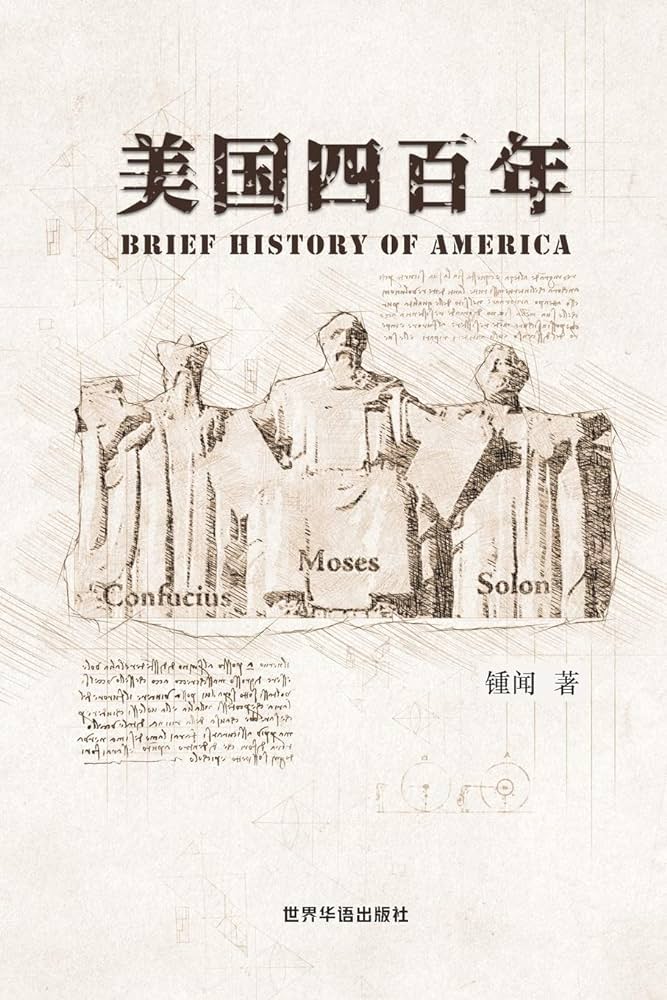
The Foundations of the United States
The Vitality of Democracy: Advancing Step by Step
U.S. presidential elections are often dramatic, full of twists and turns. Even family scandals can be aired openly, and the smallest flaws and ugliness can be exposed before the public. This is precisely the vitality and power of democracy. Can authoritarian countries do this? No. Authoritarian regimes can only conceal and whitewash. If you dare to expose the truth, you are sent to prison. In China, Liu Xiaobo advocated democratic constitutionalism, won the Nobel Peace Prize, yet the authorities imprisoned him until his death. What crime did he commit? He did not even rise to the level of attacking the government.
Hillary Clinton and Donald Trump, despite their many scandals, pale in comparison with the massive corruption of officials in authoritarian states. China’s political and legal strongman Zhou Yongkang engaged in enormous corruption, yet he sat securely in high office for ten years—who dared to expose him? Xi Jinping appears fine on the surface today, but who dares say there are no problems beneath? If there are problems, can they be exposed? Can the media report them?
The most basic benefit of a democratic system is that problems can be exposed in broad daylight. Ordinary people can speak without fear, without worrying about being sent to prison.
U.S. elections can be turbulent for a full year, yet the country does not fall into chaos. People continue their lives without anxiety. There are no massive street clashes or nationwide unrest. Could authoritarian countries manage this? The fact that a nation is not afraid of such turmoil shows the stability of its democratic system. A year of repeated contention forces problems sharply onto the table for everyone to see clearly, laying a foundation for correction and improvement in the years ahead. Isn’t that worthwhile?
From a long historical perspective, the United States has practiced democracy for over 200 years, continuously refining and improving it. Today it is more mature than ever, yet it will not stop developing, nor will it ever become absolutely perfect. Still, compared with authoritarianism, it is unquestionably superior. The transition from authoritarianism to democracy is the global trend of development, though countries move at different paces. Democracy requires a long process of growth and maturation; it does not emerge overnight. The United States itself followed this path. Trying to transplant America’s already mature democracy wholesale onto other countries will naturally fail.
From the very beginning, the United States was founded as a democratic country. Major decisions were made by representatives of the thirteen colonies at the Continental Congress, reflecting a high degree of democracy. However, American democracy was not perfect at the start. The president was not elected by popular vote, but by representatives chosen by each state. The Constitution declared that all men are created equal, but this applied only to white men. At the founding, Black people were still slaves, excluded from democracy and denied political rights. Women also had no right to vote at that time.
In the early years of the republic, not everything was resolved democratically. Democracy means persuasion rather than violence, yet at the founding of the nation, disputes were settled not only with fists but with guns. Vice President Aaron Burr and Treasury Secretary Alexander Hamilton were bitterly opposed in politics, and their conflict escalated into a duel in which Hamilton was killed. This was not a personal feud but a clash of political views that could not be resolved democratically.
Even up until the 1850s, before the Civil War, members of Congress sometimes came to blows over political disagreements. Therefore, one should not be too surprised when lawmakers in South Korea’s National Assembly or Taiwan’s Legislative Yuan fight and injure one another during disputes. Democracy also calls for gender equality, yet in the United States, it took more than 100 years after the founding—until 1920—for women to gain the right to vote and enjoy the same suffrage as men.
Today, vote-buying is widely condemned, but in the early days of U.S. presidential elections, candidates sometimes offered free food and drink, and even handed out money directly to voters. When American democracy failed catastrophically, it led to armed conflict—the Civil War. That four-year war caused hundreds of thousands of deaths and immense property losses, and it took decades for the nation to recover from its trauma.
Over more than two centuries, American democracy has advanced step by step, becoming more complete, yet it is still not without problems. Even today, confrontations between Congress and the White House can delay budget approval, causing government agencies to shut down partially and suspend salaries. This shows that although democracy is the global trend and the general direction of history, it must progress gradually. Perfection cannot be achieved overnight. This is true for the United States, and it is true for all other countries as well.
 正义钟声 Voice of Justice