
400 Years of United States Content
Preface II: Entering the Broad Path of Governance through Non-Interference
Xu Wenli
Counting on my fingers, I have now been in exile in the United States for eighteen years.
Not long after arriving in the U.S., I was honored to serve for ten years and teach for nine years at Brown University, one of America’s Ivy League institutions. My earliest impressions were expressed on February 12, 2003, when I happened to have the opportunity to speak at the Fairbank Center for Chinese Studies at Harvard University:
I would like to speak concretely, through some of my personal impressions after setting foot on American soil, about what I believe to be two essential foundational conditions required for China to achieve a democratic system.
The first condition I would like to discuss begins with the general requirements of etiquette in human interaction. Some ladies and gentlemen may find this strange—what does etiquette have to do with a democratic society? Let us observe that in the United States, whether in research institutions, universities, on the streets, or in residential communities, there is a very good habit: when people meet, they greet one another. Such etiquette has been relatively rare in China over the past nearly sixty years. Why is it rare? There are many reasons; today I will mention only the most basic one. Many of my relatives and friends are members of the Communist Party, so I know that when they were young and wanted to join the Party, to become a Communist Party member, they had to write very thick “thought reports,” and they also had to expose or denounce the behavior and thinking of others to the organization. One person wrote such reports to join the Party; another person did the same. They believed that others would not know. In China there is a colloquial term for this practice: “filing small reports” (informing). You file “small reports,” he files “small reports”—how can people greet each other when they meet? Almost everyone harbors hidden motives, and naturally mutual greetings disappear. What is strange is that today some Chinese people detest contemporary China, with its naked money-based relationships amid the economic tide, yet they nostalgically long for the Mao Zedong era—an era in which almost everyone harbored hidden motives, almost everyone kicked others when they were down, and almost everyone lived with extreme caution—and they even say that this was the period when Chinese interpersonal relations were at their best. This is either absurd or sheer forgetfulness.
It must be pointed out that this condition of everyone treating everyone else as an enemy, and everyone living in fear, engaged in constant struggle, was a vicious habit deliberately cultivated by the Chinese Communist Party in order to facilitate its control and domination of society. The culture of “filing small reports” completely ruined social relationships. This pernicious influence has even been carried overseas. I have noticed a very strange phenomenon abroad: when Chinese people encounter other Chinese people, they often act as if they have not seen them at all; Chinese people are even less inclined to acknowledge fellow Chinese, let alone greet one another.
The same is true among some exiles overseas, where certain individuals are even more hostile toward one another.
I have once told some American officials: please view this abnormal situation with sympathy. One important reason is that these people come into exile abroad without the advantages that you have—being born in the United States with decent jobs, homes, cars, and stable incomes. Their resources are extremely limited, and conflicts may arise over the competition for those resources. This is what I hope foreign friends can understand with empathy. However, we ourselves cannot easily forgive ourselves. What is unforgivable is that we have also learned from the Chinese Communist Party a fondness for struggle—life-and-death confrontation, black-and-white absolutism, a disregard for etiquette—and harmful patterns of thinking. When such bad habits and harmful ways of thinking that disregard etiquette are extended further, what kind of result do they produce? The result is that the “gentlemanly spirit” once valued by the Chinese has disappeared, and the “gentlemanly demeanor” spoken of by the British is not something people seek to learn. In British gentlemanly conduct, there is a very important principle: “I may disagree with your viewpoint, but I will resolutely defend your right to hold that viewpoint.”
Etiquette is the foundation of civilization; modern etiquette is the foundation of modern civilization.
What, then, are this gentlemanly spirit and this gentlemanly demeanor to a democratic system? They are its cornerstone. In a pluralistic society, the most important thing is respect for the rights of others. However, over the past nearly sixty years, because of cultural rupture and the destruction of China’s traditional culture, a huge chasm has emerged between contemporary mainland China and modern civilization. To fill such a chasm and return to a society that values etiquette is extremely, extremely difficult—more difficult than the accumulation of material wealth.
Of course, etiquette must not be excessive; an overabundance of formalities becomes hypocrisy and waste.
Civilized etiquette knows no national boundaries, no temporal limits, and no social distinctions.
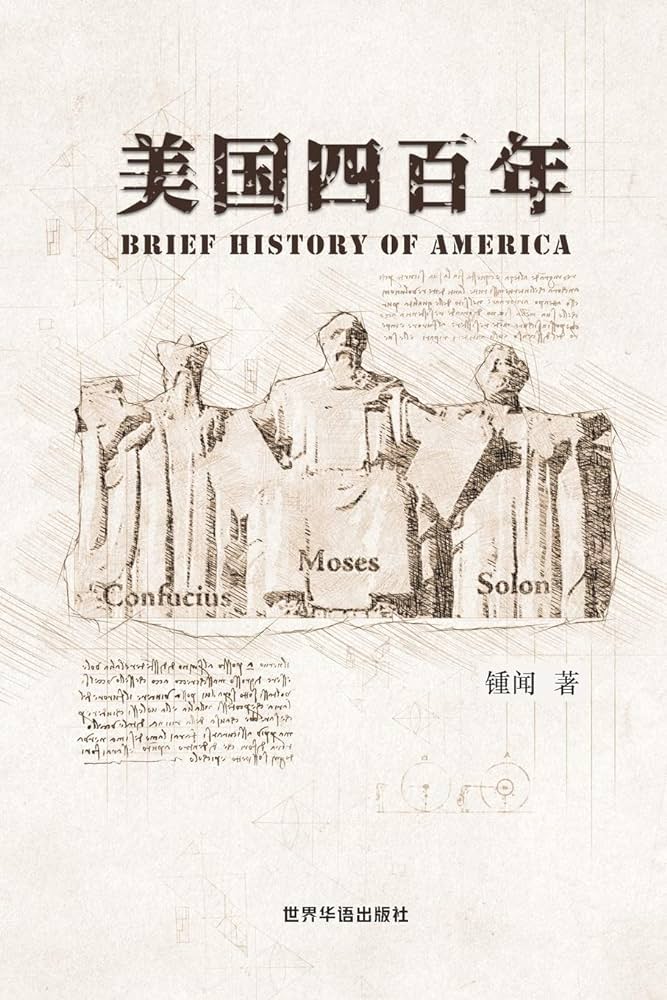
After eighteen years in America, I have come to understand even more deeply that over four hundred years the United States has preserved the nourishment of European civilization and carried it forward, thereby truly entering, in a preliminary way, the broad path of “governance through non-interference.” Mr. Zhong Wen’s Four Hundred Years of America charts a route map of America’s continuous progress along this path and is well worth reading.
[Note] Xu Wenli: Hope for the Establishment of Democracy in China Lies in Gradual Progress—speech delivered at the Fairbank Center for Chinese Studies, Harvard University, February 12, 2003.
April 14, 2020
 正义钟声 Voice of Justice