
400 Years of United States Content
Preface I: The Great Success of Puritan Pioneering
Yu Jinshan
The United States declared independence on July 4, 1776 (with the federal government formally established in 1790). Counting from then to now, its history spans little more than 244 years. In Four Hundred Years of America, Zhong Wen pushes the narrative of American history back by 150 years, enabling readers to understand the true foundations of the nation. Before independence, after more than a century of colonial development, thirteen colonies had already taken shape, each with a well-developed legislative system—effectively thirteen small countries. Independence merely united these thirteen states into a federation and established a federal central government.
From Columbus’s discovery of the New World in 1492 to the present, nearly 530 years have passed. In the century following that discovery, almost the entire American continent was under Spanish dominance. The Spanish occupied Central and South America, regions with the most favorable natural and geographic conditions. North America, by contrast, was little more than a nominal Spanish possession—an untamed wilderness in which the Spanish had little interest in actual settlement or development. It was only more than a century later that the English began colonizing and pioneering in North America. This naturally raises the question: the Spanish arrived earlier and controlled regions with far better conditions—why, then, did they fall behind the English?
After American independence, several western and southwestern states still belonged to Mexico. There were only a few thousand Spanish-descended Mexicans living there, and few were willing to cultivate the land. Today, however, illegal immigration from Mexico has become a major problem for the United States. When people trace this issue back to its roots, they ultimately must look to the differences in culture and religious belief between England and Spain.
At that time, Spain was the strongest supporter of the Roman papacy and a staunch opponent of the Reformation. England, by contrast, supported Henry VIII’s independent national church. The Spanish came to the New World in search of gold and silver. In Central and South America, they brutally conquered two great Indigenous empires, plundered their precious metals, and brought the entire region under their rule, styling themselves lords of the Americas. North America, however, had little ready to be conquered. Its Indigenous peoples had no large empires or even substantial villages comparable to those of Central and South America. They were far more primitive, scattered across the land, coexisting with tens of millions of bison. Their main trade goods were animal pelts. The Spanish saw little value in this and largely ignored the region.
The English Puritans who sailed to North America aboard the Mayflower in 1620 came to pioneer a new land not for riches, but to escape persecution by the Church of England and to seek a homeland of religious freedom. They came as pilgrims, bearing God in their hearts, determined to build a “city upon a hill” in accordance with His will. Puritan faith became the spiritual cornerstone of the United States. As the minister who led the Puritans to the New World once said: one small candle can light a thousand candles. The light thus ignited illuminated all of America.
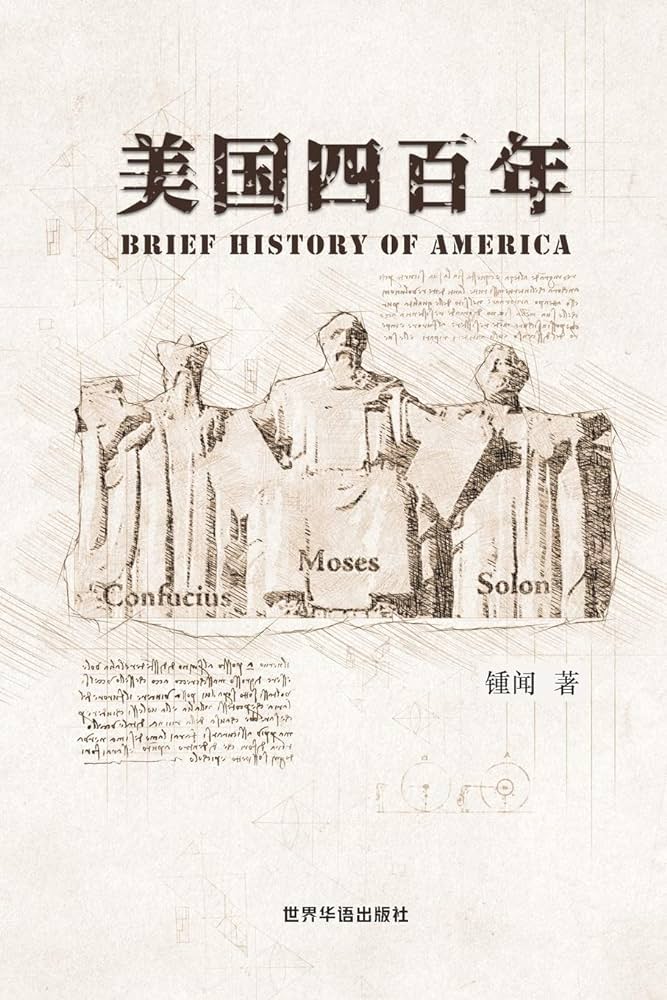
The author mentions the statues of three great sages on the east façade of the U.S. Supreme Court, which symbolize the foundations of the American nation: Moses, the prophet of the 13th century BCE and principal author of the Old Testament; Solon, the Greek statesman of the 7th century BCE and a founder of democratic governance; and Confucius, the Confucian master of the 6th century BCE and the architect of ethical and moral philosophy. Christian faith teaches that God created all things, that God created humanity, and that human beings must revere God. Democratic politics pursues freedom and equality, but it must remember that above there is God—there is a higher authority—and below there is a foundation of ethics and morality, which guides people to act with restraint and propriety.
Reverence in conduct, adherence to rules, freedom, and equality—these are America’s basic values and the foundations of its nationhood.
That America takes Confucius as a source of ethical and moral grounding fills us, as descendants of Confucius, with particular pride, and also serves as a reminder and an exhortation to Chinese people everywhere.
Today, the United States stands as the world’s sole superpower. Following the path first opened by the Puritan spirit, America will live up to its mission and continue to practice and spread freedom and justice to the entire world.
 正义钟声 Voice of Justice