
Roosevelt: The Mastermind Behind Eight Decades of Communist Disaster
Chapter 21 Epilogue
On November 9, 2022, The New York Times Chinese website published an article titled “In the Eyes of Global Democracies, American Democracy Has Lost Its Way” (author: DAMIEN CAVE), pointing out that hundreds of Republican candidates in the 2022 U.S. midterm elections either questioned the results of the 2020 presidential election or spread false information about it. …
For most countries in the world, the U.S. midterm elections are just a minor episode, but some people see it as yet another data point indicating a troubling trend. Especially in those countries that have found ways to strengthen their democratic processes — interviews with scholars, officials, and voters from these countries reveal their concerns that the U.S. seems to be doing the opposite, moving away from its core ideals.
Some critics of America’s trajectory cite the January 6, 2021 attack on the U.S. Capitol as a violent rejection of the peaceful transfer of power that democracy insists upon. Others express worry about voting obstacles set up by various U.S. states, obstacles that appeared after the COVID-19 pandemic led many to vote early or by absentee ballot, causing record-high turnout. Some individuals fear the U.S. Supreme Court is becoming a victim of partisan politics, much like judicial bodies in countries struggling to establish judicial independence.
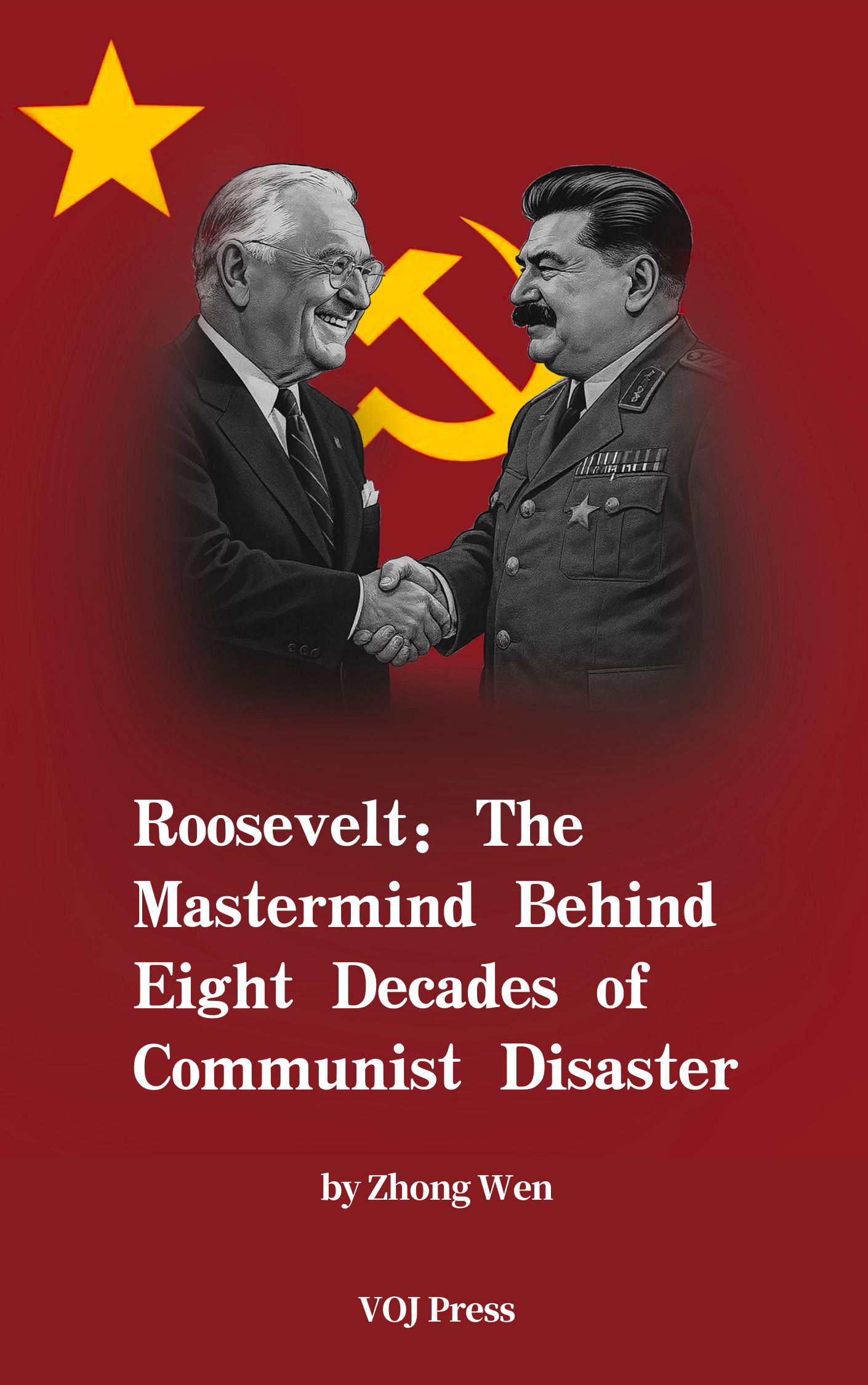
Zhong Wen remarked: The above seems reasonable but suffers from color blindness — failing to see the danger of the “red” factor; ignoring that the “American democracy has lost its way” did not start in 2016 or 2020, but from 1933 when Roosevelt colluded with the red devil, Stalin of the Soviet Union. Roosevelt and subsequent U.S. presidents and powerful figures have for 80 years, year by year, one after another, spared how many Communist devils, and are still ready to spare how many more years? How many more devils? How many more millions of lives lost????
Helmut Anheier, a sociology professor at the Berlin Hertie School, said, “America did not become what it is overnight.” The chief researcher of the Bertelsmann Governance Index said his index is based on studies of 134 countries, with America’s quality of life index lower than Poland’s. “It took some time to become like this, and it will take some time to get out of this state.”
In Halifax, Nova Scotia, Canada, some tourists and residents expressed sadness, disappointment, and surprise at the political situation in their neighboring country, the U.S. For a long time, there have been economic and family ties between Halifax and Boston.
“I’m very worried,” said Mary Lou McInnis, a registered nurse visiting the Halifax Public Gardens with her family. “I never thought this would happen in America, but I feel America might be heading toward a future dictatorship.”
In 1991, studies showed that Canadians were split evenly on which system was better — the U.S. or Canada. In a follow-up survey last year, only 5% preferred the U.S. system.
In Canada and other countries considering themselves close friends of America, some say the earliest signs of trouble appeared in the 2000 presidential election, when George W. Bush won narrowly over Al Gore after a Supreme Court decision.
Others believe the problem began with the 2016 election, where Trump lost the popular vote but won the election, and then in 2020 refused to accept defeat. Hundreds of Republican candidates in this year’s election repeated his lies without consequences.
“Many people thought Trump was a special, once-in-a-lifetime figure; once out of office, everything would return to normal,” said Malcolm Turnbull, who was the center-right prime minister of Australia during Trump’s term. “Obviously, that is not the case.”
Systemic change in America is only possible with overwhelming consensus in Congress, but even then, change is unlikely. Campaign funding is protected as free speech, and states guard their electoral authority in the federal system designed as a bulwark against authoritarian abuse.
Jennifer McCoy, a political scientist at Georgia State University, recently co-authored a report on how polarized countries have depolarized in the past. She said America’s problem is not just partisan division but also lack of foresight: Americans rarely borrow ideas from abroad.
“There is a myth surrounding our Constitution and American exceptionalism,” she said. “Firstly, it makes people complacent; secondly, leaders take a long time to realize the risks we face. That makes adaptation difficult.”
Zhong Wen remarked: In my view, “America might be heading toward a future dictatorship” — this started with Roosevelt! It is not only due to controversies in the 2000, 2016, and 2020 presidential elections or the Supreme Court’s partisan rulings, but has a deeper background.
Exploring these backgrounds, identifying the crux of the problem, and seeking solutions can turn this book’s “Roosevelt critique” into a new theme — the future of American democracy.
This constructive discussion, together with the critique of Roosevelt, although two different subjects, I believe it is obvious that “without thorough critique, fundamental reconstruction cannot happen” — this is the intention of this book to provoke thinking and gather wisdom. From this, we can take America’s successes and failures in confronting authoritarianism over the past 80-90 years as the starting point for the next book, a sister volume to this one — The Future of American Democracy.
 正义钟声 Voice of Justice