
Roosevelt: The Mastermind Behind Eight Decades of Communist Disaster
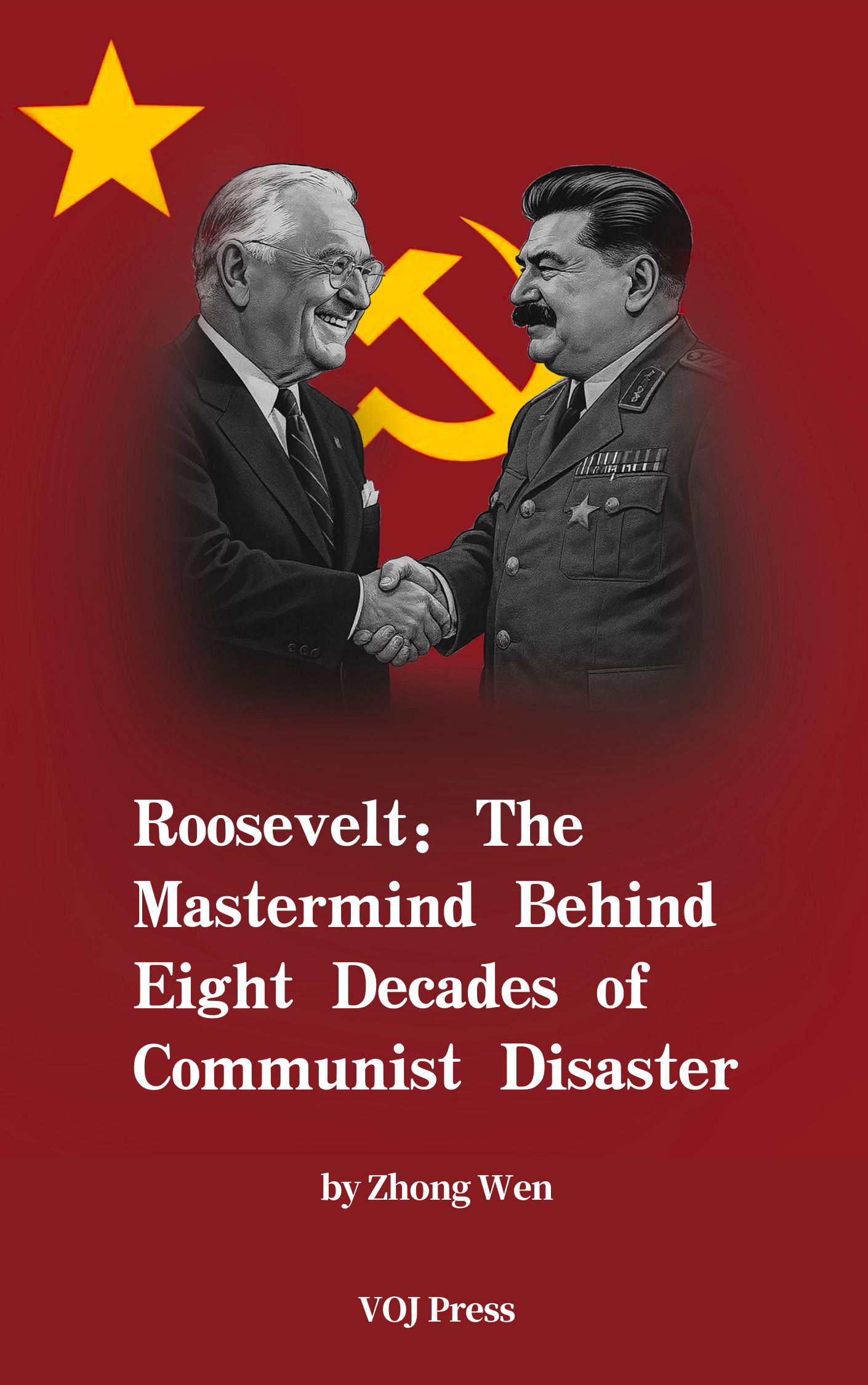
Chapter 12
Roosevelt Deceived Congress Even on His Deathbed
On April 12, 1945, Roosevelt said: “I have a terrific headache.” That very night, he died of a cerebral hemorrhage. From that moment on — and for the next hundred years — the Communist Party would thank the devil for giving them a Roosevelt, the man who helped Stalin win World War II and establish the socialist camp. Though Roosevelt was dead, the poisonous seeds he had sown could never be undone.
I. Stalin Was a Master of Schemes and Intrigue
In March 1932, British General Clark Kerr visited the Soviet Union and held talks with Stalin. In a private letter, he wrote: “I had imagined Stalin to be a tall and burly man, but he turned out to be short and thin, with a hunched back and gray hair. He had an unusually large head and pale, oversized hands.”
‘Stalin’s eyes seemed to sneakily glance at my shoulder rather than look me in the face. He always avoided direct eye contact.” Their interaction was like that of two old tricksters. It was clear that Stalin was not put off by Kerr’s eccentric personality.
Despite cultivating a cult of personality in the Soviet Union, Stalin heavily relied on his team and others. Another of Stalin’s defining traits was his extraordinary command of language, a skill honed during his early theological education. Though he could use force to assert authority and accomplish goals, he also understood that the pen and tongue could be mightier than the sword.
In his youth, Stalin had studied for several years at an Eastern Orthodox seminary in Georgia and became fluent in Russian. He also worked as an editor for some years. In the letters he wrote, he paid meticulous attention to detail, grammar, punctuation, and style. But more importantly, he was fixated on power.
Like Churchill, he believed that if you leave the judgment of history to others, they will erase you from its narrative. Both men became masters of rewriting history and usurping power.
Where Stalin’s editorial style was brief and incisive, Churchill preferred expansive discussions of policy and long-winded explanations. As he often said, he would dictate letters to secretaries and then revise their drafts himself. Since these documents were intended for posterity and for manipulating world opinion, Churchill would often compare multiple versions to best polish his own image.
Roosevelt had relatively smoother relations with the Soviet Union, largely because the UK and USSR were geopolitical rivals in Europe, each with their own spheres of influence.
At the time, Roosevelt’s approach to Europe — especially at the Tehran Conference in late November 1943 — was clear: as long as the Soviet Union maintained a veneer of democracy, the U.S. would not obstruct Soviet reassertion of control over the Baltic states, nor would it challenge Soviet hegemony in Poland and Eastern Europe. Roosevelt repeatedly emphasized his determination not to get involved in territorial disputes in Europe, and not to station American troops there for more than a year or two. What interested Roosevelt was the grand framework of global cooperation — not the ever-shifting chessboard of European borders.
In my view, Roosevelt’s brain had been clouded by the effects of syphilis. Did he truly believe that handing over Eastern Europe to the Soviets would make them obedient to him? It’s no different from Biden in 2024, who, in the name of the “grand alliance,” has practically dismantled America’s southern border!
 正义钟声 Voice of Justice