
Roosevelt: The Mastermind Behind Eight Decades of Communist Disaster
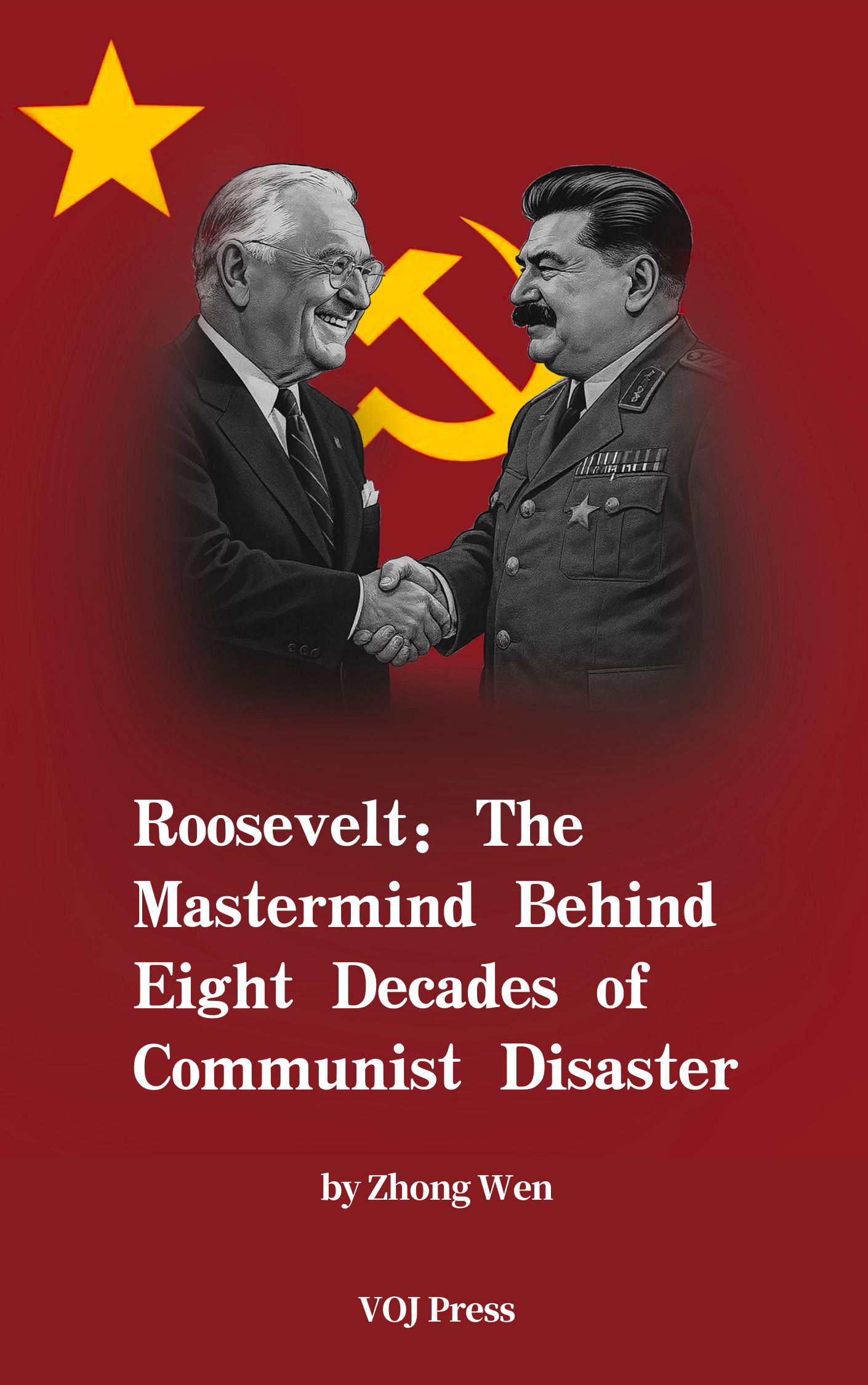
Chapter 11
Roosevelt Risked His Life to Attend the Yalta Conference
III. The Soviet Union Covets American Financial Power
Zhong Wen remarked: In March 1945, Roosevelt harshly rebuked Stalin, accusing him of breaking various promises made at Yalta regarding Poland, Germany, prisoners of war, and other issues. When Stalin accused the Western Allies of plotting a peace resembling Hitler’s dictatorship and detached from reality, Roosevelt replied: “I am both saddened and outraged by the unavoidable distortion — through such despicable means — of either my own actions or those of my trusted subordinates, regardless of who your informants may be.”
This was because Stalin, seeing Roosevelt’s health in steep decline, aimed to strike first and seize the initiative in the race to control Europe.
What made Stalin hesitate was America’s rapidly rising economic might during the war — a true “production miracle.” Compared to prewar levels (1937–1939), U.S. industrial production in 1944 had increased by 1.23 times, with output double that of the three Axis powers combined. Exports surged from $3.19 billion to $15.34 billion. Overseas investment rose from $12.3 billion in 1940 to $16.8 billion in 1945. U.S. gold reserves grew from $14.51 billion in 1938 to $20.08 billion in 1945, accounting for roughly 59% of global gold reserves.
Building on this foundation, the U.S. proposed a new global economic order in the later stages of the war. This strategy involved creating basic multilateral international rules based on U.S. policy objectives, such as reducing trade barriers and applying non-discriminatory principles (i.e., multilateral free trade). It also aimed to establish international institutions and mechanisms under American leadership — including the IMF, the World Bank, and later the WTO.
Roosevelt himself was idealistically devoted to international economic cooperation after the war. To this end, he was willing to appease the Soviet Union, just as presidents like Bush and Clinton would later appease the Chinese Communist Party — attempting to turn communists into America’s financial partners.
On November 24, 1944, Roosevelt told Congress in a report on the Lend-Lease Act: ‘this legislation is a systematic military supply system. It should end with the war. However, the partnership of our united nations should continue and grow stronger.”
On February 22, 1945, in a message urging Congress to approve the Bretton Woods Agreement, Roosevelt stated: “If we are to approach the tasks of peace with the same vigor as we approached the tasks of war, then we must ensure peace is built on a solid foundation of international political and economic cooperation.”
Roosevelt asserted that, economically, all nations’ “objectives and interests are aligned.” What the U.S. and its allies needed, he said, was a shared goal: ‘to expand production, employment, trade, and consumption—in other words, to produce more goods, provide more jobs, engage in more trade, and raise everyone’s standard of living.”
Clearly, Roosevelt was living in a dreamworld of his own making — just like Nixon, Carter, Bush, Clinton, and Obama decades later — naively indulging the Chinese Communist Party in its century-long marathon.
But once Roosevelt died, things began to shift.
Harry Truman, a right-leaning Democrat, held hawkish views on the Soviet Union. Shortly after Germany invaded the USSR, then-Senator Truman had declared — according to later Soviet foreign minister Andrei Gromyko — that the U.S. should “help whichever side is losing” so that both could inflict as much damage on each other as possible before America intervened.
As the war in Europe neared its end, the USSR took a hardline stance on Poland and Eastern Europe. Roosevelt’s death further stirred isolationist and anti-Soviet sentiment in the U.S., particularly in the State Department and Congress. This shift encouraged policymakers to view economic aid as a tool of foreign policy.
During his April 23, 1945, meeting with Soviet foreign minister Molotov, Truman may not have been as rude as later accounts claimed, but he was certainly cold and firm. On May 10, he hastily approved an “immediate suspension” of Lend-Lease aid to the USSR — a move that stemmed from inexperience (especially regarding the ongoing war against Japan), and it wasn’t specifically aimed at the Soviets (Britain received the same notice). However, the subsequent Soviet protest and Truman’s quick reversal of the decision reflected his underlying dissatisfaction with the Soviets.
Ultimately, after months of back-and-forth following the end of the war with Japan, U.S. Lend-Lease and credit loans to the USSR were terminated, and negotiations for new loans failed completely.
 正义钟声 Voice of Justice