
Roosevelt: The Mastermind Behind Eight Decades of Communist Disaster
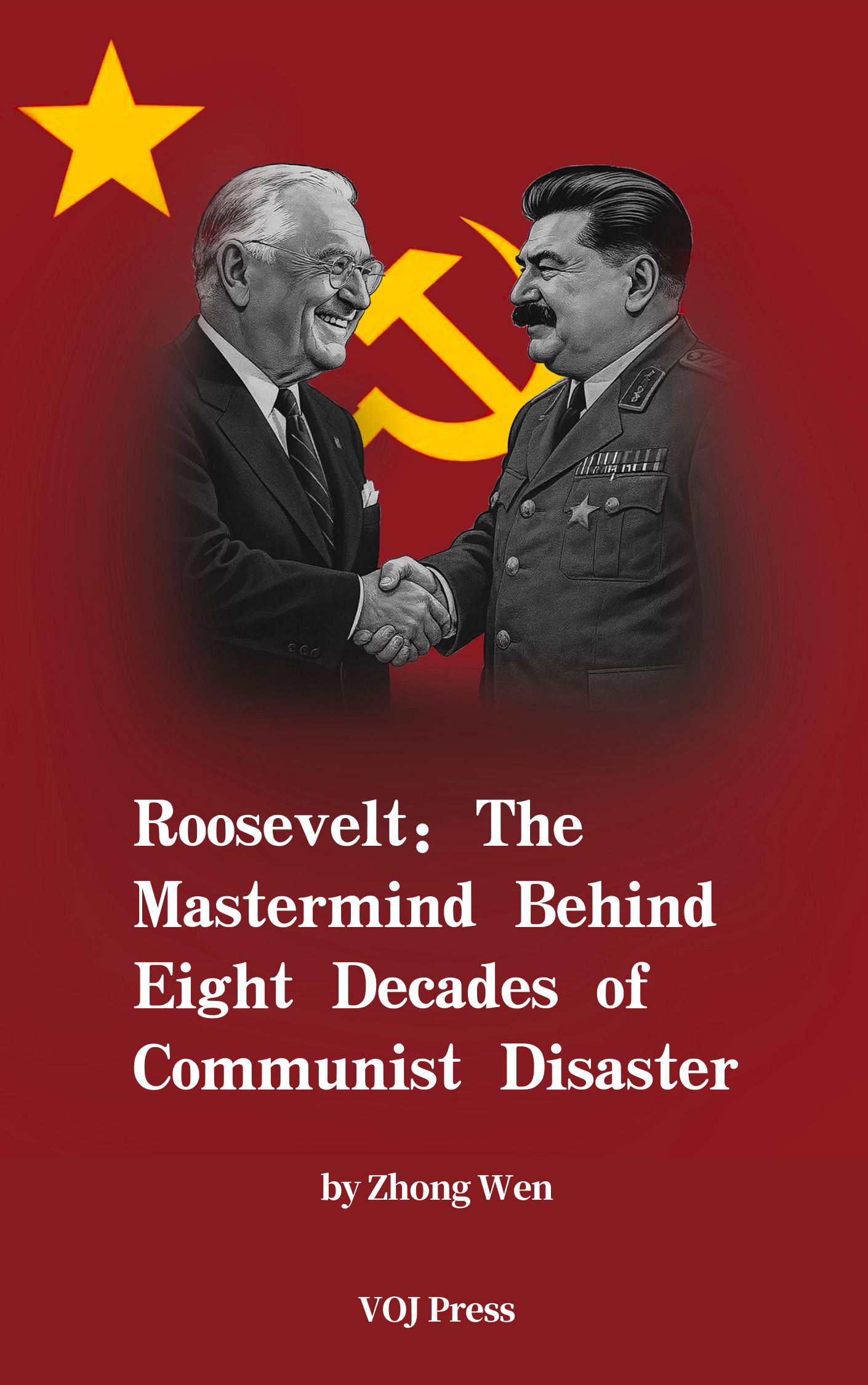
Chapter 11
Roosevelt Risked His Life to Attend the Yalta Conference
II. Berlin Handed Over to the Soviet Red Devils
Historical records show that American General Dwight D. Eisenhower handed over the German capital Berlin and the whole of Eastern Europe to the Red Devil Stalin — most likely under Roosevelt’s directive.
In March 1945, Nazi Germany was on the verge of defeat, and the Allied victory was within sight. Under the coordination of the Allied forces, Montgomery’s 21st Army Group successfully executed the Normandy landing plan and advanced with unstoppable momentum, recapturing France and pushing directly into Nazi Germany.
Just as the army was steadily advancing into the heart of Germany, General Montgomery suddenly received a telegram from Eisenhower, stating that the Allied battle plan had changed. The new directive required the main offensive to shift from Berlin to the southeast, targeting Munich and Leipzig, and the primary assault would now be led by General Omar Bradley’s 12th Army Group. Montgomery’s 21st Army Group would instead head northeast to occupy the Baltic port of Lübeck Bay, cutting off the German army’s retreat routes to Denmark and Norway. The task of capturing Berlin was handed over to the Soviets.
Montgomery, who was gearing up to storm Berlin, was shocked and furious upon reading the telegram. He deliberately publicized the contents to his subordinates, sparking a wave of criticism against the Americans within the British army. Staff officers, without consulting Prime Minister Churchill, sent a lengthy telegram to the American Joint Command in Washington, criticizing the unilateral change of plans and expressing disbelief that the task of capturing Berlin was being left entirely to the Soviets.
Eisenhower responded: ‘since the Normandy landings, I’ve always accommodated them, letting the British take the lead while American forces played second fiddle. Now it’s time to switch roles.”
Upon receiving Montgomery’s report, Prime Minister Churchill also believed Eisenhower had made a major blunder. Like Roosevelt in the early stages of the war, Churchill had once been eager to crush Hitler quickly, often at the expense of political considerations. However, after the Yalta Conference, Churchill increasingly realized that the Soviet-led East would pose a serious threat to the Western world. As victory neared, political considerations took on greater importance. Churchill believed Berlin should not only be taken — it should be the top priority for the Anglo-American alliance.
Churchill sent a telegram to Eisenhower explaining his position and questioning why Berlin’s political significance was being ignored.
In his message, Churchill said: “I do not understand what benefit comes from not crossing the Elbe. If enemy resistance continues to weaken, why don’t we advance eastward and cross the Elbe? By voluntarily handing Berlin over to the Russians from the south, serious political consequences will follow. It will give them the impression that ‘the whole of Europe was won by the Russians.’ Furthermore, I do not believe Berlin has lost its military importance, nor especially its political significance. The fall of Berlin would deliver a psychological shock to all of Germany and cause most Germans to stop resisting. Therefore, I prefer the 21st Army Group to advance to the Elbe and capture Berlin. This does not conflict with your offensive south of the Ruhr; it simply shifts the troops slightly north. It will also prevent British forces from being trapped in a narrow corridor ……”
Soon after, Churchill received Eisenhower’s reply. Eisenhower reiterated his argument for abandoning Berlin and claimed that letting the Soviets attack would save tens of thousands of lives. Regarding Churchill’s concern about British forces being trapped, Eisenhower rebutted: “Your speculation about ‘British troops being trapped in a narrow corridor’ is completely unrelated to my thinking. I believe my work over the past two years should have dispelled such concerns. Moreover, I do not believe my reallocation will diminish the role or prestige of the British army ……”
Churchill could not understand how the Americans could have such short-sighted political vision — only seeing short-term military interests without recognizing the long-term political consequences. When persuasion failed, Churchill wrote a long letter to President Roosevelt, laying out his thoughts.
However, there was no sign the American position would change. Frustrated, Churchill sent a conciliatory and understanding message to Eisenhower, hoping that the Allied forces would meet the Russians as far east as possible — a matter of utmost importance.
While Eisenhower and Churchill were exchanging these messages, Stalin received the American telegram inviting the Soviets to take Berlin. Stalin merely smiled faintly and said calmly, “Eisenhower’s plan seems reasonable.”
The next day, Stalin’s reply reached Eisenhower’s desk: “Your proposal for your troops to link up with Soviet forces and thus split the German army is excellent and fully aligns with the Soviet High Command’s thinking. I fully agree to have our forces meet in Erfurt, Leipzig, and Dresden. The Soviet High Command believes the main Soviet offensive should also be in that direction. Berlin has lost its former strategic importance, so the Soviet High Command will send secondary units to attack Berlin ……”
As a result, the Soviet Red Army single-handedly completed the capture of Nazi Germany’s capital, seizing Berlin on May 2, 1945. When Prime Minister Churchill saw Stalin’s message to Eisenhower, he realized the situation was a fait accompli and could no longer be changed — he was devastated.
After WWII, Germany was divided into East and West — a Western-aligned state and a Soviet-aligned one. This was the bitter fruit of Roosevelt and Eisenhower’s joint decisions. Had U.S. forces marched east and taken Berlin alongside or ahead of the Soviets, the Cold War might never have happened. But clearly, America had been betrayed by insiders. And the next one to be betrayed would be the Republic of China in East Asia.
 正义钟声 Voice of Justice