
Roosevelt: The Mastermind Behind Eight Decades of Communist Disaster
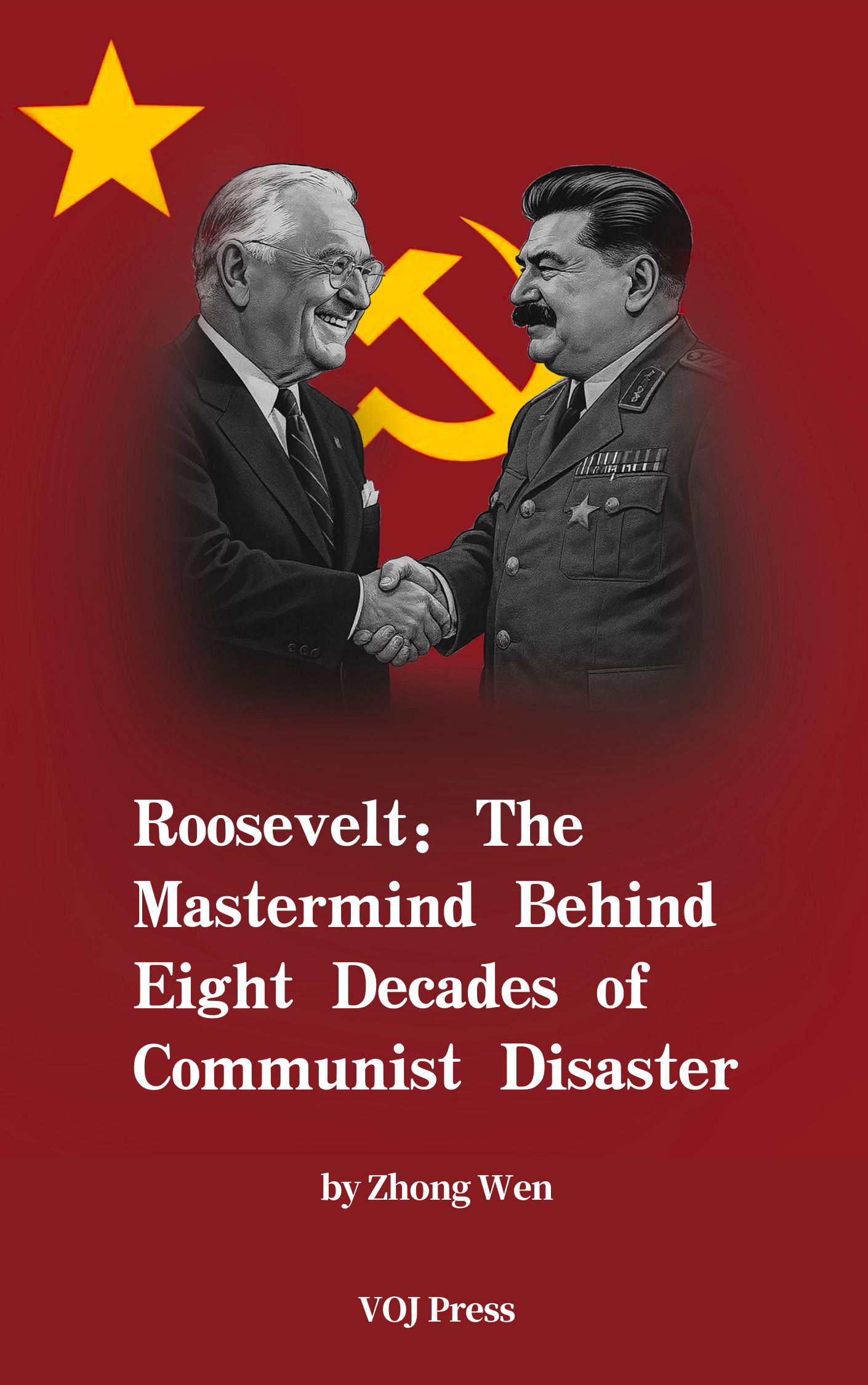
Chapter 10
Roosevelt’s Betrayal of China’s Sovereignty
III. Stalin Eavesdropped on Roosevelt and Churchill
The July 2003 issue of Studies in Intelligence (published by the U.S. intelligence community) revealed that during the Yalta Conference in February 1945, Stalin ordered the surveillance and eavesdropping of Roosevelt and Churchill, recording all conversations between the American and British representatives. The policies formulated by the former Soviet Union based on these recordings, as well as the Yalta Agreement signed at the conference, largely determined the post-World War II world order.
The article’s author, Gary Kern, who served in senior positions at the CIA for 35 years, wrote: ‘stalin focused intensely on this American president (Roosevelt), studying him as if observing a sample under a magnifying glass.” Meanwhile, Roosevelt, trapped in this “monitoring snare,” was completely unaware — or pretended to be.
Roosevelt was lodged at the Livadia Palace in Yalta, once a summer retreat for the Tsars. However, Soviet agents had densely installed various advanced eavesdropping devices throughout this magnificent palace, allowing them to monitor everything said indoors by the American delegation.
In fact, just before the Yalta Conference, no fewer than 120 listening devices were discovered inside the U.S. Embassy in Moscow. Logically, the Americans should have been on guard against such espionage, but whether through carelessness or simply being outmatched, they once again became “fish in a barrel” for the Soviets.
Kern’s article states: ‘the British delegation stayed at the Vorontsov Palace, about 20 miles from Livadia Palace, and like Roosevelt, Churchill was also a ‘high-priority’ target for Soviet surveillance. Two similar jokes were circulating: one version said that Churchill once lamented while drinking gin that he wished he had lemon juice; the next morning, the British delegation was amazed to find a lemon tree growing on the floor. The other version replaced Churchill with his daughter Sarah but told the same story.”
Lavrentiy Beria, Stalin’s subordinate and former head of the Soviet secret police, handled intelligence analysis during the Yalta Conference. In 1998, Beria’s son Serge recalled that his father once said that even outdoor conversations of the American delegation were thoroughly monitored and secretly recorded by the Soviet secret police. At that time, Soviet listening devices could capture any sound signals within a 50 to 100-meter radius. Due to the absence of background noise, the Americans’ conversations were very clear, and the recordings, after translation and organization, were highly effective.
Every morning at 6 a.m., the elder Beria would get up early to compile a summary of the eavesdropped information and report to Stalin by 8 a.m. ‘stalin listened very carefully to every piece of intelligence my father reported. He was not only interested in what the Americans said, but also in their tone and manner of speaking — for example, whether they paused while speaking and the length of those pauses,” Serge said.
Kern pointed out in his article: “Roosevelt repeatedly said that for the freedom of Eastern Europe, the U.S. should abandon fighting the Soviet Union… On the contrary, he believed in being soft rather than hard toward the Soviets. He thought if the U.S. took a gentle and frank approach, the Soviets might abandon their tough stance. He even actively encouraged Poland and Lithuania to submit to Soviet chauvinism.”
According to Kern, Roosevelt’s attitude toward the Soviet Union at the time sowed the seeds for the Cold War’s bitter legacy. It is well known that after the Yalta Agreement took effect, the world was divided into two opposing camps: the communist camp led by the Soviet Union and the free world camp led by the United States.
 正义钟声 Voice of Justice