
Roosevelt: The Mastermind Behind Eight Decades of Communist Disaster
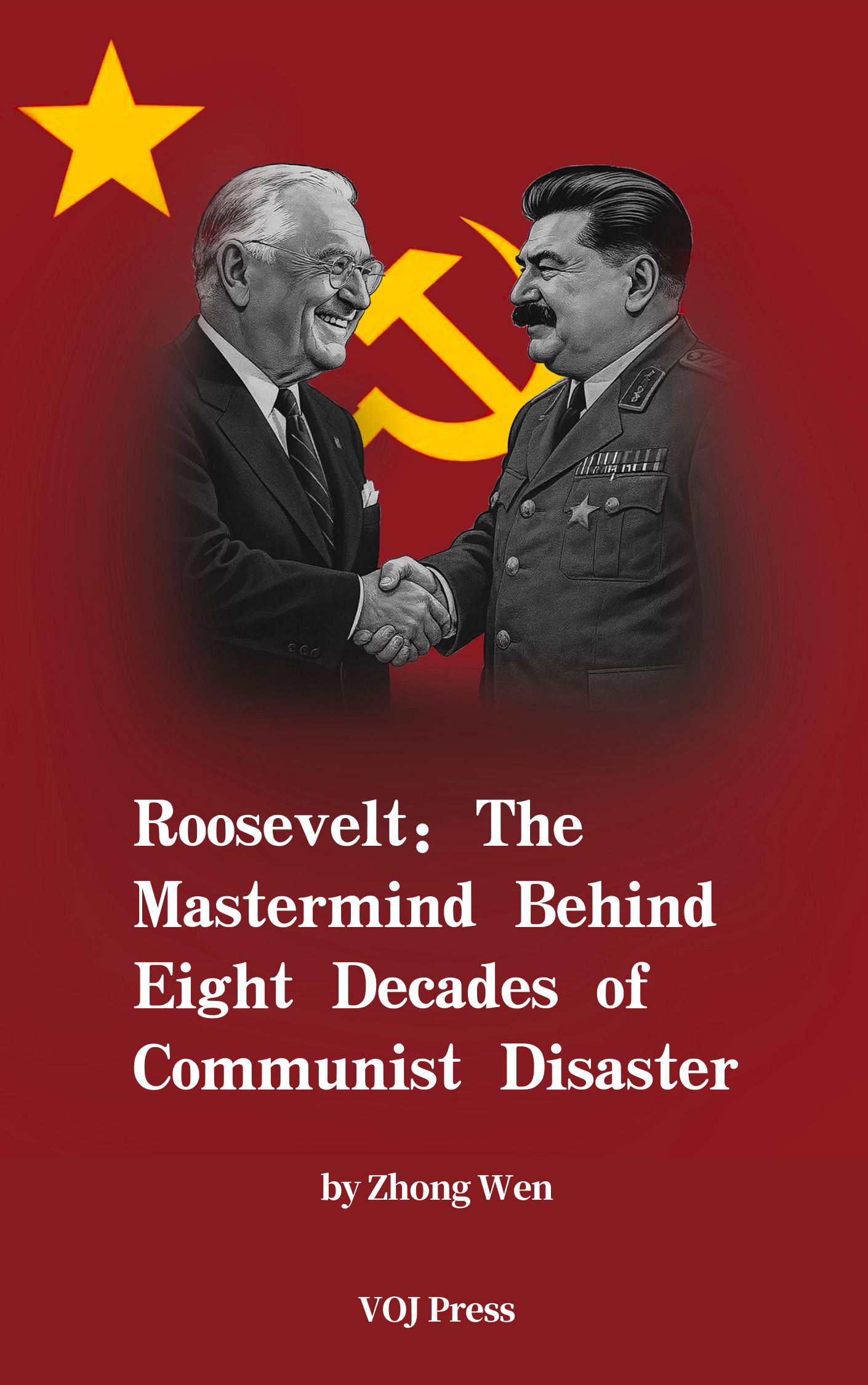
Chapter 10
Roosevelt’s Betrayal of China’s Sovereignty
II. The Soviet Theft of China’s Outer Mongolia
In May 1945, the capture of Berlin by the US, Britain, and the Soviet Union marked the end of World War II in Europe. On the eve of the war’s end, the heads of the US, Britain, and the Soviet Union held a series of meetings, including the Yalta Conference, to divide spoils. Besides discussing major operations affecting the war’s overall course, these meetings arranged the postwar world order, forming the so-called “Yalta System.”
The current reality of Outer Mongolia’s independence largely stems from secret agreements between the US and the Soviet Union made at the Yalta Conference, and the later Sino-Soviet Treaty of Friendship and Alliance, which was a dirty deal between the Soviet Union and both the US and the Chinese Nationalist government.
During the Yalta Conference, to secure the Soviet Union’s early participation in the war against Japan, US President Roosevelt essentially agreed to Stalin’s extortionate demands. On February 11, 1945, the Soviet side presented the final text, and on the same day Stalin, Roosevelt, and Churchill signed the “Yalta Agreement.”
The “Outer Mongolia” referenced in the Yalta Agreement refers to the northern Mongolian Plateau, as opposed to “Inner Mongolia.” It includes not only the entirety of today’s Mongolian People’s Republic but also the areas within Russia such as the Donnu Uriankhai region, territories near Lake Baikal and the Argun River, and the Kobdo region in northeastern Kazakhstan. This vast area of over 1.5 million square kilometers was once all Chinese territory.
Historically, Outer Mongolia had long been coveted by Tsarist Russia. In 1911, after the Xinhai Revolution and the fall of the Qing Dynasty, Tsarist Russia took the opportunity to encourage Outer Mongolia’s lamas and princes to declare independence. In 1913, Yuan Shikai’s Beiyang government signed the Sino-Russian Declaration with Tsarist Russia, stipulating that both countries recognized Outer Mongolia’s autonomy, and China could not station officials, troops, or settlers there. However, this “autonomy” was in fact under Tsarist Russian control.
In 1917, the October Revolution toppled the Russian provisional government. The Bolsheviks pretended to abolish unequal treaties signed by Tsarist Russia with China, but regarding Outer Mongolia, Soviet Russia declared: “Outer Mongolia is a free country.” This was an ominous signal to Outer Mongolian authorities, who hastily telegraphed Beijing asking to abandon “autonomy” and restore the old Qing system, as Outer Mongolia’s autonomy had relied heavily on Russian aid, which was suddenly withdrawn, leaving local authorities unable to maintain order.
At this time, the President of the Republic of China, Xu Shichang, ordered the cancellation of Outer Mongolia’s autonomy and the abolition of the 1913 Sino-Russian Declaration and the 1915 Sino-Russian-Mongolian Agreement, reclaiming Outer Mongolia. In November 1919, the Northwest Border Defence Office of the Republic of China was established in Kulun (Ulaanbaatar), with General Xu Shuzheng stationed there.
However, a few months later, the Duan Qirui government fell, Xu Shuzheng was wanted, Chinese troops withdrew from Kulun, and Outer Mongolia descended into turmoil again. On March 19, 1921, Mongolian herdsman Sukhbaatar and Choibalsan led the Mongolian People’s Party to establish a “Mongolian Provisional People’s Government,” declared independence, and fought fiercely with the Mongolian princes. To win, the provisional government requested Soviet assistance. In May, the Soviet Red Army entered Mongolia, and by July had occupied Kulun, forcing the Mongolian princes and the People’s Party to jointly establish the “Mongolian People’s Revolutionary Government.”
This situation is strikingly similar to Russia’s invasion of Ukraine up to 2022!
The Chinese government did not recognize Outer Mongolia’s “independence,” but domestic warlords were embroiled in their own battles and neglected border issues. When the War of Resistance (against Japan) broke out, much of China was in dire straits, and Outer Mongolia became a “forgotten” land. From the 1920s through the 1940s, Outer Mongolia effectively became a Soviet satellite state. Therefore, the Soviet demand in the Yalta Agreement to “maintain the status quo of Outer Mongolia” was a legal means of consolidating its conquest under international law! How did the Soviet Union accomplish this?
A 2012 article in Global People (Issue 30), titled ‘stalin Outsmarts Roosevelt (Famous Figures’ Experience),” tells that at the end of 1944, with World War II nearing its end and Nazi Germany’s defeat imminent, the Allied victors including the US and the Soviet Union decided to hold a conference to discuss the division of postwar interests.
The US initially proposed holding the conference in spring the following year. However, Stalin, then General Secretary of the Soviet Communist Party, opposed this. In a telegram to US President Roosevelt, Stalin wrote: “Due to the urgency of the situation, the sooner the meeting is held, the better; it must be held no later than February next year!” Reluctantly, Roosevelt agreed. But Roosevelt then requested the venue be in the US or near it, which Stalin rejected. Stalin insisted the meeting be held near the Black Sea. The two sides were deadlocked, but Roosevelt eventually agreed to hold the meeting in Yalta by the Black Sea.
Stalin’s insistence puzzled his aides. One asked: “Why must you insist on this minor point? It may anger Roosevelt and harm negotiations.” Stalin smiled slightly: “Just wait and see. We will win the negotiations!” As Stalin predicted, the Soviet Union profited. The US agreed to the Soviet proposal that half of the war reparations go to the USSR, with the rest split between the US and Britain, securing Soviet status in the world order.
At that point, Stalin revealed the secret: he had learned that Roosevelt’s health was severely deteriorating. So Stalin decided to exploit this, scheduling the meeting before spring when the weather was still cold, choosing the distant Yalta to wear out Roosevelt during his long journey, and setting a tight agenda. The cold weather and endless meetings exhausted Roosevelt’s weak body, making him eager to finish quickly, unable to think deeply or hold his ground, and he hastily signed the agreements.
The wolf is skilled at catching every detail of its prey’s weakness and delivering the fatal blow to win.
Actually, this story has many flaws. It never clearly explains why Roosevelt had to travel so far to meet the Soviets. Was it just to send himself to the afterlife?
 正义钟声 Voice of Justice