
Roosevelt: The Mastermind Behind Eight Decades of Communist Disaster
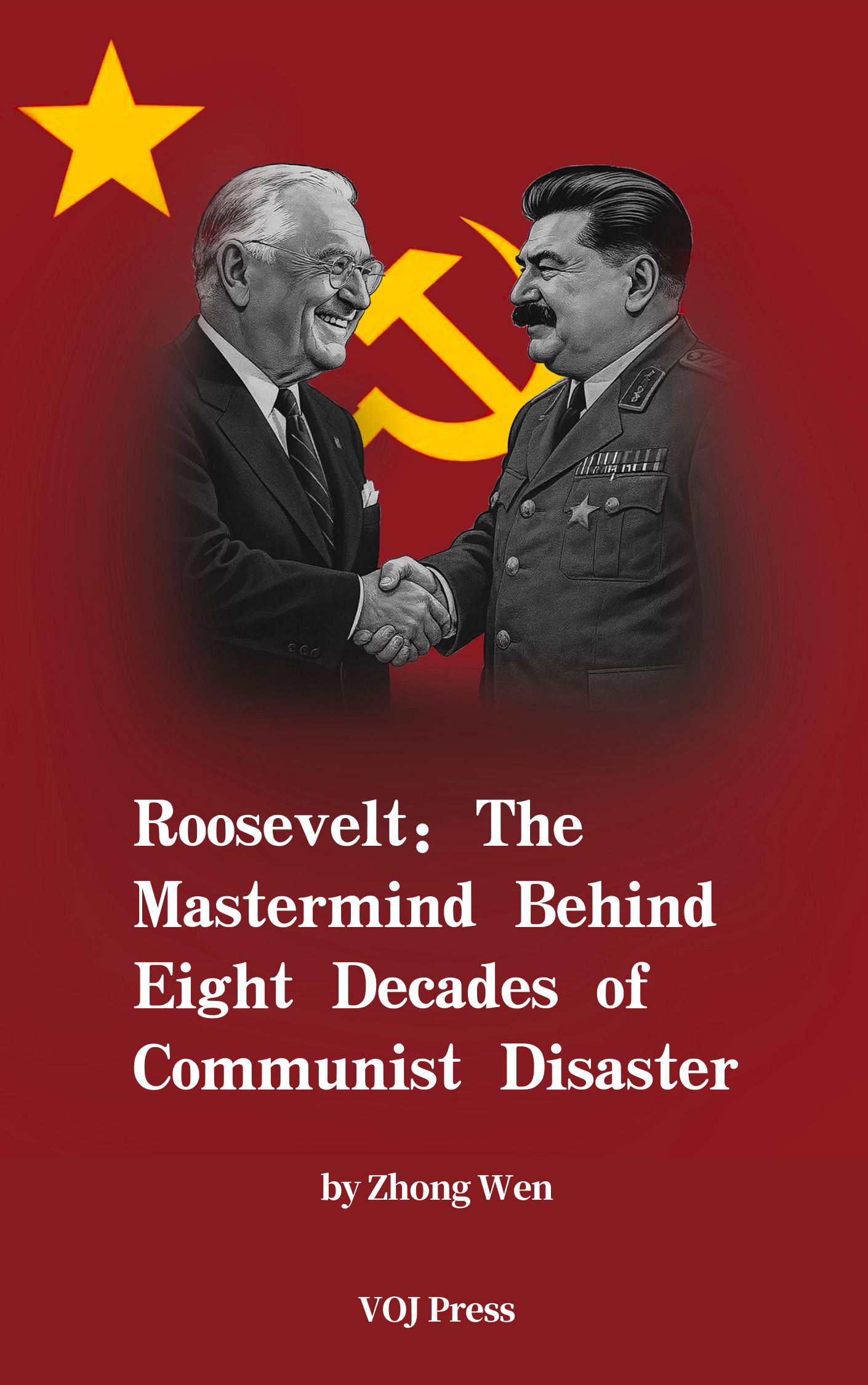
Chapter 09
Roosevelt is nothing but a Lucifer
II. Roosevelt Endorsed Stalin’s Massacres
On January 6, 1942, during his 10th State of the Union Address, President Franklin D. Roosevelt announced the United States’ military production goals for the year. These goals included 60,000 aircraft, 45,000 tanks, and 6 million tons of ships. General Lucius D. Clay, who was in charge of military procurement, expressed concern that these targets were too ambitious and might negatively impact the overall functioning of the U.S. economy.
In fact, General Clay’s concerns were overly cautious. Between 1941 and 1945, the United States produced a total of 300,000 aircraft (with 96,318 produced in 1944 alone), 88,400 tanks, 2.4 million trucks, 635,000 jeeps, 5,800 ships, and 40 billion rounds of ammunition. These achievements were credited to the United States“ powerful industrial capacity at the time, as well as the strong leadership behind the scenes by Deputy Secretary of War Robert Patterson, Secretary of Logistics Brian Somervell, and General Lucius Clay.
In November 1943, during the Tehran Conference, Roosevelt, Churchill, and Stalin met for a multilateral summit, where Stalin publicly expressed his gratitude and admiration for the massive material assistance provided by the United States to its allies during the war.
In January 1943, Roosevelt flew to Morocco to attend the Casablanca Conference. He disliked flying and, apart from a flight in November 1932 to Chicago after learning he had secured the Democratic presidential nomination, he had never flown during his presidency. However, for Stalin, he repeatedly broke this habit.
On November 11, 1943, Roosevelt boarded the presidential yacht Potomac to begin his transatlantic journey. Accompanying him were Secretary of Commerce Hopkins, Chairman of the Joint Chiefs of Staff Leahy, and others. After the yacht entered Chesapeake Bay, they transferred to the battleship Iowa, where Marshall, Ernest King, Arnold, and a large group of staff were already waiting. They were to cross the Atlantic and meet Churchill and Stalin in Tehran.
On November 20th, the Iowa arrived at the port of Oran in Algeria, where Roosevelt was greeted by General Dwight D. Eisenhower, Supreme Commander of the Mediterranean Allied Forces, and Roosevelt’s two sons, Elliott and Franklin Jr. All four of Roosevelt’s sons had entered military service after the outbreak of the war. That evening, Roosevelt dined with Eisenhower and others, and the next day he flew to Cairo, where he met with Churchill and Chiang Kai-shek.
Churchill insisted on meeting with Roosevelt before holding talks with Stalin, but Roosevelt worried this would give the impression of an exclusive Anglo-American clique, so he wanted the Chinese leader to be present as well. Churchill harbored prejudices against China and felt that the four-day Cairo Conference was a waste of time. Roosevelt, however, believed that “although China’s current military contribution is small, having hundreds of millions of Chinese people on the Allies’ side is very important and will have significant influence for the next 20 to 25 years.”
Roosevelt’s decision to stay at the Soviet embassy at Stalin’s invitation was part of his determination to establish a good personal relationship with Stalin himself. As Hopkins said, “He would not allow anything to interfere with his purpose. He spent his whole life dealing with all kinds of people, and Stalin was undoubtedly very different from the others.”
Churchill and Stalin had already met once in August 1942, and Churchill’s message to Roosevelt was that Stalin was a very shrewd person who was good at “quickly understanding new issues he encountered.” The U.S. ambassador to the Soviet Union told Roosevelt that Stalin was the most inscrutable and contradictory person he had ever met — very hard to figure out, extremely intelligent, and adept at grasping details. Hopkins, who went to Moscow in September 1941 to discuss aid legislation with Stalin, reported to Roosevelt that Stalin was a very matter-of-fact man who never said more than necessary, spoke without any formalities, was very practical, had a strong hand and strong grip. His voice was somewhat harsh but well-controlled, and everything he said was exactly what he intended to express.
Before Roosevelt had even settled into the Soviet embassy, Stalin came to visit him. Secret Service agent Mark Riley recalled: ‘stalin slowly approached with a smile. He was dressed in a simple khaki robe, with a Lenin medal pinned to his chest. When the two shook hands, Roosevelt said, ‘Glad to meet you; I’ve been looking forward to this.’ Stalin expressed his pleasure but regretfully said that military duties had prevented an earlier meeting.”
The first formal meeting of the “Big Three” took place in the conference room of the Soviet Embassy. Each country had four seats. Sitting to Roosevelt’s right was the U.S. Ambassador to the Soviet Union, Averell Harriman; to his left was the translator Polen, and next to Polen was Hopkins. Roosevelt accepted the invitation to chair the meeting. At his insistence, no formal agenda was set for this first meeting, so the atmosphere was relaxed.
The Tehran Conference covered a wide range of topics. Besides the important consensuses that were later announced, many other issues were also discussed. Regarding Germany, Stalin believed that Germany should be dismembered after the war. He said the Germans were very smart and could recover within 15 to 20 years, so merely disarming them was not enough. Roosevelt suggested dividing Germany into five parts, plus two special zones — Hamburg and the Ruhr — which would be under international control. Churchill thought the core issue was Prussia, so the primary task was to detach Prussia from Germany. Roosevelt disagreed with Churchill’s view and further proposed, “Germany should be divided into 107 provinces, so its threat to human civilization would be much smaller.”
Stalin also put forward a typically bloody communist proposal: he believed that all 50,000 officers of the German General Staff should be executed after the war. Roosevelt, surprisingly, concurred on this principle with the “Red Devil”: “Not 50,000, but 49,000.” Churchill immediately objected, his tone heated: “Britain will never allow such atrocities.”
That evening’s dinner was also hosted by Roosevelt. Just like in the White House, he mixed cocktails for the guests. Stalin took the drink Roosevelt prepared, sipped it lightly, and made no comment. Roosevelt asked how it tasted. Stalin replied, “Hmm, not bad, just a bit cool to drink.” Polen, Roosevelt’s interpreter, noticed that Stalin was not fond of drinking; he rarely drank vodka and preferred red wine from his homeland, Georgia.
Roosevelt did not participate in the discussions regarding the Polish issue. Churchill believed it was their postwar responsibility to rebuild a strong Poland, as the war began with Germany’s invasion of Poland. He also suggested retaining the lands the Soviet Union gained in 1939 (east of the Curzon Line), then shifting Poland’s borders westward and compensating the Soviet Union with territory taken from eastern Germany. Later, when Roosevelt discussed the matter with Stalin, he admitted he had to consider the feelings of the 6 to 7 million Polish Americans at home. If the war had not ended by 1944, he would have to consider running for re-election. Publicly taking a stance on Poland could cause him to lose the support of Polish Americans.
Stalin understood Roosevelt’s predicament and said he would not cause trouble over the issue. He also wished Roosevelt success in his re-election bid, believing it would be good for the whole world. It is worth noting that this was the first time Roosevelt mentioned his intent to seek a fourth term.
Obviously, he was seeking Stalin’s support for his re-election, effectively inviting Soviet interference in American domestic politics! If we talk about “Russian collusion,” Roosevelt is undoubtedly the first.
 正义钟声 Voice of Justice