
Roosevelt: The Mastermind Behind Eight Decades of Communist Disaster
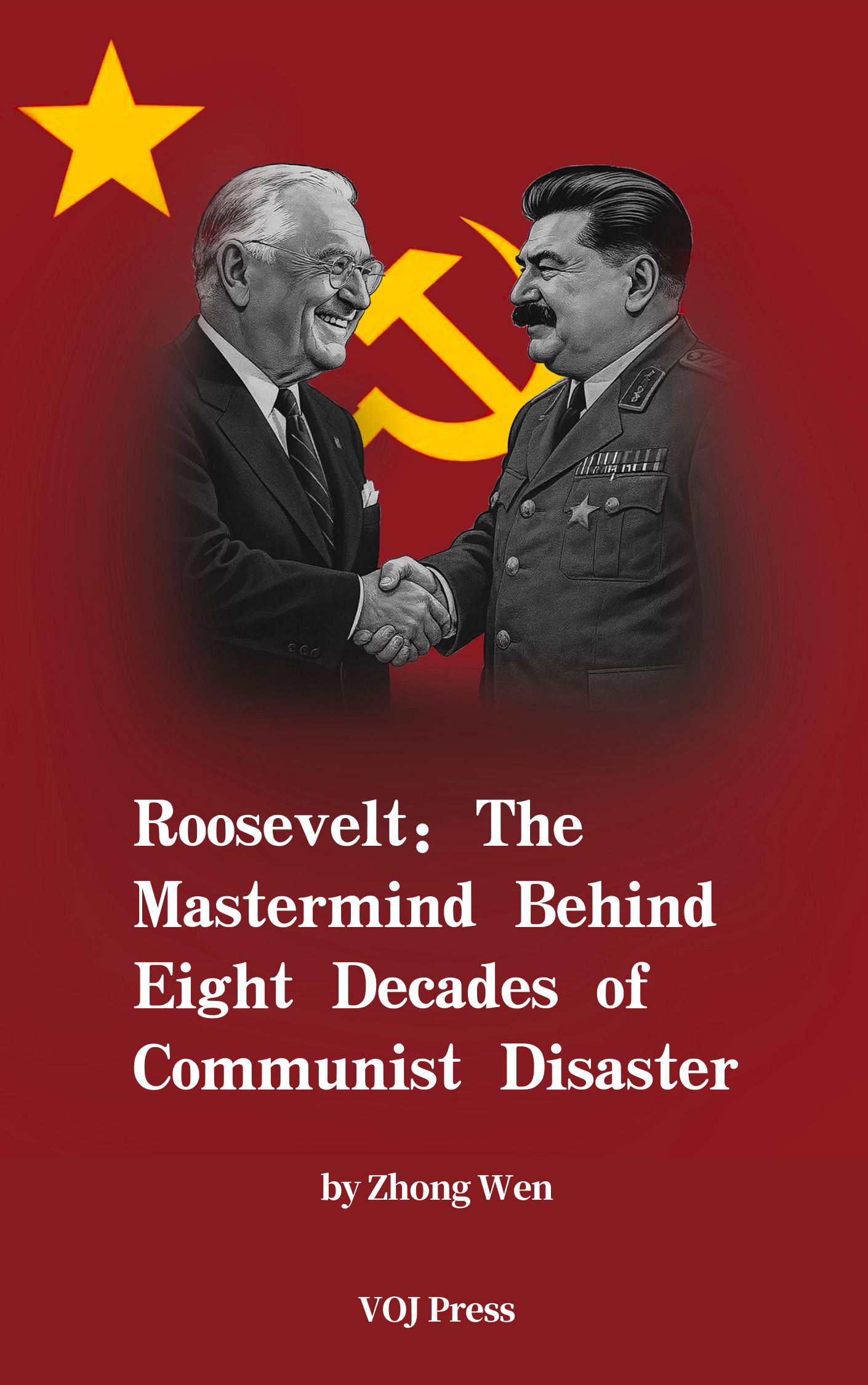
Chapter 08
Roosevelt Fed Stalin and Made Him Smile
IV. The Lend-Lease Act Created the Socialist Bloc
In April 1945, shortly after the death of President Franklin D. Roosevelt, British Prime Minister Winston Churchill delivered a speech in the House of Commons in which he praised Roosevelt, saying that he “conceived that extraordinary plan of aid called Lend-Lease, which will go down in history as the most unselfish and unsullied act of any one nation in all history.” What pleased American leaders most was that the Lend-Lease Act achieved its intended goal: the defeat of Hitler.
However, Churchill — the British colonial figure involved in the partition of China — utterly failed to mention that the Lend-Lease Act had nurtured one of history’s greatest monstrosities: the socialist bloc!
The socialist bloc controlled by the Soviet Union was essentially a replica of Hitler’s Third Reich, but with even greater toxicity and deeper harm. By the late stages of World War II, with Germany’s defeat inevitable, why did Roosevelt continue to provide massive aid to the Soviet Union? Some have offered explanations from military, political, and economic perspectives.
Military Reasons
First and foremost, a major reason for the United States providing aid to the Soviet Union was military necessity. In the latter stages of World War II, the Soviet Union faced immense pressure from the German army on the Eastern Front, yet they were able to hold their ground and eventually achieve victory. This success was partly due to the substantial assistance received from the United States. The aid included tanks, airplanes, artillery, ammunition, and other military equipment. The arrival of these supplies enabled the Soviet Union to better resist German attacks and secure victories during their counteroffensive.
Political Reasons
Secondly, another reason the United States provided aid to the Soviet Union was political necessity. During World War II, the Soviet Union and the United States were allies, jointly fighting against Nazi Germany. However, after the war, relations between the Soviet Union and the United States began to tense. The U.S. feared that the Soviet Union would expand its territory and attempt to establish communist regimes in Europe and Asia. Therefore, the U.S. hoped to ease tensions between the two countries by providing aid to the Soviet Union and to prevent Soviet expansion of influence in the postwar world.
Economic Reasons
Finally, another reason the United States provided aid to the Soviet Union was economic necessity. During the war, the Soviet economy suffered tremendous damage. They needed large amounts of materials and funds to rebuild their economy and infrastructure. By providing aid to the Soviet Union, the U.S. not only helped rebuild their economy but also opened up a new market for American goods. Selling materials and equipment to the Soviet Union allowed the United States to gain substantial economic benefits.
In summary, the reasons for the United States providing aid to the Soviet Union were multifaceted. Militarily, it enabled the Soviets to better resist the German attacks and achieve victory in their counteroffensive. Politically, it helped ease tensions between the U.S. and the Soviet Union and prevented Soviet expansion of influence in the postwar world. Economically, it provided a new market for the American economy and brought substantial economic benefits.
However, the above views do not take into account the pathological factors of Roosevelt himself, who suffered from syphilis. Otherwise, how can the subsequent Cold War be explained? Simply put, judging from the Cold War that followed, the support given to the Soviet Union under the Lend-Lease Act was undoubtedly a grave mistake!
Especially considering that by 1943 the Soviet Union had surpassed Germany to become the world’s second-largest military power after the United States, and given the ideological opposition between the USSR and the US, why did Roosevelt continue to support the Soviets? Was it to destroy Germany at all costs by backing the Soviet Union, or was it to allow the USSR to rise as a Cold War rival to the US? Hitler’s fascism was certainly evil, but Stalin’s aggressive expansion into Eastern Europe and Asia, along with the Great Purge, were no less evil acts.
Roosevelt seemed to harbor a strong hostility toward Germany. After Japan bombed Pearl Harbor, he even pursued a “Europe first” policy (which many Americans, including MacArthur, opposed in favor of focusing on Asia first). Moreover, Roosevelt intended to use the “Morgenthau Plan” to drain Germany’s resources, though both Britain and the Soviet Union opposed that plan …… So why was Roosevelt so hostile to Germany?
Did Roosevelt truly hate Germany? Not necessarily. He feared Germany. Both Germany and the United States were rising powers born from the Second Industrial Revolution, and for America, Germany’s potential and military strength were far greater than the aging powers of Britain and France. Germany’s latent power also far exceeded that of Britain and France. Therefore, the US was determined to defeat Germany and prevent its resurgence.
However, it seems Roosevelt’s grand plan failed — he used American power to defeat one German Hitler, but in the process helped cultivate a whole group of Soviet Hitlers. Roosevelt’s cunning plan to bring peace was: “One Hitler falls, and millions of Hitlers rise!”
 正义钟声 Voice of Justice