
Roosevelt: The Mastermind Behind Eight Decades of Communist Disaster
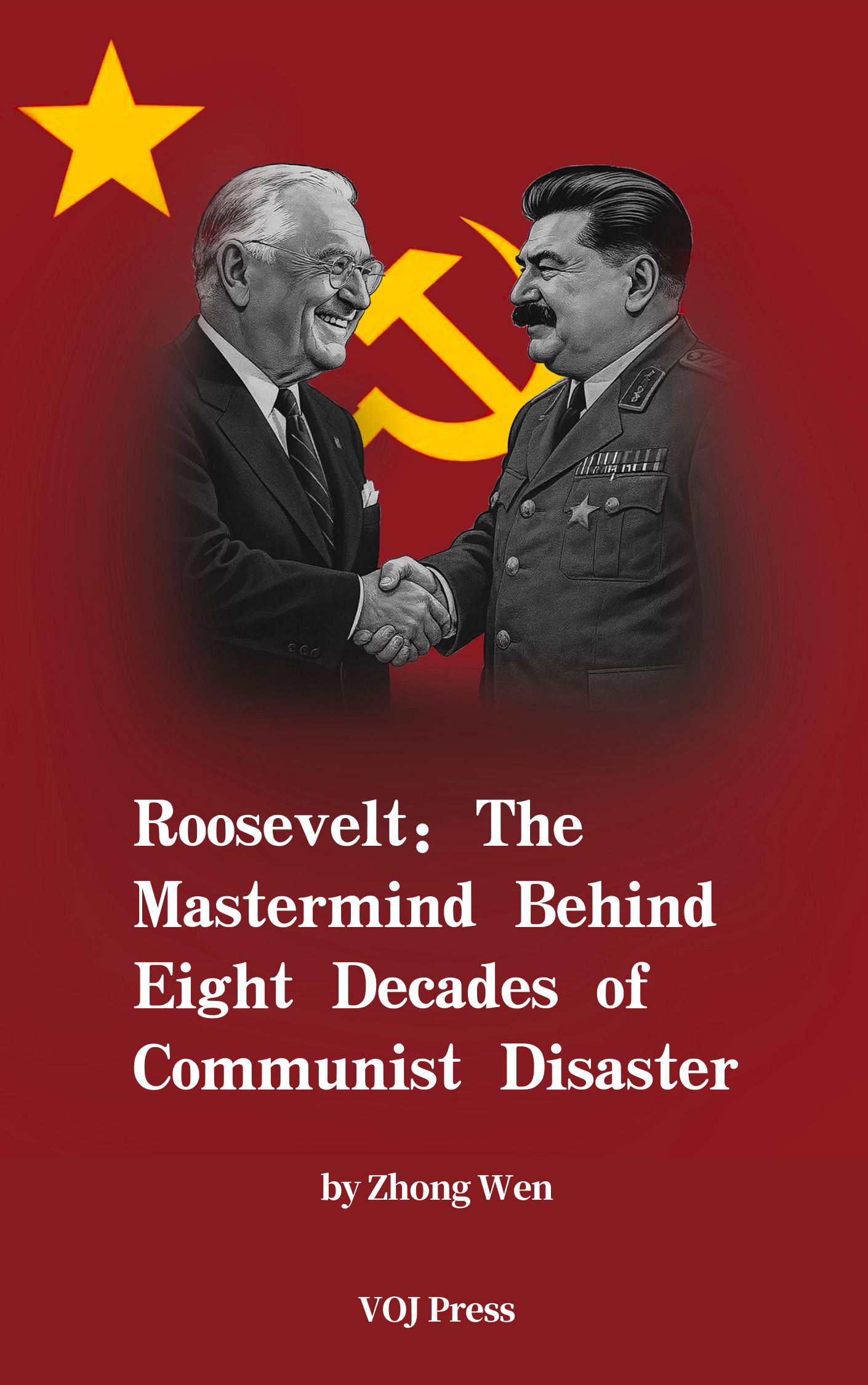
Chapter 07
Roosevelt’s Re-election: “I Won’t Run Unless Drafted”
In 1936, Roosevelt promised, “I will not run again unless the party drafts me.” However, his supporters amplified their voices at the Democratic National Convention, chanting, “We want Roosevelt! We want Teddy!” The convention quickly nominated him. Although Roosevelt promised to run only if the party called him, he ultimately broke his word and seized control of both the party and the nation. In this sense, Roosevelt’s New Deal shares common era characteristics with communism and fascism.
I. The Two Poles of Roosevelt’s New Deal
A keen literary critic once commented on Shakespeare’s famous play King Lear: ‘the true greatness of this work lies in how it maximally amplifies its own flaws …… These flaws exist between certain specific scenes and the perfect state they might have achieved.” Similarly, when evaluating the New Deal, one should not focus solely on its achievements but must analyze it comprehensively.
Ninety years have passed, and when evaluating the New Deal, people certainly should not focus solely on its achievements. Greater attention ought to be paid to the profound impact of the New Deal’s flaws on the world and to striving to understand the deeper causes behind these shortcomings. …… While fully recognizing the accomplishments of the New Deal, one must also acknowledge its defects and limitations, and diligently explore the complex interplay between political democracy and personal dictatorship, as well as between political democracy and racial prejudice.
In this discussion, traditional approaches that sharply separate domestic and foreign policy should be abandoned. Instead, efforts should be made to examine the borderline or overlapping areas where liberal civilization exists and develops. This will enable a deeper investigation into how narrow nationalist pdolitical orders, which run counter to liberal democracy both at home and abroad, influenced the decision-making processes of the New Deal.
One serious consequence of the New Deal was the widespread atmosphere of tension and fear, plunging the entire world into a moment of grave crisis. The Greeks often used terms from law, theology, and medicine in their writings to describe the profound impact such crises have on people making momentous decisions. ‘these critical decisions include choices between right and wrong, between heaven and hell, and between life and death.” As economic historian Alexander Gerschenkron stated during World War II, “If Germany had won the war, the reconstruction of an internationally engaged order among nations would have been shattered; what would remain would be a hierarchical pyramid established by a newly risen pharaoh-like dictator.”
However, in the 1930s and 1940s, humanity had already lost the ability to make perfect choices. The Manichaean philosophy, originating in ancient times, which upheld clear and uncompromising distinctions between right and wrong, good and evil, could no longer be sustained. There were no longer any absolutely flawless and perfect partners in the world. Without pragmatic compromises that do not violate moral standards, it became extremely difficult for people to reach decisions on major issues.
At that time, people were far from certain whether the constitutional system of the United States possessed the means to meet the challenges of the era and make effective decisions. As early as 1940, before the flames of war had spread beyond Europe, the renowned Harvard political scientist Pendleton Herring described the challenges facing the world as follows:
We face a world where constraints, organization, and concentration of power take precedence over individual freedoms and limits on governmental authority. Indeed, solving various domestic economic problems requires public policy to maintain a high degree of continuity and consistency. However, the original design of government did not encompass such complex functional demands. So, what can we do with the existing government burdened with such heavy responsibilities? Can our government withstand the challenges of totalitarianism and uphold the path of liberal democracy? Does the separation of powers between the legislature and the executive align with the needs of effective governance? In pursuing strong leadership authority, might we unwittingly fall into the dangers of dictatorship?
Regarding the relationship between liberal democratic politics and the inner fears of the people, during times of crisis, the New Deal implemented emergency measures to exert control over frontier regions where certain freedoms were enjoyed but in other respects freedoms were lacking. In examining how the New Deal responded to such challenges, it is necessary not only to consider the achievements attained but also to delve deeply into the costs and sacrifices involved in implementing these measures.
 正义钟声 Voice of Justice