
Roosevelt: The Mastermind Behind Eight Decades of Communist Disaster
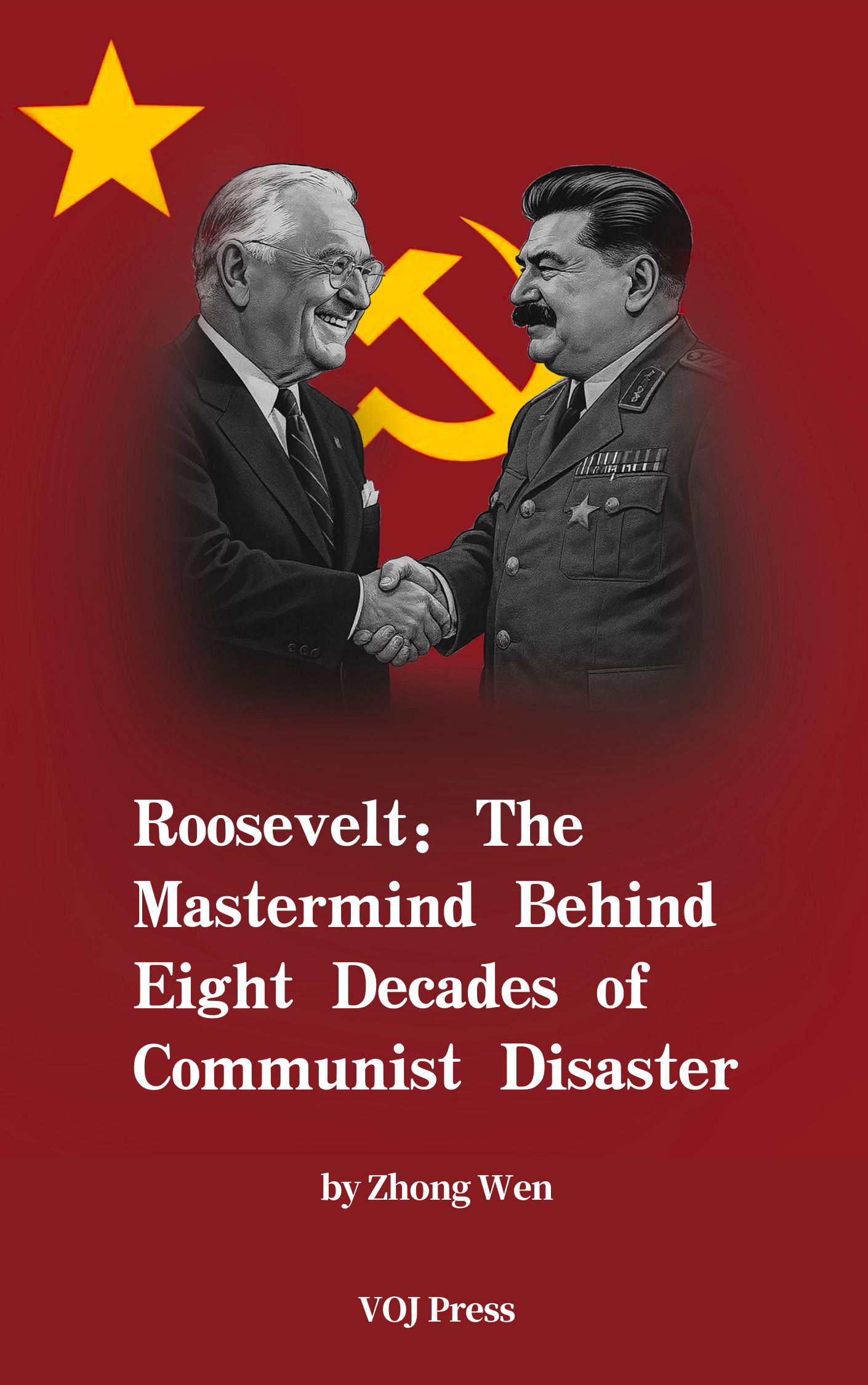
Chapter 05
Roosevelt’s Alliance with the Soviet Union
V. The USSR slipped into the League of Nations
By 1931, people around the world were beginning to seriously wonder: had Western liberty failed, and was the slave system of the Soviet Union about to triumph?
In 1933, Soviet and American officials met in Washington to negotiate the reestablishment of diplomatic ties. Soviet Foreign Minister Maxim Litvinov held talks with President Roosevelt, Secretary of State Hull, and Acting Secretary of War Morgenthau. Both sides agreed to respect each other’s political systems and promised not to interfere in each other’s internal affairs — essentially granting legitimacy to Stalin’s dictatorship.
On November 16, 1933, thanks to Roosevelt’s efforts, the United States formally restored diplomatic relations with the Soviet Union. This endorsement by the world’s leading democracy paved the way for the USSR’s rise in global status. Just one year later, in 1934, the Soviet Union joined the League of Nations — and was even granted a permanent seat on its Council, effectively bringing the vampire into the castle.
This was because, upon taking office in 1933, Franklin D. Roosevelt immediately reached out to Stalin to establish diplomatic relations, thus reversing the long-standing U.S. policy since President Woodrow Wilson had refused to recognize the Bolshevik regime and even sent troops to intervene against Soviet rule. Since 1917, despite repeated Soviet requests for diplomatic recognition, every U.S. president had rejected them — until Roosevelt. He was different. He did not regard Soviet Russia as an enemy, but as a friend.
Roosevelt changed everything. He implemented a three-pronged policy, which mainly included:
The first category involved measures to boost consumption. For example: Implementing “work-for-relief” programs to stimulate demand and reduce unemployment; Launching large-scale public works projects, including the construction of highways, railroads, airports, hydroelectric power stations, and afforestation campaigns; Improving rural infrastructure throughout the country; Raising minimum wage standards for workers, setting limits on working hours, and establishing better labor conditions across industries..
The second category focused on reducing production. For example: Limiting agricultural output to stabilize prices and avoid overproduction; Restricting industrial production capacity through government planning and regulation; Reducing working hours by mandating a 40-hour workweek and widely implementing the 8-hour workday; Introducing paid holidays and encouraging more structured leave policies; Cracking down on child labor, while simultaneously expanding enrollment in primary, secondary, and higher education institutions — a strategy that indirectly reduced the labor supply and eased pressure on the job market.
The third category aimed to strengthen government oversight. For example: Enhancing regulatory control over banks to restore public confidence and stabilize the financial system; Nationalizing certain key industries to place them under public control; Monitoring corporate production levels and regulating wage standards for workers to prevent exploitation and economic instability.
The core logic behind all these reform measures was clear: to reduce production and increase consumption, thereby preventing excessive competition that could lead to overproduction and economic imbalance. The goal was to shift from a market saturated with surplus to one characterized by scarcity, thus avoiding the kind of relative-overproduction crisis that had triggered the Great Depression.
This kind of “New Deal” helped Roosevelt buy votes and secure re-election. No wonder former President Herbert Hoover criticized it as “a raid on the rich” and “a socialist heresy.” Some newspapers even claimed that Roosevelt was feasting on “roast millionaire,” and that the Social Security Act was plagiarized from the Communist Manifesto.
See? The American people saw through it clearly — Roosevelt was the first man in America to feast on “blood-soaked bread”. His entire reform package was nothing more than a direct copy of Stalin’s demonic model — a stolen path from the Communist Party.
Facing criticism from free-market advocates, Roosevelt — who was already suffering from syphilis — resorted to saying: “In the summer of 1933, an elderly gentleman wearing a silk hat accidentally fell into the sea from a breakwater. He couldn’t swim. A friend jumped in after him and saved his life — but the silk hat was washed away by the waves. When the old gentleman regained consciousness, he was full of gratitude and praised his friend for saving his life. But now, three years later, the gentleman lashes out at his friend — for losing his hat.”
Through this story, Roosevelt attempted to deceive the American people: that the essence of the New Deal was to protect their fundamental interests — the “life-saving act ”— even if it meant sacrificing small, immediate goals — like losing the “hat.” This is how Roosevelt played both sides, justifying his policies as noble while continuing to buy votes and manipulate public opinion.
Zhong Wen remarked: In Caught Between Roosevelt and Stalin: America’s Ambassadors to Moscow, author Dennis J. Dunn records that as early as 1934, the U.S. ambassador to the Soviet Union warned Roosevelt that ‘stalin is dishonest, a mass murderer, utterly untrustworthy,” and urged a diplomatic break and withdrawal of the embassy. Roosevelt refused to listen, keeping Stalin in reserve “just in case.” From then on, every U.S. ambassador to Moscow opposed Roosevelt’s pro-Soviet policies, but Roosevelt ignored them all — because he needed the existence of a devil like Stalin to make his own New Deal appear moderate by comparison.
 正义钟声 Voice of Justice