
Roosevelt: The Mastermind Behind Eight Decades of Communist Disaster
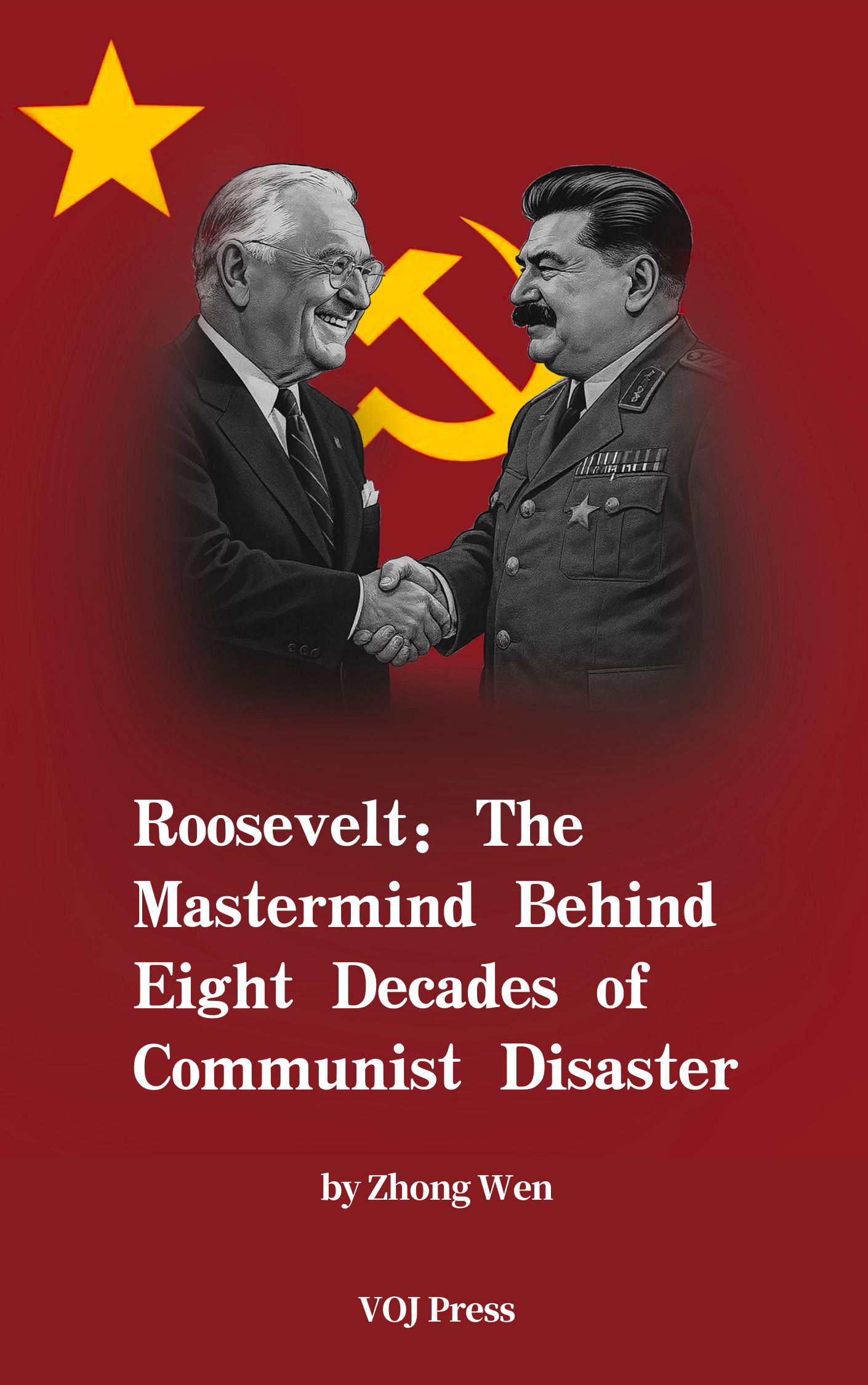
Chapter 05
Roosevelt’s Alliance with the Soviet Union
II. Roosevelt Helped Enable the Rise of the Soviet Union
Why did Roosevelt take the initiative to establish diplomatic relations with the Soviet Union? Why did he, on multiple occasions, break with precedent and bypass traditional American reservations to intervene directly? And why, after establishing ties, did he not immediately exploit this diplomatic achievement for political gain? Some explanations suggest that Roosevelt simply enjoyed being personally involved in foreign affairs. Others argue that he was a new president eager to make a mark in diplomacy, or that he sought to systematically expand the powers of the presidency.
While the above explanations all hold merit, there are additional factors worth considering. One is that Roosevelt’s policies closely aligned with Keynesian economic thought, which emphasized the active role of government in managing the economy. From this perspective, the deeply flawed Soviet model could be strategically useful to the United States — not as a blueprint, but as a political and rhetorical foil. By contrasting his own New Deal with Soviet-style central planning, Roosevelt could justify greater government intervention while portraying it as moderate and pragmatic. In doing so, he effectively created more space — both politically and in public opinion — for his administration to “extract” support for expanded federal programs.
Second, the United States — surrounded by oceans and lacking any natural enemies in its immediate vicinity — has often been described as a ‘two-ocean island”. This geographic advantage allowed it to adopt and amplify aspects of Britain’s traditional grand strategy, particularly the principle of “offshore balancing”. As an island nation, Britain mastered the art of intervening selectively in continental affairs. Whenever a dominant power emerged in Europe, Britain would align with rival states to suppress it — such as forging coalitions to defeat Napoleonic France or forming the Entente to counter an ambitious Germany — while maintaining a flexible and relatively detached position itself. Roosevelt’s ambiguous and ambivalent approach toward the Soviet Union can be seen as a manifestation of this same strategic logic in a new global context.
Third, around 1933, Britain was experiencing further decline, and its global hegemony was visibly slipping away. Although the United States had become the world’s leading economic power, it had remained largely detached from the post–World War I international order.
The global financial crisis of 2008 is often compared to the Great Depression that gripped the world from 1929 to 1933.
This perspective allows us to better understand the historical dynamics of the Great Depression. Just as the 2008 subprime mortgage crisis paved the way for the rise of Communist China, the 1929 economic collapse created an opening for the rise of various authoritarian regimes.
In fact, in 1929, one major country not only avoided crisis but experienced rapid economic growth: the Soviet Union — at the time the world’s only social-fascist state. This parallels how Communist China profited significantly from the global financial crisis of 2008.
Looking back to 1921, Russia had just emerged from seven years of war — World War I and a brutal civil war. With the introduction of the New Economic Policy (NEP), the Soviet Union restored its industrial and agricultural output to pre-World War I levels by 1926.
In 1928, the USSR launched its first Five-Year Plan. In order to fund rapid industrialization and export surplus grain, the regime began the mass persecution of peasants and deliberately engineered famine. The over-export of grain — what might be called “bread soaked in blood” — to Western markets played a role in triggering the global economic crisis of 1929.
A similar pattern emerged decades later. After joining the World Trade Organization in 2002, Communist China flooded global markets with cheap, exploitative ‘sweatshop” goods, a factor some analysts believe contributed to the U.S. subprime mortgage crisis.
While the free world was consumed by economic turmoil in 1929, the closed-off, authoritarian Soviet Union stood at the height of its totalitarian consolidation. Ironically, the West’s economic collapse became the Soviet Union’s opportunity to rise. Eighty years later, a near-identical dynamic appeared in mainland China during the 2010s.
 正义钟声 Voice of Justice