
Roosevelt: The Mastermind Behind Eight Decades of Communist Disaster
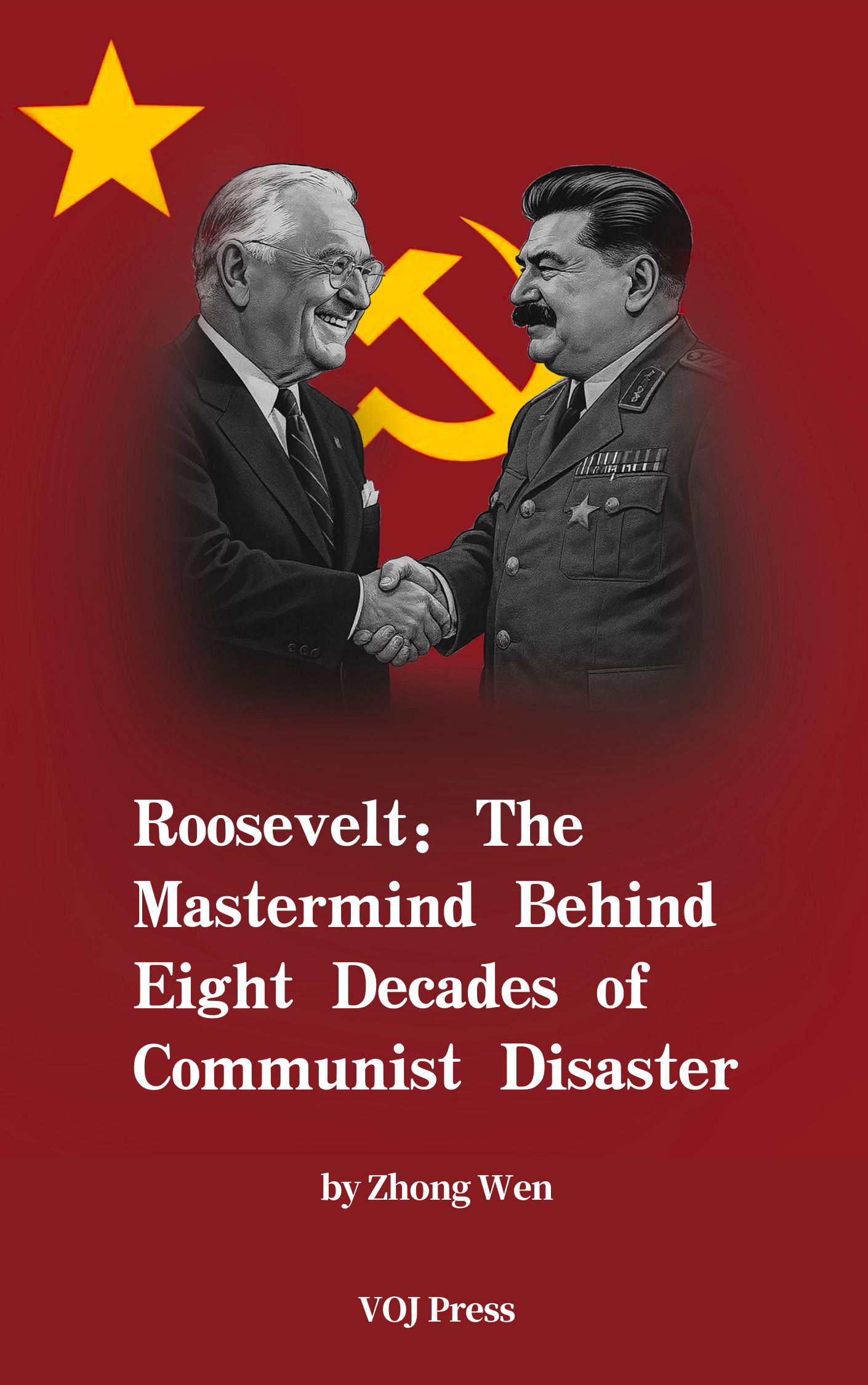
Chapter 04
Roosevelt’s New Deal as Slogans
The so-called “New Deal” under Roosevelt was merely a slogan. The book The Lies of the Roosevelt New Deal argues that most of Roosevelt’s policies were actually derived from Hoover, but Roosevelt insisted on going his own way, regardless of the side effects, ultimately turning good intentions into harmful results. The current Biden administration is said to be following in Roosevelt’s footsteps — appeasing communists abroad and using government spending to buy votes at home — “exploiting crises to seize control of the nation.”
I. Roosevelt’s Tendency for Self-Promotion
As early as 2010, The Lies of the Roosevelt New Deal — the Chinese edition of New Deal or Raw Deal? How FDR’s Economic Legacy Has Damaged America — was published by Huaxia Publishing House. Readers may want to take a look. The author of this book is American economic historian Burton W. Folsom. In it, he offers sharp and original criticism of Roosevelt’s New Deal, using a wealth of facts to argue that the policies of FDR’s administration during the Great Depression actually delayed economic recovery — and that they continue to have negative effects on the United States even today.
During the global financial crisis that swept the world in 2008, Western countries, in an effort to save their economies, widely followed Roosevelt’s example by adopting government intervention policies. Many of today’s large-scale government spending programs in the United States — such as agricultural subsidies and minimum wage laws — can trace their roots back to the New Deal. In reality, these measures have hindered economic growth, leading to declining productivity and rising unemployment.
Roosevelt’s authoritarian approach to the presidency permanently altered the political landscape of the United States. He manipulated public opinion, causing American citizens to unknowingly become accomplices in the economic stagnation of the 1930s. More than 60 years after Roosevelt’s death, Barack Obama echoed his legacy with the slogan “We believe in change,” and the “new” New Deal policies he implemented were, in fact, a continuation of Roosevelt’s original agenda. To this day, both the United States and countries around the world remain unable to escape the profound negative impact of Roosevelt’s political legacy.
Roosevelt was the first to use the U.S. Internal Revenue Service as a tool for political retaliation. He manipulated emergency relief funds, government spending, and the allocation of national projects to punish opponents and reward supporters — employing political maneuvering to consolidate power.
As a result, during Roosevelt’s first two terms, the average unemployment rate remained above 12%. By the late 1930s, the United States’ industrial output and national income had declined by nearly one-third. Even by 1940, the stock market had yet to fully recover from the crash on Black Tuesday in October 1929.
In the eight years following the 1930s, the U.S. national debt grew more than it had in the entire previous 150 years combined. When Franklin D. Roosevelt was elected president in 1933, the average life expectancy in the United States was 63.3 years. Throughout the 1930s, the suicide rate remained high. By 1940, after seven years of the New Deal, average life expectancy had actually declined to 62.9 years. In terms of four key indicators — industrial output, unemployment, national debt, and taxation — the United States performed extremely poorly during the 1930s. In fact, most European countries handled the Great Depression more effectively than the U.S. did.
Eager to find a way to revive the economy, Roosevelt clung tightly to the idea of insufficient consumption, making it a key weapon in his presidential campaign. He used the promise of addressing under-consumption to counter Hoover’s policies. In a speech in Atlanta, Roosevelt spoke about low wages, inadequate consumer purchasing power, and the need for government intervention to inject vitality into a chaotic economy and to create a “more equitable system of national income distribution.”
Zhong Wen remarked: I believe this book helps support the theme I’ve been advocating — “Roosevelt Was the Culprit Behind 80 Years of Global Misery — and Biden Is Now Rescuing Xi Jinping Again” — and is therefore worth reading. Overall, today’s United States is sliding rapidly toward socialism, with a deepening sense of moral decay. Understanding the “Roosevelt phenomenon” is useful in tracing the trajectory of America’s social and political transformation.
 正义钟声 Voice of Justice