
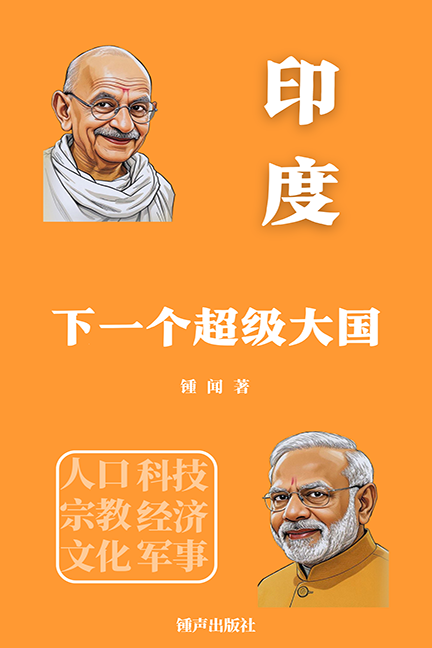
India: The Next Superpower?
Appendix: Biography of India’s Current Prime Minister Narendra Modi
Narendra Damodardas Modi, the current Prime Minister of the Republic of India, is one of the most influential and controversial figures on the contemporary Indian and global political stage. Known for his strong leadership style, assertive Hindu nationalist stance, and ambitious economic and social reform agenda, Modi commands substantial domestic support while attracting widespread international attention. His political trajectory—from the son of a humble tea seller to the leader of the world’s largest democracy—reflects both the complexity and transformative potential of Indian society. This biography aims to trace his life, political philosophy, major policies, and the broader impact of his leadership on India and the world.
I. Early Years and Ideological Formation
Narendra Modi was born on September 17, 1950, in Vadnagar, Mehsana district, Gujarat, in western India. His family belonged to the “Ghanchi” caste, traditionally of low social standing, engaged in oil-pressing businesses, and was financially modest. Modi was the third of six children. His childhood was marked by hardship, and he helped his family run a tea stall at the Vadnagar railway station—a formative experience later instrumental in cultivating his “son of the people” image.
Although reportedly an average student, Modi showed early interest in debate and drama. Crucially, he became associated with the Rashtriya Swayamsevak Sangh (RSS) at a young age. Founded in 1925, the RSS is an organization promoting Hindu culture and values with the goal of building a strong, unified India. It serves as the ideological backbone and parent organization of the Bharatiya Janata Party (BJP).
Around age eight, Modi began attending daily RSS gatherings (Shakha). The discipline, communal life, and emphasis on Hindu traditions profoundly shaped his early worldview. He studied Hindu texts, Indian history, and the RSS concept of Hindutva, emphasizing India’s cultural and national identity rooted in Hinduism. This period laid the foundation for his later Hindu nationalist stance.
After completing school, Modi did not immediately enter full-time politics. At 17, he left home and traveled across India, visiting various religious sites, including Himalayan retreats. By age 20, he returned to Gujarat and became a full-time RSS pracharak (propagator), committing to a life of celibacy and simplicity while working extensively in organizational and community engagement. This role honed his communication skills, grassroots understanding, and organizational capabilities.
During India’s Emergency (1975-1977) under Prime Minister Indira Gandhi, civil liberties were suspended and opposition suppressed. The RSS was banned, and Modi actively participated in underground resistance, distributing materials, organizing secret meetings, and supporting detained members. These experiences strengthened his resilience, political acumen, and stature within the RSS.
II. Entry into Politics and Rise in Gujarat
After nearly two decades as an RSS pracharak, Modi’s political talent became evident. In 1985 (or 1987), he formally joined the Bharatiya Janata Party (BJP) through RSS referral, transitioning from social organizer to professional politician.
Initially serving as BJP’s organizational secretary in Gujarat, Modi coordinated party affairs and elections. He helped the BJP achieve significant gains in the 1990 Gujarat legislative elections and later in a coalition with Janata Dal. In 1995, he played a key role in BJP’s first independent governance of Gujarat, and subsequently was appointed BJP national secretary, expanding his influence across multiple states. He contributed to the 1998 national election victory under Atal Bihari Vajpayee.
Turning point (2001): In January 2001, Gujarat suffered a devastating earthquake. The then-Chief Minister Keshubhai Patel faced criticism for poor disaster response. The BJP central leadership appointed Modi as Chief Minister on October 7, 2001, his first administrative office.
Modi focused on post-earthquake reconstruction and implemented the “Gujarat Development Model”, emphasizing efficiency, transparency, investment attraction, and infrastructure development. He launched the Vibrant Gujarat global investors’ summit, boosting industrial growth and foreign investment. Gujarat’s economy thrived under his leadership, with low unemployment and significant agricultural progress, notably in cotton and irrigation.
2002 Gujarat Riots: On February 27, 2002, a train carrying Hindu pilgrims in Godhra was attacked, resulting in 59 deaths, sparking widespread Hindu-Muslim violence. Over a thousand people, mostly Muslims, were killed, and tens of thousands displaced. Modi’s government faced domestic and international criticism for delayed or insufficient response. The Supreme Court-appointed Special Investigation Team (SIT) later found insufficient evidence to prosecute him directly. Despite controversy, Modi’s governance record and appeal among Hindu voters enabled him to win 2002, 2007, and 2012 Gujarat elections, serving nearly 13 years as Chief Minister.
III. Ascension to National Leadership
Modi’s stature in BJP grew steadily. By 2013, he was chosen as the party’s prime ministerial candidate for the 2014 national elections. His campaign centered on “Development (Vikas), Good Governance (Sushasan), and Nation First”, promising to overcome policy paralysis and corruption while revitalizing India’s economy and international stature.
Modi leveraged technology and social media, launching initiatives like “Chai Pe Charcha” to connect directly with citizens, while massive rallies created the so-called “Modi Wave”.
In April–May 2014, BJP won a historic victory, securing 282 Lok Sabha seats, the first single-party majority in three decades. Modi won in both Varanasi and Vadodara, and on May 26, 2014, he was sworn in as India’s 14th Prime Minister.
IV. Prime Ministerial Tenure: Policies and Challenges
First Term (2014–2019):
Economic and social reforms:
Make in India: Promote domestic manufacturing and attract investment.
Skill India: Enhance workforce skills at scale.
Digital India: Digitalize government services and expand internet access.
Startup India: Support entrepreneurship and innovation.
Financial and tax reforms:
Jan Dhan Yojana: Financial inclusion for previously unbanked households.
Demonetization (2016): Removal of high-denomination notes to combat black money.
Goods and Services Tax (GST, 2017): Unified national indirect tax system.
Social programs:
Swachh Bharat Abhiyan: Nationwide sanitation and public health initiative.
Ujjwala Yojana: Free LPG connections for poor households.
Foreign policy and national security:
Active multilateral diplomacy, emphasizing Neighborhood First.
Strengthened strategic partnerships with the U.S., Japan, Australia; managed tensions with China.
Tough stance on Pakistan; surgical strikes in 2016.
Second Term (2019–2024):
Re-election marked by demonopolized BJP/NDA victory.
Major policies:
Revocation of Article 370 in Kashmir.
Citizenship Amendment Act (CAA, 2019): Controversial extension of citizenship for specific non-Muslim minorities from neighboring countries.
COVID-19 response: lockdowns, economic stimulus, vaccination program.
Infrastructure development, agricultural reform attempts, economic stabilization.
Strategic Indo-Pacific partnerships amid global geopolitical tensions.
Third Term (2024–present):
BJP/NDA again secures majority; Modi begins third term.
Focus areas: economic development, infrastructure, digital transformation, global positioning, climate change, social cohesion, regional security.
V. Leadership Style, Personal Traits, and Controversies
Modi is known for strong, centralized leadership, personally driving major policy agendas. Decisions are rapid and often confidential, leading to efficiency but criticism of concentrated power.
He possesses charismatic communication skills, engaging citizens via radio program “Mann Ki Baat” and social media.
His Hindutva ideology informs many policies, attracting support among Hindu voters while raising concerns about minority rights.
Media relations are complex, with allegations of press pressure and self-censorship, while supporters argue he democratizes public discourse.
Policy controversies (e.g., demonetization, social reforms) and concerns over democratic health persist, but Modi and his supporters maintain that his actions aim to build a strong, prosperous, globally respected India.
VI. Summary and Outlook
Narendra Modi is arguably the most transformative Indian political figure of the 21st century. Rising from humble origins, he has leveraged personal determination, organizational skill, and mass appeal to lead India through three consecutive terms as Prime Minister.
Under his leadership, India has seen significant economic, infrastructural, digital, and international profile improvements, alongside ambitious social welfare programs benefiting hundreds of millions. He blends a development-focused agenda with national pride, inspiring optimism for India’s future.
However, his tenure is accompanied by social and political controversies, particularly regarding Hindu nationalism, minority rights, democratic institutions, and social inclusivity. The long-term effects of sweeping reforms remain under scrutiny.
Modi’s political legacy will likely be complex and multifaceted, potentially remembered both as a modernizing force and a polarizing figure. His vision for a “New India” and its inclusivity will shape both his historical standing and India’s trajectory in South Asia and the global arena.
THE END
 正义钟声 Voice of Justice