
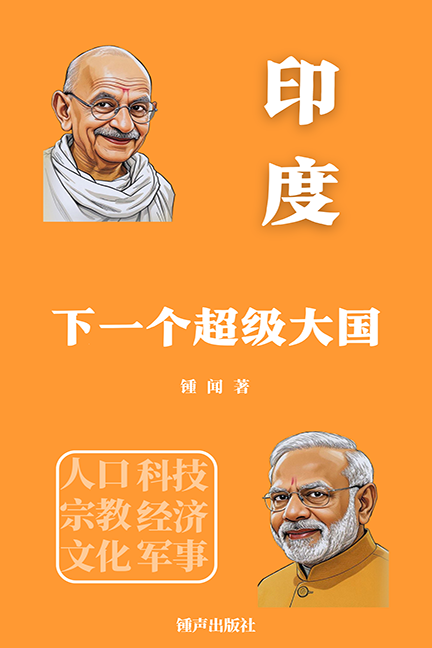
India: The Next Superpower?
Chapter 4: The Imprint and Mobility of the Caste System — The Tension Between Tradition and Modernity
Section I Historical Origins, Social Stratification, and the “Proper Place for All” Function of the Traditional Caste System
The caste system is one of the oldest and most controversial social structures in Indian society, with origins tracing back to around 1500 BCE during the Vedic era. Its foundations lie in the “Purusha” myth of the Rig Veda, which describes the cosmic being whose body was divided into four parts, giving rise to the four major castes: the Brahmins (priests and scholars), the Kshatriyas (warriors and rulers), the Vaishyas (merchants and farmers), and the Shudras (laborers). Outside these four groups were the “Untouchables” (Dalits), who traditionally performed occupations considered “impure,” such as sanitation work or handling the dead. This stratified structure was more than a division of labor—it was interwoven with religion and philosophy and thus became a foundational pillar of traditional Indian society.
The theoretical basis of the caste system was dharma, the idea that each caste had its own duties and that fulfilling these duties would lead to spiritual advancement and better rebirths. In traditional society, this “proper place for all” function helped maintain stability. Each caste was seen as performing a divinely ordained role: Brahmins presided over rituals and learning, Kshatriyas protected and governed, Vaishyas sustained the economy, and Shudras provided labor. This division was viewed as a reflection of cosmic order, reducing class conflict by reinforcing the sacredness of individual roles. In ancient village economies, the complementary relationships among castes—such as between farmers and blacksmiths—helped sustain self-sufficient communities.
However, the rigidity of the caste system entrenched inequality. Brahmins and Kshatriyas often enjoyed privilege, while Shudras and Dalits faced oppression. The Manusmriti (200 BCE–200 CE) further institutionalized these hierarchies, imposing strict rules on marriage and occupation. Inter-caste marriage was forbidden, and lower castes were excluded from religious rituals. Dalits faced severe restrictions: they were segregated to the outside of villages, forbidden from entering temples, and denied access to shared water sources. Historian estimates suggest that roughly 20% of medieval India’s population belonged to the “Untouchable” category.
External forces also shaped the evolution of caste. The Mughal Empire (1526–1857) and British colonial rule (1858–1947), though not dismantling caste, reshaped it—especially the British, whose census and administrative policies formalized caste identities and solidified what were previously fluid jati (local sub-castes). Despite its injustices, the caste system did provide traditional society with order and continuity, enabling cultural survival through centuries of invasions and internal changes. Yet this stability came at the cost of equality, planting the seeds of modern reform.
Section II Legal Reforms and Social Movements After the Constitutional Abolition of Untouchability
After India gained independence in 1947, reforming the caste system became a top priority. The Constitution of India (1950), drafted under the leadership of Dr. B.R. Ambedkar—himself born into a Dalit community—explicitly abolished caste discrimination. Article 17 outlawed “untouchability,” and Article 15 guaranteed equality in public spaces. The Constitution also introduced affirmative action policies, reserving positions in education and government employment for Scheduled Castes (SCs) and Scheduled Tribes (STs), amounting to about 22.5% of total positions.
Legal reform was accompanied by powerful social movements. Ambedkar, who was a fierce critic of Gandhi’s gradualism, advocated for the complete dismantling of caste and in 1956 led hundreds of thousands of Dalits to convert to Buddhism as a protest against Hindu hierarchical oppression. This “Neo-Buddhist Movement” remains influential today; by 2021, India counted roughly 10 million Buddhists, most of whom were Dalits. Early 20th-century lower-caste movements such as the Self-Respect Movement in South India also challenged Brahminical dominance and advanced education and women’s rights.
The government strengthened protections with additional legislation. The Scheduled Castes and Scheduled Tribes (Prevention of Atrocities) Act of 1989 imposed harsh penalties for violence against Dalits, with a tougher revised version passed in 2020. Institutions such as the National Human Rights Commission (NHRC) monitor caste-based violations. Education reforms likewise boosted equality: by 2023, rural primary-school enrollment reached 90%, and Dalit students rose from 10% of the student population in 1970 to 25%.
However, enforcement remains uneven. Rural caste discrimination persists, such as Dalit students being segregated during meals. In 2023, the NHRC recorded roughly 45,000 caste-related discrimination cases. Affirmative action has also sparked controversy; higher castes sometimes argue that reservations constitute “reverse discrimination,” as seen in the nationwide protests of 2006. Despite these tensions, legal reforms and social movements have significantly improved the status of lower castes, opening pathways for mobility and contributing to India’s modernization.
Section III Contemporary Residues of Caste in Marriage, Employment, and Social Life
Even though caste discrimination is illegal, its influence endures in modern India, especially in marriage, employment, and daily social interactions. Caste remains a key marker of identity, shaping relationships and opportunities and highlighting the tension between tradition and modernity.
Marriage remains the most visible domain of caste influence. Hindu endogamy—the expectation to marry within one’s caste or sub-caste (jati)—remains strong. A 2023 survey shows that about 95% of marriages are still within the same caste; in urban areas this drops slightly to around 90%, while rural areas remain nearly entirely endogamous. Inter-caste marriages often face family opposition and sometimes violence, particularly when they involve Dalits. In 2022, India recorded around 200 violent “honor killing” incidents related to cross-caste marriages. Although the younger urban middle class is more open, and social media or dating apps facilitate inter-caste interaction, change remains slow.
In employment, caste continues to shape occupational mobility. While affirmative action has increased opportunities for Dalits within government jobs, discrimination persists in the private sector. A 2024 study found that only 5% of corporate executives come from lower castes, far below their roughly 20% share of the population. Rural Dalits are still concentrated in low-skilled labor such as sanitation and agriculture. In cities, lower-caste workers remain overrepresented in blue-collar jobs. Covert discrimination—such as favoring high-caste surnames like Sharma or Patel—remains widespread. Although success stories, including Dalit entrepreneurs, are on the rise, overall progress is gradual.
Social discrimination also persists. In rural areas, Dalits are sometimes denied entry to temples or restricted from using common wells; the NHRC documented 12,000 such cases in 2023. Urban discrimination tends to be more subtle, such as landlords refusing Dalit tenants. Online spaces have also become a battleground: in 2024, Twitter India flagged thousands of caste-based hate speech incidents. The rise of religious nationalism has exacerbated tensions, with some upper-caste groups viewing Dalit activism as a threat to traditional order.
Despite these challenges, the influence of caste is weakening. Urbanization, education, and economic growth foster more cross-caste interaction; in Bangalore’s tech sector, professional skills increasingly overshadow caste identity. Media and art—such as the Bollywood film Article 15—have contributed to public awareness by exposing discrimination. While caste residues remain strong, their ability to dictate social life is gradually diminishing, enabling greater mobility.
Section IV Social Mobility and Lower-Caste Success Stories — The Example of Prime Minister Narendra Modi
The historical burden of the caste system has not entirely prevented upward mobility, and modern India has witnessed numerous success stories from marginalized groups. Among the most prominent is Prime Minister Narendra Modi. Born into a low-caste Other Backward Class (OBC) family in Gujarat, Modi helped his father run a tea stall as a child. Through education, political participation, and personal determination, he rose from grassroots activist to Chief Minister of Gujarat (2001–2014), eventually becoming India’s Prime Minister in 2014 and serving continuously through 2025. His journey symbolizes the possibilities of social mobility in contemporary India.
Modi’s rise was supported by several factors. First, affirmative action policies expanded educational and occupational opportunities for lower-caste communities; Modi’s political science degree from Gujarat University enabled his entry into politics. Second, the Bharatiya Janata Party (BJP) offered lower-caste activists a political platform through grassroots mobilization. Third, economic liberalization since 1991 has broadened the middle class and created new pathways to advancement. Modi’s story has inspired millions, especially among OBC and Dalit communities.
Additional examples underscore this evolving landscape. Dalit entrepreneur Kalpana Saroj rose from a slum-dwelling child to a multimillionaire leading major companies in construction and manufacturing. By 2024, about 10% of India’s billionaires were from lower-caste or OBC backgrounds—up from just 2% twenty years prior. Education remains the strongest driver: by 2023, Dalits accounted for 15% of higher-education enrollment, compared to only 3% in 1970. Urbanization also opens opportunities; cities such as Bangalore offer low-caste youth an escape from village hierarchies.
Yet significant barriers remain. In rural areas, access to quality education is limited, and the secondary-school dropout rate among Dalits was still 30% in 2023. Economic inequality—where the richest 1% hold 55% of the nation’s wealth in 2024—constrains mobility, with many lower-caste households living below the poverty line. Caste bias also persists in elite professions, including corporate leadership and academia. Modi’s success, while inspiring, remains an exception rather than the norm.
The future of social mobility in India will depend on sustained efforts: expanding rural education and infrastructure, corporate initiatives promoting diversity, and broader societal action to challenge caste stereotypes. Success stories such as Modi demonstrate that when institutional reforms align with personal effort, upward mobility becomes possible—offering hope for India’s pursuit of inclusive growth and its aspirations to become a global superpower.
 正义钟声 Voice of Justice