
India: The Next Superpower?
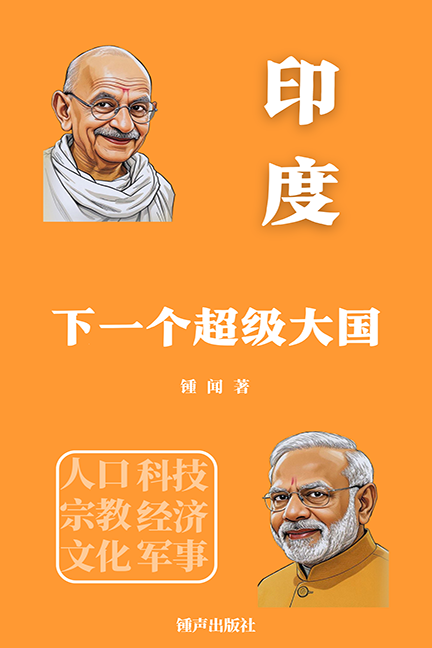
Chapter 1: Mahatma Gandhi:
The Philosophy of Nonviolence and the Spiritual Foundation of Independent India
Section I Gandhi’s Life, Intellectual Origins, and Core Principles: Nonviolent Noncooperation, Satyagraha, Asceticism, and Self-Discipline
Mohandas Karamchand Gandhi (October 2, 1869 – January 30, 1948) stands as one of the most influential figures in modern Indian history. His philosophy of nonviolence not only reshaped India’s destiny but also inspired civil rights movements around the world. Born in Porbandar in the state of Gujarat, Gandhi grew up in a devout Hindu family. His father served as a local official, while his mother—known for her piety and simple lifestyle—left a profound spiritual imprint on him. Gandhi’s intellectual foundations blended Indian traditions with Western ideas, forming a distinctive philosophical system grounded in Ahimsa (nonviolence), Satyagraha (the force of truth), and a life of asceticism and restraint.
Ahimsa lies at the heart of Gandhi’s philosophy. Drawn from Hindu and Jain traditions, Ahimsa goes far beyond the mere avoidance of physical harm; it represents an active form of love and compassion, extending even toward one’s enemies. Gandhi believed that violence could only achieve short-lived victories, whereas nonviolence could awaken the conscience of the oppressor and lead to lasting transformation. In his autobiography, The Story of My Experiments with Truth, he wrote: “Nonviolence is the greatest force at the disposal of mankind. It is mightier than the mightiest weapon devised by man.” Gandhi thus elevated nonviolence from a personal ethic into a strategy for collective political action.
Satyagraha, the “force of truth,” constitutes another cornerstone of Gandhi’s doctrine. Combining Satya (truth) and Agraha (firmness), Satyagraha aims to confront injustice through steadfast commitment to truth. Gandhi held that truth was the ultimate principle of the universe, and Satyagraha the means of realizing it. Practitioners were expected to endure suffering peacefully—through fasting, marches, or boycotts—to compel oppressors to reconsider the legitimacy of their actions. This method first took shape during Gandhi’s years in South Africa (1893–1914), where he worked as a lawyer advocating for the rights of Indian migrants and successfully resisted discriminatory laws.
Asceticism and self-restraint were hallmarks of Gandhi’s personal life and key components of his political philosophy. He adopted the simple dhoti, renounced material comforts, and emphasized swadeshi (self-reliance). His ascetic lifestyle functioned not only as personal discipline but also as a political statement—contrasting the simplicity of India’s masses with the extravagance of colonial rulers, thereby fostering unity and dignity among Indians. Gandhi’s commitment to vegetarianism, celibacy, and periodic fasting served both as spiritual purification and as symbolic acts of political mobilization.
Gandhi’s thought emerged from multiple sources: the Bhagavad Gita shaped his view of selfless action; Jain principles reinforced his commitment to nonviolence; and Western thinkers such as Henry David Thoreau (Civil Disobedience) and Leo Tolstoy (Christian nonviolence) provided modern frameworks for resistance. During his 21 years in South Africa, Gandhi synthesized these ideas into a practical philosophy for mass movements. After his return to India in 1915, this philosophy became the soul of the independence struggle, inspiring a revolutionary movement unprecedented in world history.
Section II Gandhi’s Pivotal Role in the Independence Movement and His Symbolic Status as the “Father of the Nation”
When Gandhi returned to India in 1915, the country remained under British colonial rule. The Indian National Congress, though established decades earlier, was dominated by elites and disconnected from the masses. Gandhi transformed this dynamic. Using nonviolent noncooperation as a political weapon, he brought the independence struggle out of conference halls and into villages and streets, turning it into a truly national movement. His three landmark campaigns—the Non-Cooperation Movement (1920–1922), the Dandi Salt March (1930), and the Quit India Movement (1942)—demonstrated his strategic brilliance and moral authority.
The Non-Cooperation Movement (1920–1922) urged Indians to boycott British goods, courts, and schools, aiming to undermine the economic and administrative foundations of colonial rule. For the first time, farmers, workers, and women joined the struggle, making the independence movement a mass national cause. When a violent incident erupted in Chauri Chaura, Gandhi halted the movement, reaffirming his unwavering commitment to nonviolence—even at the cost of political momentum.
The Dandi Salt March (1930) was Gandhi’s masterpiece. To protest Britain’s monopoly on salt, Gandhi led a 240-mile march from Sabarmati Ashram to the coastal town of Dandi and produced salt from seawater. This simple but symbolic act violated colonial law and captured global attention. Millions followed Gandhi’s example; British mass arrests only fueled greater resistance. By choosing salt—a basic necessity—Gandhi transformed abstract ideas of independence into a concrete and relatable symbol.
The Quit India Movement (1942) marked Gandhi’s most direct challenge to British rule. Launched during World War II, it demanded the immediate withdrawal of the British from India. Although brutally suppressed, its rallying cry—“Do or Die”—ignited nationalist sentiment and set the stage for independence in 1947.
Gandhi is revered as the “Father of the Nation” not only for his leadership but also for embodying India’s moral and spiritual aspirations. His simple attire, advocacy of religious pluralism, and empathy for the marginalized made him a unifying figure across caste, class, and faith. Yet his insistence on Hindu-Muslim reconciliation sparked criticism among some radical factions. On January 30, 1948, Gandhi was assassinated by Nathuram Godse, a Hindu nationalist, a tragedy that starkly revealed India’s internal fractures but further cemented Gandhi’s moral legacy. Today, his portrait appears on all Indian currency, and his birthday is a national holiday—testimony to the enduring reverence for India’s “Father of the Nation.”
Section III Gandhi’s Influence on India’s Social Foundations and His Legacy in Contemporary India
Gandhi’s philosophy shaped not only the independence struggle but also the social fabric of modern India. His commitment to nonviolence fostered interreligious and caste harmony, helping India sustain a model of pluralistic coexistence. His swadeshi ideals promoted local industries and still echo in today’s “Make in India” initiative. His advocacy for the Harijan (“children of God”) community empowered marginalized castes and laid the groundwork for the constitutional principles of equality.
In contemporary India, Gandhi’s legacy remains visible in various institutions and policies. The Mahatma Gandhi National Rural Employment Guarantee Act (MGNREGA) reflects his vision for rural upliftment by guaranteeing 100 days of paid work annually to rural households. The Panchayati Raj system of local self-governance echoes his belief in village-level autonomy. Moreover, Gandhi’s spirit of nonviolence continues to serve as a moral compass for handling religious and ethnic tensions, even as these challenges persist.
Yet Gandhi’s philosophy faces significant pressures in modern India. Rapid urbanization and globalization have fostered consumerism, often at odds with his ideal of simplicity. India’s expanding middle class is increasingly oriented toward material prosperity, rendering Gandhi’s asceticism seemingly outdated. The caste system also remains unresolved: while Gandhi opposed untouchability, his willingness to preserve aspects of caste drew criticism. In contrast, B. R. Ambedkar advocated the complete abolition of caste distinctions—a debate that continues to shape Indian social reform.
Religious harmony poses another major challenge. Gandhi’s dream of Hindu-Muslim unity was deeply tested by the violence surrounding Partition, and contemporary religious nationalism further strains this ideal. Nevertheless, Gandhi’s principles inspire new generations of activists, from environmental movements to anti-corruption protests. His philosophy must evolve to meet the complexities of modern society, but its core values—peace, equality, and self-reliance—remain foundational to India’s social ethos.
Section IV Gandhi’s Global Influence on Peace and Civil Rights Movements
Gandhi’s philosophy of nonviolence transformed not only India but also global movements for peace and civil rights. His doctrines of Ahimsa and Satyagraha provided a new model of resistance, demonstrating that meaningful change could be achieved without violence.
One of the most notable inheritors of Gandhi’s legacy was Martin Luther King Jr., leader of the American civil rights movement. King visited India in 1959 to study Gandhi’s methods and applied them to landmark events such as the Montgomery Bus Boycott and the March on Washington, helping advance racial equality in the United States. King later remarked: “Gandhi was the first person in history to lift the ethic of love to a political level.”
In South Africa, Nelson Mandela integrated Gandhi’s principles into the anti-apartheid struggle, combining nonviolence with strategic resistance. Mandela described Gandhi as a “pioneer of South African freedom,” acknowledging the influence of Gandhi’s early activism in the country. Leaders such as Kwame Nkrumah in Ghana and Ho Chi Minh in Vietnam also adapted elements of Gandhi’s philosophy in their anti-colonial movements.
Gandhi’s influence continues in modern activism worldwide—from the Occupy Wall Street movement to climate protests and the Black Lives Matter movement. In 2007, the United Nations declared October 2, Gandhi’s birthday, as the International Day of Non-Violence. Critics, however, argue that nonviolence may be insufficient in confronting authoritarian regimes or urgent crises, particularly in today’s volatile geopolitical environment.
Gandhi’s global legacy lies in his demonstration that individual moral courage can transform society. His philosophy calls for a fusion of personal responsibility and collective action, urging people to confront injustice with moral integrity. For India, Gandhi’s teachings remain not only a source of national pride but also a reminder that the pursuit of superpower status must be grounded in peace and justice.
 正义钟声 Voice of Justice