
India: The Next Superpower?
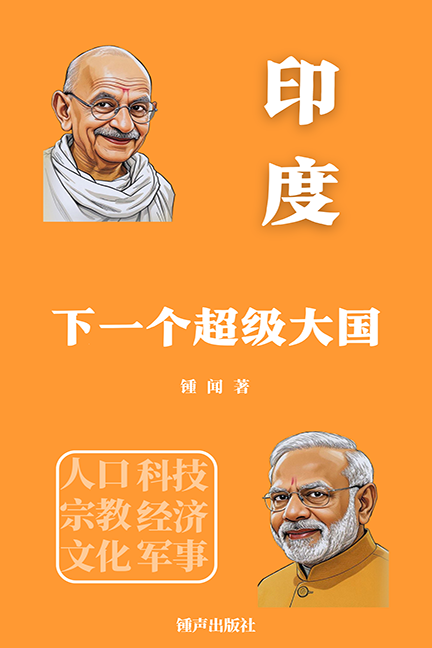
Preface: India’s Challenge to China
As an emerging major power, India’s rise presents a potential challenge to China’s influence in Asia and across the globe. In 2024, India’s GDP reached about USD 4 trillion (5th worldwide), compared with China’s USD 18 trillion (2nd), a significant gap. Yet India’s demographic dividend, geopolitical positioning, and growing role in global supply chains make it a long-term competitor for China. The following analysis examines India’s challenge to China across four dimensions—economics, geopolitics, cultural soft power, and structural constraints—while offering a forward-looking assessment of future competition.
Economic and Supply Chain Challenges
Manufacturing and the “China+1” Shift
The restructuring of global supply chains has opened new opportunities for India. In 2024 India attracted USD 10 billion of China+1 FDI, about 20% of global flows. Exports in electronics (USD 50 billion, with 25% of iPhones assembled in India) and pharmaceuticals (USD 30 billion, accounting for 20% of the world’s generic drug supply) have grown, eroding China’s traditional dominance in low-cost manufacturing (China holds 30% of global manufacturing; India about 3%).
India’s labor cost (USD 300/month) remains far below China’s (USD 1,000/month). In 2024 India created 500,000 new manufacturing jobs and drew major commitments such as Tesla and TSMC, each investing USD 5 billion.
However, India remains dependent on China for key inputs—30% of electronic components and 50% of pharmaceutical raw materials—leading to a USD 70 billion trade deficit in 2024, limiting its autonomy.
IT and the Digital Economy
India’s IT and BPO industry generated USD 250 billion in 2024, holding a 15% global share. AI outsourcing (USD 5 billion) and data labeling (USD 2 billion) increasingly challenge China’s AI expansion (China’s AI market is USD 100 billion). India’s digital economy (USD 50 billion) and the UPI payment system (100 billion transactions) surpassed China’s WeChat Pay (80 billion transactions). In 2024, Google and Meta invested USD 2 billion into India’s digital sector.
Still, China leads in AI patents (50% of global total) and 5G infrastructure (3 million base stations vs. India’s 500,000). Yet India’s English proficiency and lower engineering salaries (USD 30,000/year vs. China’s USD 60,000) narrow the gap.
Impact: By 2024 India captured 10% of China’s electronics and pharmaceutical contracts. By 2030 India aims to secure 5% of global manufacturing (China: 25%). If infrastructure and workforce training improve (100 million skilled workers by 2030), India could divert USD 50 billion in FDI away from China; without such progress, its challenge will remain limited.
Geopolitical and Regional Influence
The Indo-Pacific and the Quad
Through the Quad (U.S., Japan, Australia, India), New Delhi has positioned itself as a counterweight to China’s Belt and Road Initiative (BRI). In 2024 the Quad held 10 joint military exercises and supported Indo-Pacific security coordination. India provided USD 2 billion in aid to Southeast Asian and Pacific Island nations to offset China’s USD 60 billion of investment.
India’s leadership of the International Solar Alliance (121 countries) and its role in the G20 as a “voice of the Global South” have reduced China’s influence in developing countries.
Yet India’s unresolved border disputes with China (LAC negotiations stalled in 2024) and Pakistan’s alignment with Beijing through CPEC (USD 60 billion) constrain India’s regional dominance.
Global Governance
India continues to seek a permanent seat on the UN Security Council and in 2024 won support from the U.S. and France—an implicit challenge to China’s veto power. Within BRICS and the SCO, India has resisted China’s push to expand AIIB influence and is promoting digital South-South cooperation benefiting 50 nations.
China still maintains far superior military capacity—USD 296 billion in defense spending and 500 nuclear warheads, compared with India’s USD 80 billion and 172 warheads. Yet India is boosting domestic arms production (40% in 2024) and deepening military ties with the U.S. and France (USD 5 billion in arms deals).
Impact: India secured USD 20 billion in international financing in 2024, strengthening its Global South leadership. But China’s African investment (USD 100 billion) and the persistent Sino-Indian rivalry limit India’s influence. By 2030, India could lead Indo-Pacific architecture if border issues stabilize and Quad cooperation deepens; otherwise China’s geopolitical advantage will persist.
Cultural Soft Power Competition
Global Influence
Yoga (USD 105 billion global market in 2024) and Bollywood (USD 2 billion in exports) contribute significantly to India’s cultural footprint, challenging China’s soft power instruments such as Confucius Institutes (USD 1 billion revenue in 2024). International Yoga Day attracts participation from 180 countries, and India’s T-Series exceeds 200 billion views—surpassing TikTok’s international footprint (150 billion).
Indian cuisine (USD 50 billion global restaurant revenue) and a vast diaspora (35 million people) extend cultural influence, with 80% of Indian Americans actively promoting Indian culture. In contrast, only about 50% of Chinese overseas communities (60 million people) participate in cultural outreach.
Limitations
India’s cultural reach is strongest in emerging markets and the West, while China’s BRI-linked outreach and CGTN media presence remain powerful across Africa and Central Asia. China’s overall cultural exports (USD 10 billion) and 2024 soft power ranking (10th) still exceed India’s (USD 5 billion, 8th).
Impact: India’s soft power boosts tourism (12 million visitors in 2024) and diplomacy (e.g., G20 culinary diplomacy). But China’s infrastructure diplomacy (USD 100 billion) often proves more attractive to governments. By 2030, India could narrow the gap if it successfully globalizes its “authentic culture,” potentially doubling the yoga market to USD 200 billion.
Constraints on India’s Challenge
Economic Gap
In 2024 China’s GDP was 4.5 times that of India, and exports reached USD 2.65 trillion (India: USD 437.4 billion). India’s infrastructure challenges (logistics cost 14% of GDP) and corruption (CPI rank: India 85 vs. China 42) reduce competitiveness.
Technological Dependence
India imports 80% of its AI tools and 30% of its weapons, while China leads in self-developed technologies (50% of global AI patents). In 2024 India’s 5G coverage reached only 50%, compared with China’s 90%.
Geopolitical Challenges
Border disputes with China and China–Pakistan alignment limit India’s strategic space. India’s defense spending (2.5% of GDP) strains development resources.
Internal Weaknesses
India’s inequality (Gini 0.36), pollution-related deaths (1.5 million annually), and education challenges (50% of students below proficiency standards) constrain its potential. China—despite possible data inflation—reports a Gini of 0.34 and 98% literacy, creating a more stable base.
Impact: India’s competitive advantages lie mainly in emerging industries (AI, supply chains), but structural gaps make it unlikely to rival China before 2030. In 2024, 20% of protests in India were inequality-related, compared with China’s relatively “stable” environment (5% of protests).
Future Outlook
Scenarios for 2030
If India successfully implements domestic reforms—including USD 500 billion in infrastructure investment, improving CPI ranking into the top 50, resolving border issues, and training 100 million AI-skilled workers—its GDP could reach USD 7 trillion by 2030. Manufacturing could rise to 5% of global share, AI outsourcing to USD 20 billion, and India could meaningfully challenge China’s 25% share of global manufacturing and its USD 150 billion AI market.
Geopolitically India could weaken China’s Indo-Pacific influence by leading the Quad and BRICS reform efforts, while attracting USD 50 billion in FDI annually. In soft power, if India expands global cultural outreach (e.g., a USD 200 billion yoga industry), it could surpass China’s projected USD 15 billion cultural exports.
Pathways for India’s Rise
India would need to:
Invest USD 200 billion in infrastructure and green technology, reducing logistics costs to 8%.
Train 2 million AI and manufacturing specialists, cutting reliance on Chinese components to 10%.
Strengthen diplomacy through FTAs, UNSC reform efforts, and cultural diplomacy (e.g., yoga diplomacy).
Implement anti-corruption measures and education reform (100% lower-secondary enrollment by 2030) to reduce inequality (Gini 0.30).
Probability Assessment
The likelihood that India becomes China’s primary competitor by 2030 is estimated at 60%. Achieving superpower status—on par with both China and the United States—would require stability and sustained reform through 2050. If Sino-Indian conflict escalates or reforms stagnate, India may remain a regional power unable to fundamentally challenge China’s dominance.
Conclusion
India’s challenge to China is becoming more visible across supply chain diversification, geopolitical balancing, and cultural appeal. By 2024 India had already captured roughly 10% of supply-chain and soft power space once dominated by China. By 2030, if reforms align with strategic opportunities, India could emerge as Asia’s second-largest source of influence and narrow the gap with China. If not, China’s predominance will remain largely unshaken. India’s rise is both a challenge to China and a test of India’s own capacity.
Voice of Justice Research Institute
June 25, 2025
 正义钟声 Voice of Justice