
The Concord of the Five Religions
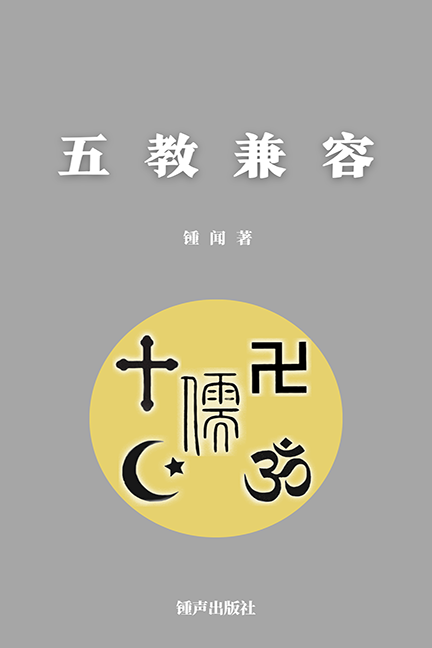
Chapter 6 The Compatibility of Five Traditions
Part 2: A Historical Exploration of Interreligious Dialogue — From Conflict to Cooperation
Interreligious dialogue refers to exchanges and interactions between different religious traditions, aimed at enhancing mutual understanding, resolving conflict, or fostering cooperation. From ancient trade routes and encounters shaped by warfare, to the philosophical debates of the Middle Ages, and finally to modern global conferences, the forms and purposes of interreligious dialogue have continually evolved with historical change. These processes reflect humanity’s exploration of faith, while revealing the complex interplay of political, economic, and cultural forces.
This section traces the historical development of interreligious dialogue, examining its major phases, motivations, and impacts, while also assessing future trends.
1. Ancient Interreligious Dialogue: Contact and Syncretism (Prehistory – 5th Century CE)
Early Trade and Cultural Exchange
The origins of interreligious dialogue can be traced to early encounters among ancient civilizations. In the 4th century BCE, Alexander the Great’s eastern campaigns linked Greek culture with Persian and Indian civilizations, facilitating the exchange of religious ideas. For example, Greek polytheism and the Vedic traditions of Hinduism interacted in the Gandhara region, leading to the development of Buddhist art — particularly the Greco-Buddhist sculptures of Gandhara.
The Silk Road also served as a crucial conduit for religious transmission. Buddhism moved from India into China, where it entered into dialogue with indigenous Confucianism and Daoism. In the 1st century CE, Buddhist monks such as Kasyapa Matanga translated scriptures into Chinese, while Confucian scholars attempted to understand Buddhism through geyi, a method that interpreted Buddhist concepts using Confucian and Daoist terminology. This stands as one of the earliest documented forms of interreligious dialogue in world history.
Dialogue Shaped by Imperial Policies
Imperial governance further promoted religious interaction. The Achaemenid Empire (550–330 BCE) adopted policies of tolerance, allowing subjugated peoples to maintain their own faiths — enabling Zoroastrianism, Judaism, and other traditions to coexist. Early Roman tolerance toward Christianity (before Nero’s persecutions) also fostered exchange, and Christianity later absorbed elements of Roman festivals, such as transforming the winter solstice into Christmas.
Impact and Characteristics
Ancient interreligious dialogue was largely informal, emerging naturally through trade, conquest, and migration. It was practical and syncretic rather than based on systematic theological debate. However, conflict was never absent — as seen in later Roman persecutions of Christians — demonstrating the limits of early dialogue.
2. Medieval Interreligious Dialogue: Conflict and Philosophical Encounter (6th – 15th Century)
Islamic Expansion and Christian Responses
The rise of Islam in the 7th century triggered extensive interaction with Christianity. Much early dialogue took the form of conflict, such as the Muslim conquest of Jerusalem in 638, after which Christian pilgrims negotiated access rights under Muslim rule. Yet peaceful exchanges also occurred: the caliph Umar allowed Christians to retain their churches.
Medieval Spain (al-Andalus) became a high point of interreligious dialogue. After Muslims established rule in the 8th century, Christians, Muslims, and Jews coexisted. Córdoba became a major intellectual center where Jewish philosopher Maimonides, Muslim scholar Averroes, and Christian thinkers interacted. Averroes’ commentaries on Aristotle later influenced Thomas Aquinas, exemplifying philosophical dialogue across faiths.
Dialogue During the Crusades
Although the Crusades (1095–1291) were defined by war, they also contained elements of dialogue. During the Third Crusade (1189–1192), negotiations between King Richard I of England and Saladin resulted in a treaty allowing Christian pilgrimages to Jerusalem — an example of pragmatic dialogue. In 1219, St. Francis of Assisi famously met with the Sultan of Egypt in an effort to spread peace, standing as an early model of interfaith exchange.
Buddhism and Its Interactions with Other Traditions
In East Asia, Buddhism engaged in extensive dialogue with Confucianism and Daoism throughout the medieval period, eventually giving rise to the “Unity of the Three Teachings.” Tang-era Zen Buddhism incorporated Confucian ethics and Daoist naturalism, while Song Neo-Confucianism drew from Buddhist introspective methods. Along the Silk Road, Buddhism also encountered Islam, with regions such as Tibet and Arab-controlled Central Asia maintaining periods of peaceful coexistence during the 8th century.
Characteristics and Impact
Medieval interreligious dialogue was marked by both conflict (e.g., the Crusades) and cooperation (e.g., Andalusian intellectual life). Philosophy and theology became major vehicles of exchange, advancing knowledge across cultures — but religious exclusivism often limited deeper integration.
3. Early Modern Dialogue: Colonial Encounters and the Enlightenment (16th – 19th Century)
Dialogue Under Colonial Expansion
European colonial expansion intensified interreligious contact. In the 16th century, Jesuit missionaries such as Matteo Ricci entered China and adopted an “accommodation strategy”: wearing Confucian garments, learning classical Chinese, and harmonizing Christian doctrines with Confucian ethics. His works, including The True Meaning of the Lord of Heaven, argued that Confucianism and Christianity were compatible. This helped facilitate cultural exchange but also led to controversy, particularly the Chinese Rites Controversy.
In India, British colonial rule fostered dialogue with Hinduism and Islam. In the 19th century, reformer Raja Ram Mohan Roy founded the Brahmo Samaj, integrating Christian monotheism with Hindu traditions. Meanwhile, interactions between Sufism and Hinduism contributed to the emergence of new traditions such as Sikhism.
The Enlightenment’s Influence
The European Enlightenment brought rationalism into religious dialogue. Thinkers such as Voltaire criticized religious exclusivism and championed tolerance, indirectly promoting interfaith engagement. The rise of Orientalism sparked Western scholarly interest in Eastern religions, with translations of texts like the Bhagavad Gita influencing philosophical discourse across Europe.
Impact and Characteristics
Dialogue in this period was driven by both colonial power structures and intellectual curiosity. It was characterized by cross-cultural exchange and increasing secularization, laying the foundations for modern interreligious dialogue.
4. Modern Interreligious Dialogue: Institutionalization and Globalization (20th Century – Present)
Early Attempts: The Parliament of the World’s Religions
In 1893, the first Parliament of the World’s Religions was held in Chicago, marking the institutionalization of interreligious dialogue. Representatives from Christianity, Buddhism, Hinduism, Islam, and other faiths attended. Hindu monk Swami Vivekananda’s address on religious unity became iconic, setting a model for systematic global dialogue.
Post-War Reconciliation
After World War II, global trauma and accelerating globalization spurred new efforts at interfaith cooperation. In 1965, the Second Vatican Council issued Nostra Aetate, encouraging dialogue with non-Christian religions. Popes thereafter met with Buddhist and Muslim leaders to promote interreligious peace. The Dalai Lama also dialogued with Christian thinkers like Thomas Merton on meditation and spirituality.
Growth of Institutional Dialogue
By the late 20th century, numerous organizations dedicated to interreligious cooperation emerged:
World Conference of Religions for Peace (WCRP) (1970)
United Religions Initiative (URI) (2000)
King Abdullah Interfaith Dialogue Center (2012)
These bodies facilitated joint projects in peacebuilding, humanitarian aid, and education.
Contemporary Cases and Challenges
Contemporary interreligious dialogue often focuses on global issues such as environmental protection (e.g., Christian-Buddhist “Green Religion” movements) and human rights (e.g., joint Christian-Muslim statements). However, extremism (e.g., ISIS) and long-standing political conflicts (e.g., Israeli-Palestinian tensions) continue to hinder progress.
Characteristics and Impact
Modern interreligious dialogue is characterized by institutionalization and globalization, emphasizing cooperation over competition. Its impacts include reducing conflict, promoting cultural understanding, and addressing shared challenges — though it continues to face obstacles from secularization and religious conservatism.
5. Motivations and Models of Interreligious Dialogue
Primary Motivations
Peace and reconciliation: e.g., post-Crusade negotiations; post-WWII cooperation.
Intellectual exchange: e.g., medieval philosophy; Orientalism.
Practical necessity: e.g., coexistence in trade, colonization, and multicultural societies.
Models of Dialogue
Theological Dialogue: doctrinal debate (e.g., Trinity discussions between Christians and Muslims).
Practical/Action-Based Dialogue: joint charity, education, community service.
Cultural Dialogue: exchange through art, literature, and music (e.g., Indo-Islamic musical traditions).
6. Conclusion and Future Outlook
The history of interreligious dialogue shows a progression from ancient informal interactions, through medieval conflict and philosophical debate, to early modern cross-cultural exchange, culminating in today’s institutionalized cooperation. This evolution demonstrates that interreligious dialogue is both a product of conflict and an instrument for reconciliation.
Its driving force lies in humanity’s pursuit of truth, understanding, and coexistence.
Looking forward, advances in technology (e.g., online dialogue platforms) and global challenges such as climate change will require interreligious collaboration to become more inclusive and practical. However, obstacles such as extremism, nationalism, and cultural distrust must still be overcome.
 正义钟声 Voice of Justice