
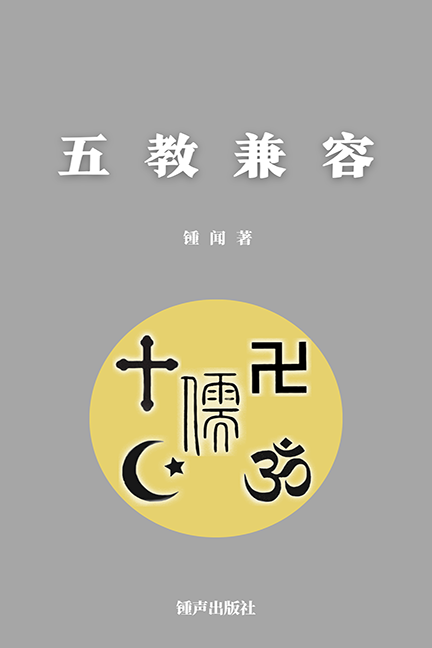
The Concord of the Five Religions
Chapter 6 The Compatibility of Five Traditions
Part 1: Theories and Practices of Pluralistic Religious Coexistence
Christianity, Islam, Buddhism, Hinduism, and Confucianism are among the most influential religious and intellectual traditions in human civilization. Emerging from different historical and cultural contexts, each possesses unique doctrines, rituals, and value systems. Yet in an age of globalization, dialogue and coexistence among religions have become essential themes. This section examines whether these five traditions can be compatible in their core ideas, ethical aims, and practical operations, and assesses historical examples of interaction as well as contemporary possibilities. The study argues that despite doctrinal differences, these traditions share common goals in promoting human well-being, moral cultivation, and social harmony—thus creating a foundation for compatibility.
1. Core Overview of the Five Religious and Philosophical Traditions
Christianity
Originating in 1st-century Palestine, Christianity centers on the teachings of Jesus Christ. Its core beliefs include monotheism (faith in one God), soteriology (salvation through Christ’s sacrifice), and the ethic of love (“love your neighbor as yourself”). The Bible constitutes its sacred scripture, and the Church plays a vital role in transmission and practice.
Islam
Islam arose in 7th-century Arabia, founded by the Prophet Muhammad. Central tenets include strict monotheism (Allah as the only true God), the Five Pillars (profession of faith, prayer, fasting, almsgiving, pilgrimage), and submission to divine will. The Qur’an is its holy book, emphasizing the unity of belief, righteous conduct, and social justice.
Buddhism
Founded by Śākyamuni (c. 563–483 BCE) in ancient India, Buddhism teaches the Four Noble Truths, the Noble Eightfold Path, and the doctrine of non-self (anātman). Buddhism is non-theistic, seeking liberation from samsara through cultivation and wisdom. Its textual foundation lies in the Tripiṭaka.
Hinduism
Hinduism, a highly diverse and ancient tradition of the Indian subcontinent, has no single founder. It encompasses polytheistic and pantheistic elements, and its core doctrines include reincarnation, karma, and liberation (moksha). Canonical texts include the Vedas, Upaniṣads, and Bhagavad Gītā. Hinduism is uniquely pluralistic in its acceptance of varied beliefs and practices.
Confucianism
Confucianism, rooted in the teachings of Confucius (551–479 BCE), emerged in China during the Spring and Autumn period. It is more accurately described as a philosophical and ethical system rather than a religion. Its core concepts include ren (humaneness), li (ritual propriety), and xiao (filial piety), stressing moral cultivation and social order. Foundational texts include the Four Books and Five Classics.
2. Doctrinal Differences and Challenges
Monotheism vs. Polytheism
Christianity and Islam emphasize exclusive monotheism and often view polytheistic worship as heretical. Hinduism embraces a pantheon of deities, while Buddhism and Confucianism do not center on gods at all. This contrast creates apparent tension: for example, Christianity’s Ten Commandments prohibit worshiping other gods, while Hindu devotion includes figures such as Viṣṇu and Śiva.
Paths to Salvation or Liberation
Christian salvation relies on faith and divine grace; Islam emphasizes submission and righteous action; Buddhism and Hinduism focus on personal cultivation and karmic transformation; Confucianism prioritizes the moral order of the present world. These divergent paths can lead to differing goals and spiritual expectations.
Differences in Ritual Practice
Rituals reflect cultural foundations: Christian Eucharist, Islamic salat, Buddhist meditation, Hindu sacrifice, and Confucian ancestral rites. Compatibility requires negotiating these distinctive practices.
3. Theoretical Foundations for Compatibility
Shared Ethical Aims
Despite doctrinal divergence, these traditions demonstrate significant ethical convergence:
Love and Compassion:
Christianity’s “love your neighbor,” Islam’s almsgiving (zakat), Buddhism’s compassion (karuṇā), Hinduism’s non-violence (ahimsa), and Confucian ren all advocate care for others.
Justice and Social Order:
Islam and Confucianism emphasize social harmony and justice; Christianity and Hinduism value virtuous conduct; Buddhism upholds moral discipline through precepts.
Self-cultivation:
All traditions encourage moral and spiritual improvement.
Potential for Inclusiveness
Buddhism and Hinduism, being non-exclusive, naturally accommodate pluralism—evident in Buddhism’s syncretism with Confucianism and Daoism in China. Although Christianity and Islam hold exclusivist claims, both have historically absorbed external cultural elements (e.g., Christian theology drawing from Greek philosophy). Confucianism’s secular orientation allows it to coexist readily with other religions.
Philosophical Support for Pluralism
Religious pluralism posits that diverse traditions represent varied human approaches to truth. John Hick’s pluralistic hypothesis—viewing religions as different responses to “the Real”—provides theoretical grounding for compatibility.
4. Historical Examples of Interaction and Synthesis
Buddhism with Confucianism and Daoism in China
Upon its introduction, Buddhism engaged deeply with Chinese traditions, resulting in the “Three Teachings in Harmony.” Chan (Zen) Buddhism absorbed Confucian self-cultivation and Daoist naturalism; Neo-Confucianism, in turn, adopted introspective methods influenced by Buddhism.
Islam and Hinduism in India
During the Mughal Empire (16th–19th centuries), rulers such as Emperor Akbar promoted religious tolerance. A rich Indo-Islamic culture emerged in architecture (e.g., the Taj Mahal), music, and literature (notably Sufi poetry).
Christianity and Pagan Cultures
As Christianity spread through the Roman Empire, it absorbed Greco-Roman philosophy and adapted pagan festivals (e.g., Christmas aligning with winter solstice celebrations). Medieval theologians like Thomas Aquinas drew from Muslim philosopher Avicenna.
Confucianism with Buddhism and Christianity in East Asia
Confucian societies such as Korea and Japan accommodated Buddhist institutions and later accepted Christian missions. Confucian ethics operated as a civil foundation compatible with religious belief.
5. Models of Compatibility in Practice
Individual-Level Syncretism
Individuals often embrace multiple traditions. In China, many live according to Confucian ethics, practice Buddhist rituals, and participate in Christian or folk activities. Similarly, in India, Hindu practitioners may attend Buddhist ceremonies or Sufi shrines.
Societal-Level Coexistence
Historically, tolerant policies have enabled multi-religious societies—such as Tang dynasty Chang’an or the Ottoman Empire’s millet system, which allowed non-Muslim communities autonomy.
Modern Dialogue and Cooperation
Contemporary interfaith dialogues, such as the Parliament of the World’s Religions, foster mutual understanding. Collaborative initiatives—e.g., joint Buddhist-Christian environmental efforts or Islamic-Confucian discussions on family values—show growing areas of convergence.
6. Challenges and Solutions
Exclusivism and Fundamentalism
Some branches of Christianity and Islam emphasize strict exclusivity, resisting pluralism. Solutions include promoting inclusive interpretations such as Christian universalism or Islamic Sufi traditions.
Cultural and Historical Conflicts
Historical grievances—such as the Crusades—continue to affect relations. Education and cultural exchanges support reconciliation, as seen in Middle Eastern interfaith peace programs.
Impact of Modernity
Globalization and secularization challenge traditional authority but also create new opportunities for interreligious cooperation in areas like human rights and peacebuilding.
7. Conclusion
Christianity, Islam, Buddhism, Hinduism, and Confucianism differ in doctrine, but they share convergent ethical goals, cultural adaptability, and historical precedents of synthesis. Theoretical pluralism offers an intellectual basis; historical interactions demonstrate feasibility; and contemporary practices provide workable models. Compatibility does not require erasing differences but recognizing diversity and seeking harmony. In today’s world, interfaith dialogue among these five traditions is not only possible but also indispensable for addressing global challenges.
 正义钟声 Voice of Justice