
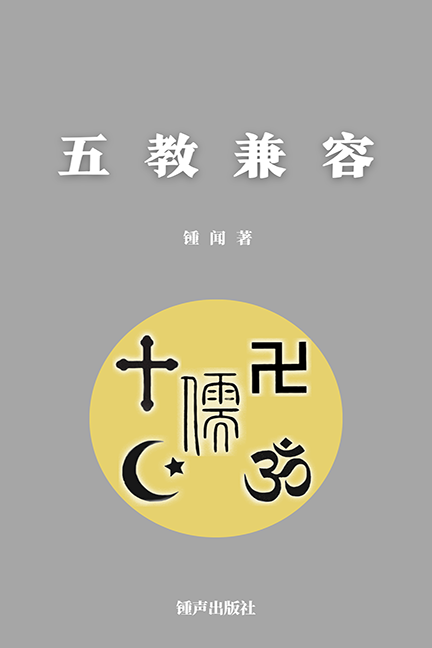
The Concord of the Five Religions
Chapter 5 Confucianism
Part 5: The Contemporary Religious Status of Confucianism
As of February 2025, Confucianism is no longer a mainstream religion in the traditional sense; instead, it has transformed into an ethical system and cultural symbol deeply embedded in East Asian societies. From its philosophical origins in the pre-Qin era, through its establishment as state ideology during the Han dynasty, to its intellectual peak in the Song–Ming period, Confucianism has undergone alternating phases of religiousization and secularization. With the spread of Western thought and the impact of modernization in recent centuries, Confucianism’s religious dimension has significantly faded, yet its values continue to shape Chinese and broader East Asian societies in subtle ways. This section analyzes the status of Confucianism in 2025, exploring its religious attributes, cultural functions, and the challenges and opportunities it faces in a globalized world.
1. The Religious Nature of Confucianism: From Faith to Culture
A Historical Overview of Its Religious Character
Throughout its development, Confucianism once possessed strong religious features. In the Western Han dynasty, Dong Zhongshu’s theory of “correspondence between Heaven and humanity” integrated Confucianism with a cosmic order, and imperial rituals of worshipping Heaven and Earth became state ceremonies. During the Tang and Song dynasties, the ritual status of Confucian temples equaled that of Heaven worship; Confucius was honored as “King of Propagated Culture” (Wenxuan Wang), signifying the sacred nature of Confucian teachings.
However, from the Ming and Qing onward, the rise of Neo-Confucian philosophy and evidential scholarship gradually weakened these religious elements. In the 20th century, the fall of the imperial system, the New Culture Movement, and later the Cultural Revolution further eroded Confucianism’s religious standing, with Confucian temples damaged and rituals nearly discontinued.
Religious Practices in 2025
In mainland China, Confucianism is no longer officially recognized as a religion. Under current religious policies, the five recognized religions (Buddhism, Daoism, Islam, Catholicism, Protestant Christianity) are registered and managed, while Confucianism is categorized as “traditional culture” rather than a faith system.
Although Confucian ceremonies have been restored in places like Qufu, they function mainly as cultural heritage events. For example, the September 28, 2024 Confucius Birthday Ceremony in Qufu attracted thousands of scholars and tourists, but the ritual resembled a historical reenactment rather than religious worship. Participants understood it as commemorating Confucius and Confucian culture, not seeking divine intervention.
Confucian temples—over 2,000 nationwide—are managed primarily as cultural relics. A small number, such as the Beijing Confucius Temple, hold occasional rituals, attended mostly by scholars, students, or officials, not by a distinct community of believers. Confucianism lacks formal religious organizations, doctrinal systems, and lay congregations, making it difficult to fit modern definitions of religion.
Debates on Its Religious Status
Academic debates continue regarding whether Confucianism constitutes a religion. Supporters argue that historical practices—such as worship of Heaven and ancestral rites—demonstrate its religious nature. Critics contend that Confucianism resembles an ethical philosophy lacking belief in the supernatural or the afterlife. In 2025, the mainstream view treats Confucianism primarily as cultural tradition rather than living religion.
2. Cultural Influence of Confucianism: The Foundation of Ethics and Education
Revival in Mainland China
Since the 1980s, mainland China has experienced a revival of traditional culture, with Confucianism at its core. By 2025, this trend is even more prominent. Primary and secondary schools incorporate The Analects, Mencius, and other classics; texts such as Standards for Students (Dizigui) and the Three-Character Classic have become popular in children’s education. Government initiatives promoting “excellent traditional Chinese culture” integrate Confucian values—such as filial piety, integrity, and harmony—into public governance. The concepts of a “harmonious society” and the “Chinese Dream” reflect clear Confucian inspiration.
At the grassroots level, Confucian ethics shape family and community life. During the 2025 Spring Festival, many families continued ancestral rites and reunions in the spirit of filial piety. In the business world, values like “benevolence” and “trustworthiness” are widely promoted. Public “Confucian lectures” offered in various cities draw residents eager to study the classics, highlighting the vitality of Confucianism in everyday life.
Hong Kong, Taiwan, and Overseas Chinese Communities
In Hong Kong, the Confucian Academy actively promotes Confucian education. In Taiwan, classical Chinese education remains a core part of school curricula, and Confucian temple rituals such as the traditional Shidian ceremony persist with stronger religious elements than those on the mainland.
Among overseas Chinese communities, Confucianism is primarily an ethical framework. In the United States, Canada, Singapore, and elsewhere, values such as filial piety and education are highly emphasized. Festivals like Lunar New Year and Qingming reflect Confucian family traditions. Singapore, which incorporated Confucian ethics into civic education as early as the 1980s, continues to integrate community responsibility and social harmony into its 2025 curriculum.
The East Asian Confucian Cultural Sphere
Korea, Japan, and Vietnam remain deeply influenced by Confucianism. Korea’s Sungkyunkwan University maintains Confucian traditions and holds large-scale Confucian rituals, which in 2025 gained international attention. Japan’s educational and ethical systems still reflect Confucian influence, with some schools teaching The Analects. Vietnam’s Temple of Literature in Hanoi preserves annual ceremonies honoring Confucius.
3. Confucianism in a Global Context: Confucius Institutes and Cultural Outreach
The Role of Confucius Institutes
Since 2004, China has established over 500 Confucius Institutes worldwide, across more than 150 countries. These institutions aim to promote Chinese language and Confucian culture through courses on The Analects, cultural events, and commemorative ceremonies. For example, a 2024 Confucius Birthday event hosted by a U.S. institute drew hundreds of participants, demonstrating Confucianism’s global appeal. However, political concerns in some countries have led to the closure of certain institutes.
Modern Interpretations
In 2025, Confucianism is being reinterpreted to align with modern values. New Confucian thinkers such as Tu Weiming promote “Confucian humanism,” emphasizing universal values—benevolence, responsibility, relational ethics—and their compatibility with democracy and human rights. Some scholars apply the concept of “the Doctrine of the Mean” to environmental ethics, advocating sustainable development.
Global Perception and Limitations
In the West, Confucianism is largely regarded as philosophy rather than religion. Although academic interest remains strong in 2025, public familiarity is limited. The absence of formal symbols (such as churches or holy scriptures) and lack of missionary structures restrict Confucianism’s global spread compared to world religions.
4. Challenges and Opportunities
Challenges: Modernization and Value Shifts
Confucianism faces several challenges in 2025. Globalization and rapid technological change weaken traditional values, with younger generations showing reduced attachment to filial piety and ritual propriety. The “Three Bonds”—historically criticized as oppressive—clash with modern ideals of gender equality and individual freedom. Moreover, the diminished religious dimension leaves Confucianism less competitive in the “spiritual marketplace” relative to Christianity or Islam.
Opportunities for Renewal
Nevertheless, opportunities for revival exist. Global interest in Eastern wisdom is rising, and Confucian ideals of harmony resonate with multicultural societies. China’s growing cultural confidence and initiatives such as the Belt and Road lend soft power to the spread of Confucian principles. Furthermore, ecological crises and moral uncertainty prompt renewed attention to Confucian teachings like “unity of Heaven and humanity” and benevolence.
5. Outlook for 2025 and Beyond
Deepening Cultural Symbolism
In the coming decade, Confucianism is likely to gain further integration into education and governance. China may expand national studies programs, and Confucian ceremonies may become more international, with increased foreign participation.
Platform for Global Dialogue
Confucianism may serve as a bridge for dialogue between Eastern and Western civilizations. In 2025, UNESCO may host forums such as “Confucius and World Civilizations,” exploring its universal values.
Potential Revival of Religious Elements
While unlikely on a large scale, certain religious aspects may experience localized revival through ancestral worship or community rituals. Some regions may restore more traditional clan temple ceremonies.
6. Conclusion: The Contemporary Significance of Confucianism
By 2025, Confucianism has evolved from an ancient religious system into a cultural and ethical framework. Although its formal religious features have faded, its influence permeates family life, social governance, and international cultural interactions. Facing the challenges of modernization, Confucianism must continue adapting to remain relevant and impactful in the future.
 正义钟声 Voice of Justice