
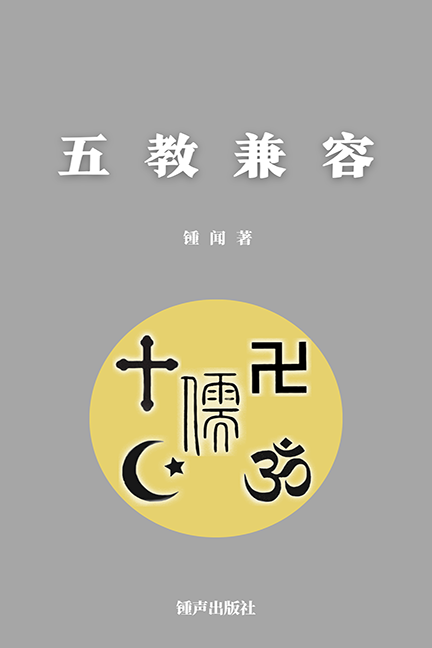
The Concord of the Five Religions
Preface
Part 1: Overview of the World’s Five Major Religions
Christianity, Islam, Buddhism, Hinduism, and Confucianism are regarded as the religious and philosophical systems that exert the most profound influence on human civilization in the twenty-first century. Originating in different eras and regions, each has shaped unique cultural, ethical, and social structures. The following overview summarizes the five major religions in terms of origin, founders, core doctrines, historical development, and contemporary status.
1. Christianity
Origins and Founder
Christianity originated in the 1st century CE in the region of Palestine under Roman rule. Its founder is Jesus Christ (c. 4 BCE – 30/33 CE), a popular preacher regarded by his followers as the “Son of God” and the Messiah (Savior). His life is recorded in the four Gospels of the New Testament—Matthew, Mark, Luke, and John—highlighting his ministry, crucifixion, and resurrection.
Core Doctrine
Christianity believes in one God and emphasizes the doctrine of the Trinity (Father, Son, Holy Spirit). Salvation is central: Christians believe Jesus died on the cross to redeem humanity, and that believers are saved through faith and divine grace. Christian teachings come mainly from the Bible (Old and New Testaments). Practices include prayer, worship (such as Mass), and sacraments (such as baptism and communion). Major branches include Roman Catholicism, Eastern Orthodoxy, and Protestantism, alongside Asian and African denominations.
Historical Development
Christianity emerged from Jewish temple reform movements and was first established as a state religion in Armenia. After suffering persecution in the Roman Empire, the Edict of Milan (313 CE) legalized Christianity, and it became Rome’s state religion in 380 CE. During the Middle Ages, the Catholic Church dominated Europe. In 1054, the East–West Schism separated Orthodoxy and Catholicism. The Protestant Reformation in the 16th century created new denominations. Christianity spread globally through European expansion.
Contemporary Status (2025)
By 2025, Christianity has about 2.4 billion followers (31% of the global population), concentrated in the Americas (950 million), Europe (500 million), and Africa (700 million). Evangelical and Pentecostal movements are rapidly growing in the Global South, while Europe faces strong secularization. Challenges include institutional scandals and religious pluralism; opportunities lie in digital evangelism.
2. Islam
Origins and Founder
Islam was founded in the 7th century in the Arabian Peninsula by the Prophet Muhammad (570–632). In 610, he received revelations from Allah in Mecca and became the “Final Prophet.” His teachings are recorded in the Qur’an, and his sayings and actions in the Hadith.
Core Doctrine
Islam is strictly monotheistic, rejecting idolatry (Tawhid). The Five Pillars—Shahada (profession of faith), Salat (prayer), Sawm (fasting), Zakat (almsgiving), and Hajj (pilgrimage)—are fundamental practices. It emphasizes the Last Judgment and social justice. The two main branches are Sunni (85–90%) and Shia (10–15%), differing mainly on leadership succession.
Historical Development
After Muhammad unified Arabia, the Caliphate (632–1258) expanded across the Middle East, North Africa, and Spain. The Abbasid Caliphate (750–1258) marked a golden age, followed by the Ottoman Empire (1299–1922), which carried Islam’s global influence. Colonization in the 19th century disrupted the Muslim world; modern nation-states such as Saudi Arabia and Iran emerged in the 20th century.
Contemporary Status (2025)
Muslims number around 2 billion (25% of the global population), mainly in Asia (1.2 billion) and Africa (600 million). Indonesia and Pakistan are the largest Muslim-majority countries. Extremist influence (e.g., ISIS) has declined, but sectarian conflict and integration issues persist. Digital preaching and modernization movements are growing.
3. Buddhism
Origins and Founder
Buddhism originated in the 5th century BCE in India. Its founder, Siddhartha Gautama (563–483 BCE), was a prince who renounced worldly life at age 29 and attained enlightenment at 35 under the Bodhi tree, becoming the Buddha. His teachings are preserved in the Tripitaka (Sutra, Vinaya, Abhidharma).
Core Doctrine
Buddhism is non-theistic. Its core is the Four Noble Truths (suffering, cause, cessation, path), with the goal of escaping the cycle of rebirth (samsara) through the Noble Eightfold Path, ultimately reaching Nirvana. Karma and non-self (Anatta) are key concepts. Major traditions include Theravada (focused on personal liberation), Mahayana (universal salvation), and Vajrayana (ritual and esoteric practice).
Historical Development
Spread by Emperor Ashoka (3rd century BCE), Buddhism moved to South Asia and Central Asia, then to Southeast Asia, East Asia, and Tibet. It later declined in India due to Islamic and Hindu revival movements. Buddhism revived under colonial influence in the 19th century and grew in the West in the 20th century.
Contemporary Status (2025)
Buddhists number about 500 million (6% of global population), concentrated in East Asia (China: 200 million; Japan: 50 million) and Southeast Asia (Thailand: 70 million). Around four million Western converts practice Buddhism. Challenges include secularization and political conflicts (e.g., Rohingya issue), while global interest in mindfulness offers new opportunities.
4. Hinduism
Origins and Development
Hinduism has no single founder. Originating around 1500 BCE in the Indus Valley region, it developed from the Vedic tradition and indigenous beliefs. The earliest scriptures are the Vedas, preserved by Brahmin priests.
Core Doctrine
Hinduism is polytheistic yet acknowledges an ultimate reality (Brahman). Central concepts include samsara (rebirth), karma (moral causation), and moksha (liberation). Key texts include the Vedas, Upanishads, the Mahabharata, and the Ramayana. Rituals, yoga, and festivals (such as Diwali) are common practices. The caste system has deeply shaped Hindu society.
Historical Development
Hinduism flourished in the Gupta Empire (4th–6th century). It faced challenges from Islamic invasions after the 12th century and mixed with Islamic traditions under the Mughal Empire. In the 19th century, British colonialism spurred reform movements (e.g., Ramakrishna Mission). After India’s independence, Hinduism remained the dominant belief system.
Contemporary Status (2025)
About 1.2 billion people follow Hinduism (15% of humanity), mainly in India (1.1 billion) and Nepal (20 million). Hindu nationalism (BJP) has increased its social influence, while conflicts with Muslims have intensified. Yoga and Vedanta philosophy have spread widely in the West.
5. Confucianism
Origins and Founder
Confucianism began in the 5th century BCE during the Eastern Zhou period. Its founder, Confucius (551–479 BCE), was a teacher and philosopher whose ideas were recorded by his disciples in the Analects. Confucianism is often considered a religion but functions more as an ethical and philosophical system.
Core Doctrine
Confucianism is non-theistic, emphasizing ren (benevolence), li (ritual propriety), xiao (filial piety), and moderation. Its aim is moral cultivation—self-discipline, family harmony, governance, and social order. Key texts include the Four Books (Analects, Mencius, Great Learning, Doctrine of the Mean) and the Five Classics.
Historical Development
Confucianism became China’s state ideology under Emperor Wu of the Han Dynasty (141–87 BCE), shaping Chinese culture for nearly two millennia. Neo-Confucianism (Song dynasty) further systematized its philosophy. It declined in the 19th century under Western influence and was criticized in the early 20th century. After fluctuating in the PRC, Confucianism has experienced revival in recent decades.
Contemporary Status (2025)
While the number of formal adherents is difficult to measure, Confucian values influence about 1.5 billion East Asians. China promotes Confucianism through cultural diplomacy (e.g., Confucius Institutes). Modernization and individualism challenge its relevance, but its ethical framework offers insight for governance and social cohesion.
6. Shared Features and Differences Among the Five Religions
Commonalities
Ethical focus: All emphasize morality—Christian love, Islamic justice, Buddhist compassion, Hindu dharma, Confucian ren.
Transcendence: Except Confucianism, all address the afterlife, heaven, nirvana, or moksha.
Cultural influence: All have shaped art, law, and education—churches, Islamic calligraphy, Hindu temples, Buddhist monasteries, Confucian academies.
Differences
Concept of God: Christianity and Islam are monotheistic; Buddhism is non-theistic; Hinduism is polytheistic; Confucianism lacks formal theology.
Paths to salvation: Christianity emphasizes faith, Islam emphasizes practice, Buddhism emphasizes personal cultivation, Hinduism mixes many paths, Confucianism focuses on worldly ethics.
Organizational structure: Christianity and Islam have structured religious institutions; Buddhism and Hinduism rely on monastics or Brahmins; Confucianism historically relied on state-sponsored education and examination systems.
7. Contemporary Interaction and Challenges (2025)
Global Dialogue
Globalization has intensified interaction among religions—for example, Christian-Islamic interfaith dialogue (e.g., the 2019 Document on Human Fraternity), Buddhist-Hindu spiritual exchange (mindfulness, yoga), and growing East-West philosophical dialogue involving Confucianism.
Challenges
Secularization (e.g., decline of Christianity in Europe), extremism (Islamic terrorism), ethnic conflict (Hindu-Muslim tensions), and modernization pressures (e.g., Confucian tradition vs. individualism) all continue to reshape the religious landscape.
Global Influence
As of 2025, the five major religions collectively influence about 6.1 billion people (some groups overlapping), approximately 76% of the world’s population.
 正义钟声 Voice of Justice