
A Concise Reinterpretation of Modern Chinese History
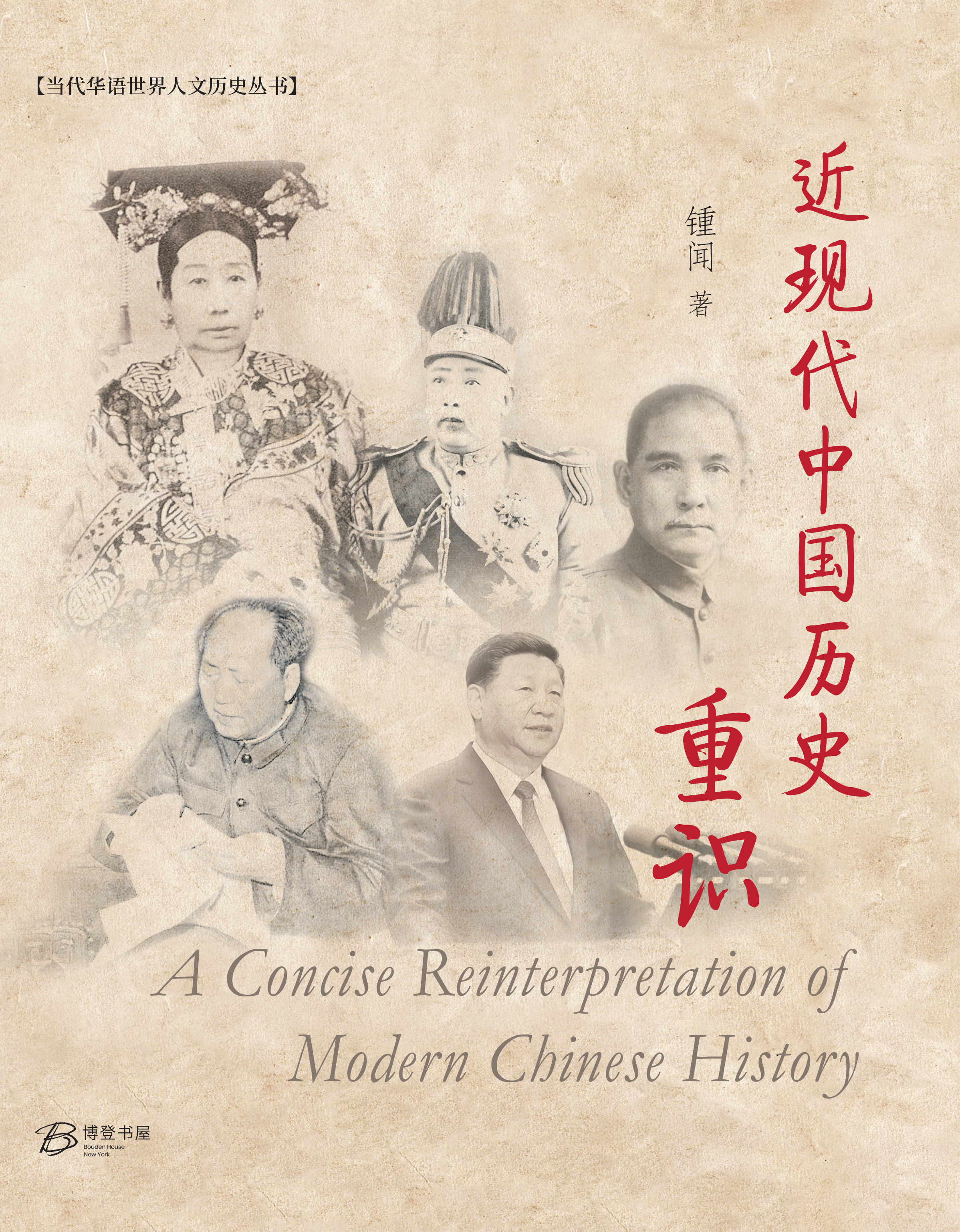
Preface 1: Reacquainting with Zhong Wen
Yan Jiaqi
Three years ago, Zhong Wen sent me his newly published book, *400 Years of America*, and we began corresponding. These three years have been a period of declining health for me since my heart surgery, while these have been three years for him, at the age of ninety, publishing book after book. With each book he publishes, my impression of him changes. He worked at the Chinese Academy of Social Sciences (CASS), and I sensed from his writing style that he was “different” from the average person at CASS. I spent 25 years at CASS and knew many people in many research institutes. He wrote that when he was at CASS, Ma Hong was his director, and Zhu Rongji was his colleague. From this, I knew that he had spent at CASS for at most one or two years, while Zhu Rongji’s time at CASS was probably longer than Zhong Wen’s.
Reading Zhong Wen’s latest book, *Reacquainting with Zhong Wen*, has once again changed my impression of him. Just as I haven’t met any of the people he “reacquainted with,” I have never met Zhong Wen in person. Therefore, I too can write *Reacquainting with Zhong Wen*.
The first point about “re-understanding Zhong Wen” is that a man in his nineties who is so concerned about the future of China and humanity and writes so diligently serves as a good example for many elderly people. There are three essential elements to centenarian life: love, hope, and something to do. Brother Zhong Wen possesses these three elements, enabling him to surpass 100 and reach the pinnacle of longevity.
Second, Zhong Wen’s open-mindedness is evident in his “re-understanding” of historical figures—not just one or two, but dozens or even hundreds. Zhong Wen’s creativity lies in his desire to comprehensively rewrite Chinese history. I believe that under the irresistible trend of “de-Maoification” in the future, modern Chinese history must be comprehensively re-understood and rewritten.
Third, rewriting Chinese history is inseparable from how we view Confucianism and Mencianism. Confucianism is the cultural foundation of Chinese civilization. Even those born in China who have lived abroad for a long time can never escape the influence of Confucianism on their interpersonal relationships. Compared to Christian, Islamic, and Hindu civilizations, Confucianism’s spirit of “benevolence” and “inclusiveness” can serve as a bridge connecting various civilizations globally. The fundamental difference between civilizations lies in their millennia-old methods of handling interpersonal relationships, not in their political and economic systems that change over decades. The concept of “benevolent governance” originated with Mencius and gradually developed into the foundation for China’s maintenance of autocratic politics. Globalization is the peaceful coexistence of various civilizations globally, driven by the gradual convergence of values in the political and economic spheres.
December 8, 2023, Paris
NEXT: Preface 2: History Needs to Be Re-examined
 正义钟声 Voice of Justice