
A Concise Reinterpretation of Modern Chinese History
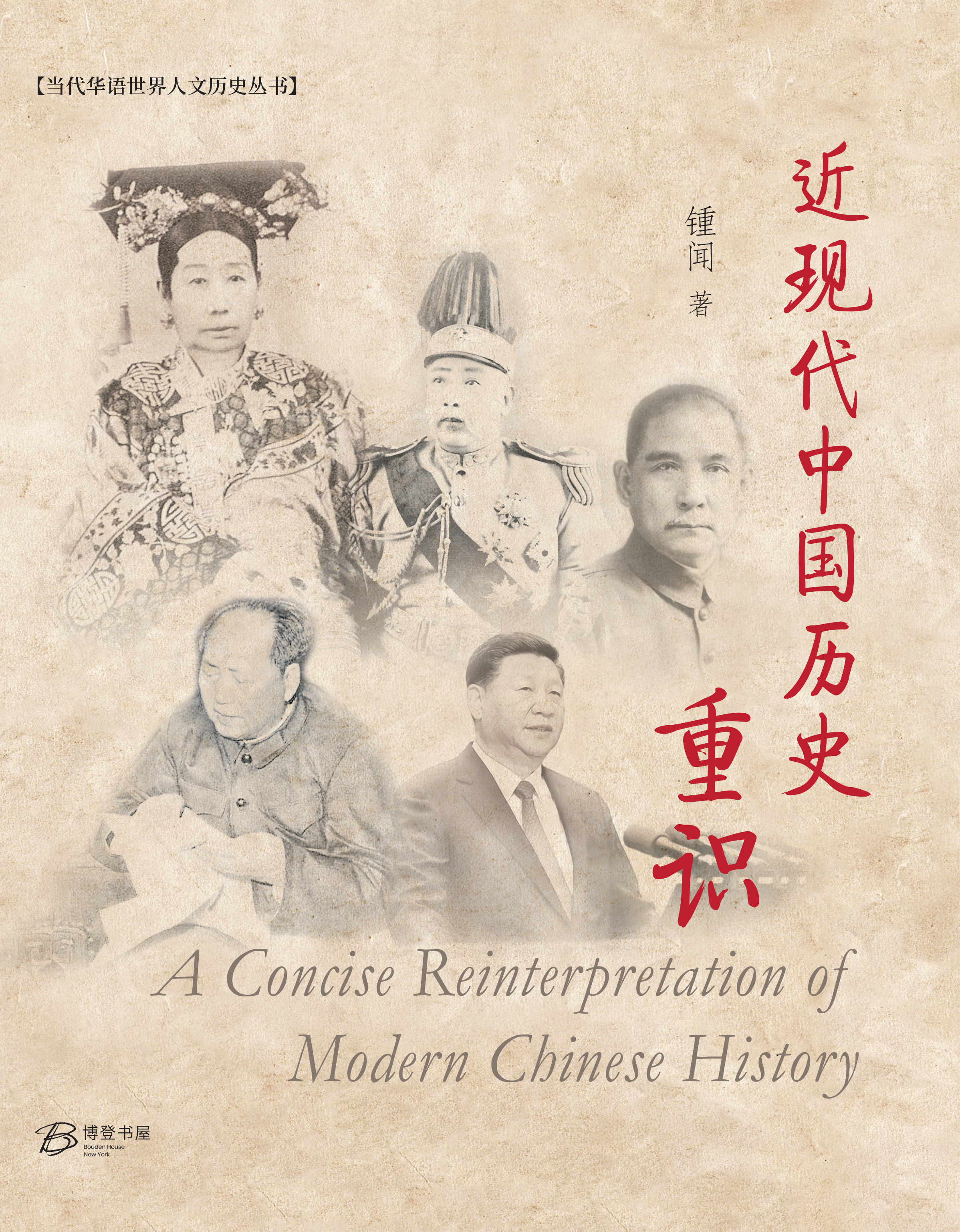
Appendix 4: Reflections on “Re-understanding Modern Historical Figures”
Miana
After reading *Revisiting Modern Historical Figures*, I was somewhat shaken. For the past two years, I’ve been trying to understand “another side” of history through various channels. This book allowed me, for the first time, to systematically, comprehensively, and objectively learn about the figures and stories of modern history. I even felt like I was “binge-watching a TV series,” wanting more. I hope the author can publish a series, such as *Revisiting Modern Historical Events*, connecting major events in modern history, such as the Opium War, the Hundred Days’ Reform, the Xinhai Revolution, the Northern Expedition, and the Xi’an Incident, weaving the characters into a narrative, creating a captivating revisiting of modern history.
Justice and Evil
Based on my observations and experiences over the past two years, I believe there is only one kind of opposition in the world: the opposition between justice and evil. There is only one kind of endeavor: the struggle between justice and evil. Even among the figures of the late Qing Dynasty, we can still see many aspects of “justice.” Zuo Zongtang, Zeng Guofan, and Li Hongzhang, as officials serving the Qing court, I believe they were extremely dedicated. Of course, Empress Dowager Cixi’s ability to recognize and appoint capable people also played a significant role. It’s conceivable that Empress Dowager Cixi was quite adept at handling the relationship between the emperor and his ministers. A good ruler is essential for good ministers, which in turn fosters a positive social atmosphere. Compared to the early Qing dynasty, where the Qianlong era saw the emergence of corrupt officials like Heshen, Cixi’s rule produced several loyal ministers willing to serve the court. This demonstrates that Cixi, in terms of both her own strength and her ability to manage people, was generally competent in assisting the Aisin Gioro family in governing the country.
The mention in “Re-understanding Modern Historical Figures” that Cixi was able to reflect on the disaster of the Eight-Nation Alliance and prepare for a constitutional monarchy surprised me greatly. I was completely unaware of this period of history; it was like seeing a ray of light in the darkness, albeit a very faint one. However, I have never seen this faint light in any figure from the Republican era. Today, the world is deteriorating, and many Chinese people have become shamelessly cunning in their dealings. For a time, I worked and studied in an office building in Shanghai. The majority of the staff were white-collar workers, and many mid-level white-collar workers’ career plans revolved around cultivating relationships with government officials, taking pride in serving the powerful. Some even switched jobs or took civil service exams for this purpose. A smaller group became morally ambiguous “technical fools,” unable to distinguish right from wrong, because they could earn a living through their own skills. These men didn’t need to flatter their superiors, gradually turning into obsessive technical craftsmen, unable to distinguish right from wrong, and many became Maoist patriots, which was both infuriating and laughable.
After living in Shanghai for over two years, I actually saw resilience, diligence, and kindness in the women around me. From Shaanxi North Road to Shaanxi South Road, the entire street was lined with shops run by women entrepreneurs—coffee shops, clothing stores, and restaurants. Many of the owners were returnees from studying abroad. These women were mostly ambitious, thoughtful about current affairs, and very independent. Their hospitality was also quite reasonable; even if a sale wasn’t made, they remained very polite. The founder of Li Liming, a well-known crocheted clothing brand in Shanghai, is also an older woman. Shanghai is the birthplace of modern textile industry. During periods of economic hardship, large quantities of dyed fabric were scarce, so Shanghai women mostly crocheted clothes from yarn. Typically, several children in a family would unravel and re-crochet, recycling the yarn and creating this unique Shanghai-style hand-knitting culture. Of course, this brand also faces challenges brought about by technological innovation, but that’s another story.
On another note, regardless of gender, Chinese people generally lack a strong sense of “stubbornness” in pursuing justice and thirsting for knowledge. Even when encountering one or two slightly better people, they mostly exhibit a moderate approach. This isn’t necessarily a major problem; what’s more urgent is the need for good leadership at the top to minimize the negative aspects of society, providing a place for the average, lower-class population, and gradually fostering a positive social atmosphere, preventing the lower classes from falling into a state of “inability to distinguish right from wrong.”
Currently, the situation in China is that the lower classes are largely in a state of “inability to distinguish right from wrong” and “inability to differentiate between good and evil.” In Shanghai, many ordinary citizens sense that the system is wrong and oppressive. However, the moment the clutches of power reach out, everyone stops thinking and readily kneels before it. It’s truly incomprehensible how society has degenerated to this point. If there were enough righteous people, they would naturally unite without any slogans or propaganda. If everyone understood right and wrong, during the pandemic lockdowns, everyone would naturally break through that invisible wall. Unfortunately, everyone is willing to become a lamb to the slaughter. In such an environment, it’s naturally difficult for the few who remain clear-headed to survive. Even some people of decent character become unrecognizable in this environment.
The ignorance and enslavement of the lower classes is the foundation for rampant tyranny. While “lying flat” (a Chinese expression for complacency or submission) is a major trend among young people today, the mainstream trend remains taking civil service exams and postgraduate entrance exams. Many of my postgraduate classmates are willing to work in local government agencies, and very few are willing to study abroad. Even those who do choose places like Hong Kong and Macau.
The Army of Justice Must Be Present
The section on historical figures of the Republic of China was still somewhat obscure after reading it. Overall, repeatedly examining any figure from that era reveals no glimmer of hope for the nation; most were opportunists or power-seekers. The Republic of China period was also a time of divergence between different schools of thought, and it felt as if no one was truly upholding justice. It was mostly a group of confused individuals who simply embellished their roles on the historical stage. The absence of a force for justice ultimately allowed a scoundrel and hypocrite like Mao Zedong to seize power.
Looking back over the past 200 years, it seems the only time China could have potentially embarked on the path of constitutionalism was during the late Qing Dynasty when Empress Dowager Cixi presided over a constitutional monarchy. While the Qing Dynasty existed, at least people still acted around the central government, maintaining a basic level of decorum. After the Qing Dynasty collapsed, morale collapsed, and there was no central authority. Yuan Shikai’s reign as a “foreign emperor,” while creating a brief period of unity, lacked both family support and capable advisors; he showed no potential to truly rule the country. Following Yuan Shikai, the nation continued to divide. Figures like Li Yuanhong, Xu Shichang, Wu Peifu, and Zhang Zuolin rose and fell quickly, and a righteous army never truly arrived. These attempts at localized national unification essentially failed.
Sun Yat-sen is consistently portrayed as a positive figure in domestic textbooks and publications. However, his revolution was, in effect, an act of “treason,” introducing a hungry wolf into China. At the time, China was in the midst of a failed attempt at localized unification, and the Comintern was eager to expand its influence in China to strengthen its communist camp. Moreover, the United States was also in a period of democratic stability and preoccupied with its own problems; China was to Russia what a fat sheep was to a hungry wolf. Our tragedy lies not in the misfortune of history, but in the ugliness of its figures. It was precisely because these now-deceased historical figures failed to overcome the greed and ignorance inherent in their humanity that disaster gradually brewed. It was also during that historical period that the soil of justice was eroded, both among the upper echelons and the common people. Those in high positions lost their moral compass; upholding justice was too arduous, while living a life of treason was the easiest.
Current textbooks and reading materials in China often distort historical figures, causing “secondary harm” to today’s children and blinding them. What will the consequences be in the future? Perhaps it’s not so pessimistic, because people’s awakening can happen in an instant. On the contrary, experiencing some “deception” can help them see the world more clearly.
Women are the second line of defense for justice.
When I tried to understand “Red Sun” (Russian leader) by reading many books, many domestic books were only superficial and vague. However, when I read about his repeated fickleness and abandonment of his former lovers, I realized that such a man is basically a scumbag. The greater his achievements in his career, the more his moral bottom line has deteriorated. I prefer to interpret people through their relationships with men. The partners of leaders in authoritarian countries are often a mystery. They may not have a partner, or they may have too many. National leaders are public figures, and it shouldn’t be too embarrassing for them to disclose their partners to their citizens. In other words, when they accept this position, they should exchange some private information. Authoritarian countries like China, North Korea, and Vietnam still have occasions where the First Lady appears in public, but it seems that the Russian First Lady rarely appears in diplomatic affairs, giving the impression that she “doesn’t even bother to pretend anymore.” In contrast, leaders in democratic countries usually make their partners public, and most successful presidents have happy and complete families, with dutiful wives and children who often follow in their footsteps. Women of great principle are often compassionate and loving, serving as a buffer for the cause of justice.
Few women are mentioned in *Revisiting Modern Historical Figures*. Soong Ching-ling and Soong Mei-ling were the wives of Sun Yat-sen and Chiang Kai-shek, respectively. Soong Ching-ling colluded with Sun Yat-sen in the Russian Revolution and the Communist Party, remaining steadfast in her beliefs even after his death, “fighting to the death” for the communist cause. She completely lost her judgment in the face of major issues, only thinking of her own high position. Even if she were alive today, I believe she would not apologize, and even if she did, I think no one would accept it. Although *Revisiting Modern Historical Figures* does not mention Soong Mei-ling, her later discord with Chiang Ching-kuo and her departure to the United States suggest that this Madame Chiang was also too deeply entrenched in political ambitions, failing to align herself with the Chiang family, ultimately acting solely for her own selfish interests. Jiang Qing, Mao Zedong’s wife (according to netizens), had a relationship with him more like that of a superior and subordinate. Judging from the video circulating online of her court trial after the Cultural Revolution, her tone was sharp and arrogant, lacking any trace of gentle femininity; she was probably truly “Chairman Mao’s dog.” This shows how pitiful the Chinese people are, lacking both a father upholding justice and a mother with compassion and love for the people, forced to wander the international community.
In *Dream of the Red Chamber*, Jia Baoyu’s previous life was that “stubborn stone,” never encountering a woman who could enlighten him. His seemingly perfect match with Xue Baochai appears to be a union of equals, but closer inspection reveals they are completely different. Jia Baoyu could be described as somewhat “angry young,” while Xue Baochai is entirely led by the nose by worldly values; they are incompatible. Lin Daiyu possesses independent female thought, but seems too “highbrow” and incapable of reconciling with worldly values. If Lin Daiyu had the wisdom to reconcile with worldly values, I believe she would have helped Jia Baoyu embark on the right path.
In China, excessive obsession rarely ends well. Abroad, however, obsessive individuals can achieve remarkable results in fields like new technologies. Obsessiveness is a national asset, like a “stubborn stone” that requires meticulous carving to become a “jade.” But I believe the current domestic environment has virtually no chance of fostering such “stubborn stones.” If we continue to insist on skills-based education, completely stifling a person’s thinking and leaving no opportunity for reflection, they will ultimately become utilitarian machines.
However, I believe the possibility of “stubborn stones” emerging in the future still exists. Having these “stubborn stones” requires the right “golden tools”—the crucial role of a nation in nurturing women. Only through the combination of both can they support and refine each other, creating something truly remarkable. Our co-educational system instills a strong utilitarian mindset in female students. Upon leaving school and entering society, they are eager to find validation. Very few women around me have a strong sense of family. In my small hometown, there are still some women with a strong desire to start a family, but in Shanghai, almost none. Only gentle and virtuous women can nurture good offspring. If a mother or wife harbors an extreme utilitarian mindset, she will drag her family down. Society is composed of individual families; if families fall apart, society will be doomed.
When necessary, there is a need for specialized education for female offspring—that is, girls’ schools. Shanghai’s few remaining girls’ schools have become co-educational. Girls’ schools allow girls to express themselves more confidently, fully realize their potential, and not be bound by gender bias. Without male interference, girls can quickly grasp gender differences, the different roles men and women play in society, and their different social goals. Of course, this is based on the premise that society can cultivate outstanding boys. If society lacks outstanding boys, cultivating many outstanding girls would be a tragedy; they might even choose to remain single. The pathways for raising boys and girls should be different. Boys’ skills come more from social competition, while girls rely more on family education and the transmission of female education. Excellent boys emerge from a favorable social environment. A competitive social environment, coupled with the support of a good wife, creates a stable family unit, which in turn contributes to a positive social environment. This may require the efforts of several generations.
A gentle and courteous social atmosphere is fertile ground for the cause of justice.
The current regime is built on theft and deception. Any reforms it undertakes are futile. In popular online parlance, it’s like “carving flowers on dung” (referring to superficial beautification without fundamental change, a metaphor used by netizens to express dissatisfaction with state-owned enterprises; a similar expression in English is “put lipstick on a pig”). The current regime is clearly unpopular; its actions since the reform and opening up can be described as “carving flowers on dung.” Yet, many people still buy into it, including now, with a large number of entrepreneurs still supporting it. They will certainly not have a good end, but it is precisely because they buy into it that the regime can linger. If they didn’t, everything would end much sooner.
Universal values have not been popularized among the people. Even in Shanghai, “troublemakers” still make up the majority. During the pandemic lockdown, arguments and even fights frequently broke out among residents in apartment buildings, with local police officers intervening as often as food delivery drivers. There was a high level of hostility in the community. Even many foreigners who came to Shanghai found themselves unconsciously assimilated. Many foreigners in Shanghai didn’t behave as politely and courteously as they are abroad; instead, they became selfish and petty like ordinary citizens. Abroad, especially in elevators, foreigners are usually very polite, holding the door open for you and pressing buttons for you. The same foreigners in Shanghai behaved completely differently. I once saw a foreigner loudly scolding his child in a shopping mall, behaving like a poorly behaved family from the countryside. Another time, in a Shanghai park, I saw a person hunched over, moving slowly, their eyes devoid of any light. At first glance, they seemed like an ordinary Shanghai citizen, but upon closer inspection, it turned out to be a foreigner. It’s disheartening; foreigners coming to Shanghai ultimately become assimilated by the Chinese. Many foreign women who come to China also become very materialistic and competitive, completely different from the foreigners I’ve met abroad. Of course, generally speaking, foreigners in China are still of relatively high quality; it’s just that foreigners in China aren’t as well-mannered as those abroad—that’s a fact.
I was chatting with a working-class citizen in Shanghai recently, and she analyzed that there are only three classes in society now: those in power, their lackeys, and ordinary people. I don’t entirely agree. The rise of new technologies has actually created new groups. These people don’t need to cultivate too many relationships with the government to make a living, yet they can still do better than ordinary people. They also maintain independent thinking and are very autonomous; I think they’re like “new citizens.” These “new citizens” are mostly born in the 1980s, from middle-class families, with bachelor’s or master’s degrees, complete families, harmonious marriages, and one or two children. These “new citizens” are not actually supporters of the regime; the larger their numbers, the greater the hope for this society.
If the social atmosphere is good, and everyone is a so-called “good citizen,” then the foundation of this society is good, and everything from the bottom up is positive. If a society’s atmosphere turns law-abiding citizens into bad and unruly ones, then that society is clearly seriously ill. Such a sick society can only be ruled by tyranny; a good regime simply cannot manage such unruly people. Regardless of the type of regime, its ultimate goal and standard of measurement is the common people. If the people under its rule are kind and well-behaved, then such a regime can continue to thrive. For a regime to achieve sustainable development, it must also ensure that its people are kind and well-behaved; the two are mutually reinforcing.
THE END
 正义钟声 Voice of Justice