
A Concise Reinterpretation of Modern Chinese History
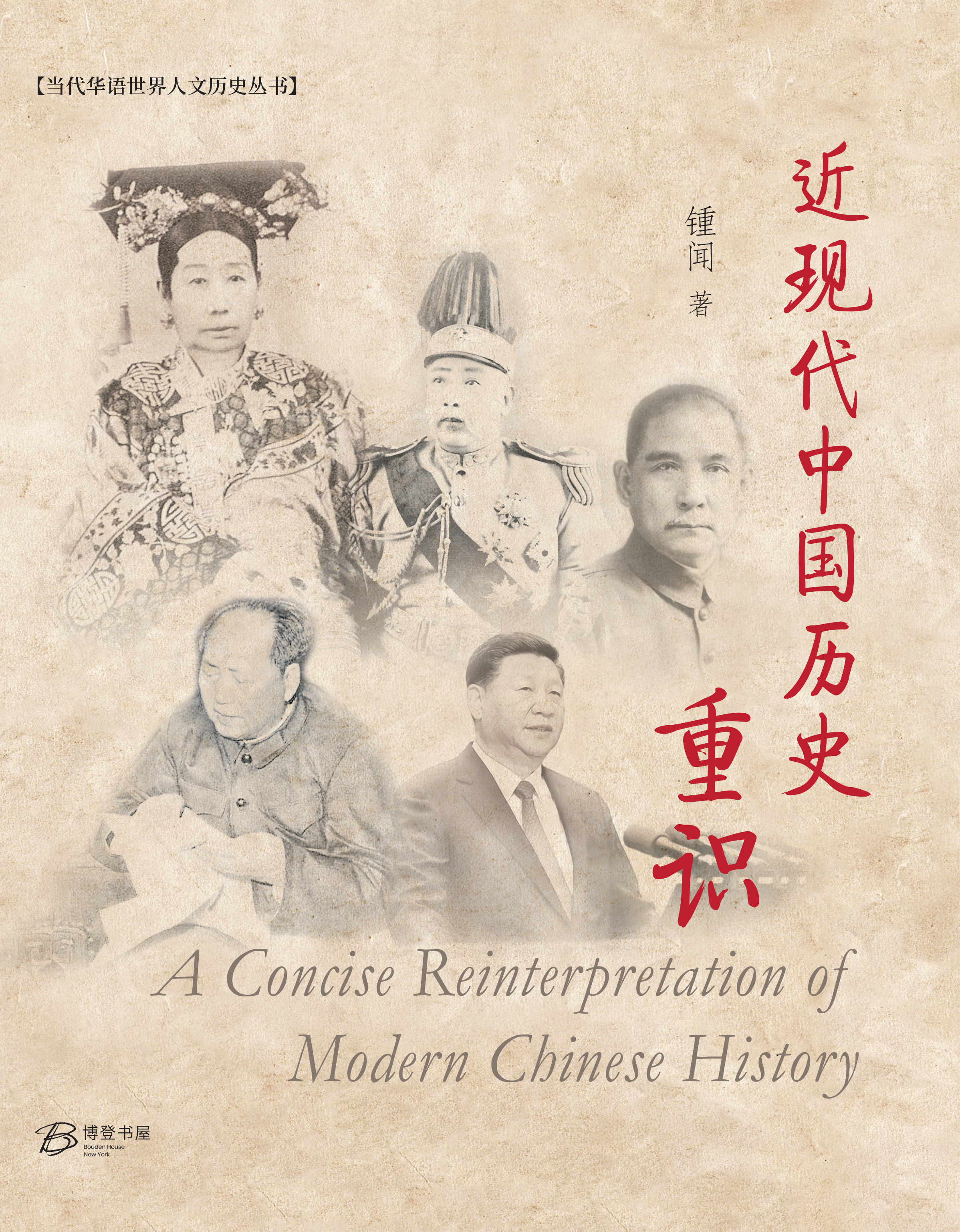
Appendix 1: Optimistic 5-10 Year Expectations: China Will Abandon Mao Zedong—Xi Jinping
Reading Professor Andrew Nathan’s Interview with Wang Tiancheng: “Development, Power, Crisis: Can This Regime Last?”
To Professor Zhang Jie,
Professor Zhang, thank you for sending me the October 2023 issue of *China Democracy Quarterly*. I saw the interview with Wang Tiancheng by Andrew Nathan. Professor Nathan has been concerned about the development of democracy in China for decades, which is very admirable.
The CCP brought a century of disaster to China. When Mao Zedong died in 1976, the whole country rejoiced, thinking the disaster was over. Mao Zedong artificially created a great famine that starved 50 million people to death. The whole country used food ration coupons, and the people were in a state of semi-starvation for a long time. In 1979, 5,000 high-ranking cadres held a meeting to review historical experience, demanding the abandonment of Mao Zedong and condemning him for the starvation of 50 million people. However, Deng Xiaoping raised the “Four Adherences” as a big stick, insisting on upholding Mao Zedong Thought. Mao’s portrait was still displayed in Tiananmen Square, and people kowtowed to Mao’s body in the Mao Memorial Hall, making the condemnation of Mao Zedong meaningless. Deng Xiaoping was Mao Zedong’s “backup plan.” His merits and demerits are balanced; ending Mao’s class struggle was a major achievement, while insisting on kowtowing to Mao was a major fault.
In 1989, Hu Yaobang, dismissed by Deng Xiaoping, died of anger, sparking nationwide mourning. The mourning demanded democracy and opposed repression, leading to a pro-democracy movement that lasted for over a month. Deng Xiaoping then deployed 250,000 troops and hundreds of tanks, opening fire on millions of civilians in Beijing, massacring 32,000 people overnight. Nationwide arrests of pro-democracy activists followed, and to this day, Xi Jinping has not rehabilitated the June 4th massacre.
Deng Xiaoping’s actions during the June 4th massacre were emboldened by then-US President Bush’s inaction. After the massacre, Bush even sent a secret envoy to Deng, pleading that he not affect US-China relations. In October 1989, he even invoked former President Nixon’s visit to Deng, again pleading for him not to affect US-China relations. This is utterly absurd, a complete reversal of right and wrong, and a distortion of the true relationship.
In 2011, Hu Jintao, the leader of China’s democratic and enlightened faction, sought to revive Confucius by erecting a statue of him east of Tiananmen Square. This move was discovered by the de facto leader Jiang Zemin, who remembered Mao Zedong’s statement, “If Confucius is brought back, the Communist Party will be finished.” Three months later, Jiang ordered the statue removed, thus halting Hu Jintao’s revival of Confucius and ultimately causing the CCP’s democratic transition to fail. Jiang then appointed Xi Jinping to replace Li Keqiang as General Secretary, leaving Hu Jintao without a successor and forcing the transition to be interrupted.
Then-US President Obama failed to recognize the significance of erecting the statue of Confucius and remained indifferent. If Obama had recognized that “bringing Confucius back would mean the end of the Communist Party” and immediately issued a statement supporting China’s revival of Confucius, Jiang Zemin would not have dared to oppose the US, and the Confucian revival movement would have continued.
Then, in 2019, a three-year pandemic began. Xi Jinping’s experiment with biological warfare resulted in a leak that spread throughout China and globally, sparking widespread condemnation and opposition. Xi Jinping concealed his alleged bribery of UN health officials and countered the misinformation that the pandemic originated in the United States. In 2021, US President Biden announced a three-month investigation, utilizing the nation’s national computers. However, by August, the investigation had ended without a report, fading into obscurity. This raised suspicions that Xi Jinping bribed Biden through his son, who did business in China, and the pandemic investigation was never mentioned again. If the investigation had revealed evidence of Xi Jinping’s wrongdoing, it would have triggered global lawsuits and demands for compensation, making him inescapably guilty and forcing him to step down prematurely. Biden’s decision to let Xi Jinping off the hook and reconcile with him surprised the public.
In 2022, Xi Jinping’s 10-year term expired, and he was legally obligated to step down. However, Xi sought to remain in power for life, desperately refusing to resign, which sparked nationwide and party opposition. Xi used his power to suppress the opposition, even having his bodyguards remove former General Secretary Hu Jintao from the podium, causing a sensation both domestically and internationally. US President Biden remained silent throughout, allowing Xi to remain in power for life.
Looking back over the more than 40 years since Mao Zedong’s death, there have been four opportunities—1979, 1989, 2011, and 2022—to abandon Mao Zedong and transform China, but all failed. A major reason for these failures was the lack of support from the United States. These attempts to transform China did not encounter presidents like Wilson, Hoover, Kennedy, or Reagan, who were staunchly anti-communist, but unfortunately, they encountered the peacemaker President Carter (1979). Carter did not support the demands of 5,000 high-ranking officials to abandon Mao Zedong; he only made two requests to Deng Xiaoping: permission to publish the Bible and permission for missionaries to return to China. Deng Xiaoping replied: “Publish the Bible, YES; missionaries to return to China, NO.” Carter agreed.
President Bush remained silent about the June 4th massacre of Deng Xiaoping in 1989. He was a good friend of Deng Xiaoping but not of the million people of Beijing. President Obama’s indifference to Hu Jintao’s “revival of Confucius” might be due to political ignorance. President Biden’s three-year silence on the pandemic investigation, intentionally letting Xi Jinping off the hook, is it dereliction of duty or bribery? Is there an intention to make Xi Jinping a lifelong emperor?
Since President Roosevelt’s 1907 circumnavigation of the globe with 16 of the most advanced warships to demonstrate America’s supreme influence, the United States has dominated world affairs, especially those concerning major powers. China’s affairs are inseparable from American influence; one could say that China’s rise and fall are both due to the US. Over the past century, no major event in China’s success or failure has occurred without American involvement.
The century-long catastrophe of the CCP and the change of Mao Zedong’s regime were inevitable, though the timing was somewhat accidental. Since 1979, four attempts at change have failed, and the process of changing regimes has become increasingly mature. In the next 5-10 years, there will be two more opportunities—the 21st and 22nd CCP National Congresses—to discuss Xi Jinping’s future. Xi Jinping is currently suppressing all dissenting voices, forbidding any mention of him online. A major outburst is certain to occur in the next 5 years.
Professor Zhang, I am 92 years old, my life is nearing its end, and I may not live to see China abandon Mao Zedong—Xi Jinping. However, I am optimistic that Mao and Xi will be abandoned within 5-10 years. Professor Andrew Nathan, at 80, will certainly live to see it, not to mention the younger generation.
Chung Wen 10/24/2023
 正义钟声 Voice of Justice