
A Concise Reinterpretation of Modern Chinese History · Chinese Kuomintang
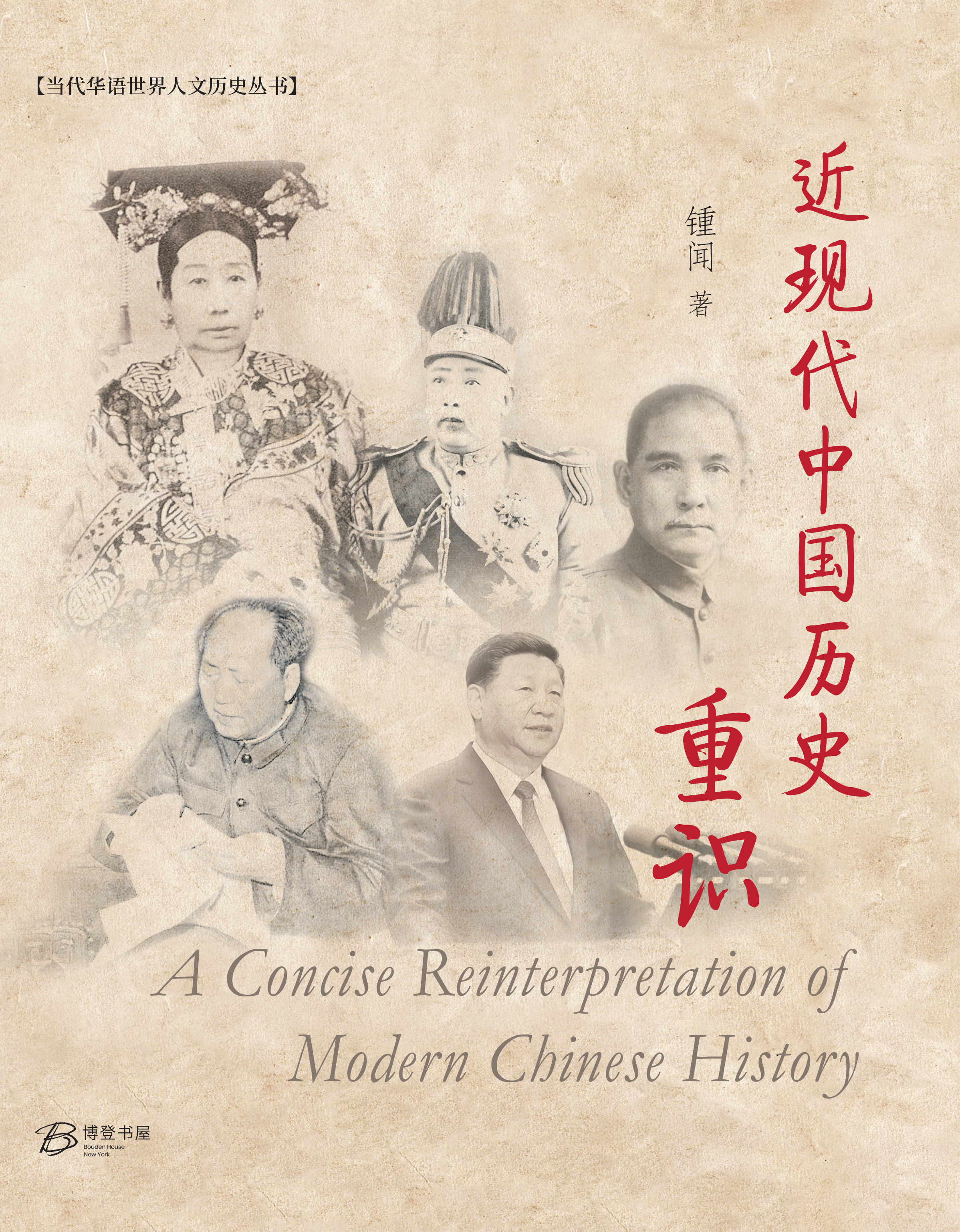
Chapter 22: Reassessing Sun Yat-sen
Sun Yat-sen was revered by Chiang Kai-shek as the Father of the Nation, while Mao Zedong called him a “forerunner of the revolution.” To this day, the Republic of China in Taiwan enshrines him as a spiritual symbol, and the Chinese Communist Party still refers to him as the “Pioneer.”
I. Youthful Admiration for Hong Xiuquan
The real Sun Yat-sen, in his youth, admired Hong Xiuquan, calling him “the foremost anti-Qing hero,” and even referring to himself as “the second Hong Xiuquan.” Yet Hong Xiuquan had long been regarded among the people as a bandit, responsible for burning, killing, looting, and causing the deaths of twenty million people over more than a decade.
Sun Yat-sen organized and financed local secret societies and desperadoes, launching ten anti-Qing local uprisings—so-called “insurrections”—all of which ended in failure.
Sun Yat-sen traveled among overseas Chinese communities in Southeast Asia and the Americas, promoting anti-Qing revolution and fundraising, but was often ignored. He later joined the Hongmen secret society, received the title of “Hong Stick,” and gained a place to eat and lodge, but few took him seriously, calling him “Sun the Big Cannon.”
II. The Xinhai Revolution and a Nominal Presidency
The so-called “Xinhai Revolution” of 1911 was in fact an accidental incident within the Qing army in Wuhan, later amplified and exploited to become the fuse that overthrew the Qing dynasty. At that time, Sun Yat-sen was in the central United States, working in a Chinese restaurant to make a living. Upon receiving a telegram, he returned to China and on New Year’s Day of 1912 assumed office in Nanjing as provisional president.
After Yuan Shikai forced the Qing emperor to abdicate and became president, Sun Yat-sen resigned voluntarily and took charge of railway construction. Yuan allocated 100,000 yuan for this purpose, but Sun undertook no railway construction at all. When Yuan later investigated the whereabouts of the funds, the matter was left unresolved.
In 1913, following the assassination of Song Jiaoren, Sun Yat-sen advocated armed resistance against Yuan Shikai. Huang Xing, the second-ranking leader of the Kuomintang, argued for a legal solution. Sun insisted on launching the “Second Revolution,” which quickly failed, forcing him to flee to Japan. In 1915, at age 49, Sun married 22-year-old Soong Ching-ling in Tokyo.
After Yuan Shikai’s death in 1916, Sun returned to Shanghai and issued a “Declaration to Punish Yuan.”
III. Establishing an Illegal Government in Guangzhou
In 1917, Zhang Xun attempted a restoration of the Qing dynasty, but was soon defeated by Duan Qirui. Sun Yat-sen called on parliamentarians to go south to Guangzhou and establish an alternative regime, forming the illegal “Constitutional Protection Government,” which he termed the “Third Revolution.” At that time, the Beijing government was the only internationally recognized legitimate government. Sun thus became the originator of “two Chinas.”
Sun assumed the title of Grand Marshal in Guangzhou but was soon sidelined by the Guangxi and Yunnan warlords.
In 1922, during the Zhili–Fengtian War, Wu Peifu of the Zhili clique won, restored parliament, and many Guangzhou legislators returned north. Guangdong military leaders favored reconciliation, but Sun insisted on launching a Northern Expedition, leading to an incident in which artillery shelled the presidential palace in opposition to Sun. Sun was forced to retreat to Shanghai.
In 1923, Sun Yat-sen encountered the greatest opportunity of his life. After the Russian Revolution, the Soviet regime was internationally isolated and unrecognized by the United States. Stalin urgently sought to cultivate a pro-Soviet government in China and sent Adolf Joffe to China. Joffe first approached the Beijing government, then Wu Peifu, proposing assistance in unifying China with funds and weapons. Both demanded, as a precondition, that Russia withdraw from Outer Mongolia. The Soviets refused and then turned to Sun Yat-sen in Shanghai.
With Soviet support, Sun Yat-sen felt like a fish in water. He did not care about Outer Mongolia, even stating that Soviet troops could enter Xinjiang if that would help him unify China faster. Joffe and Sun reached an immediate agreement, issuing the “Sun–Joffe Manifesto.” The Soviet Union assisted in building a party army, using Guangzhou as a base, and establishing the Whampoa Military Academy. At the time, the Communist Party was far weaker than the Kuomintang and incapable of seizing power on its own; to take national power, it had to rely on the Kuomintang.
IV. Sino-Soviet Military Cooperation and the Creation of a Party Army
In 1924, the Soviet Union provided large quantities of weapons and financial aid to build a party army in preparation for the Northern Expedition, aiming to overthrow the Beijing government and unify China.
In October 1924, Feng Yuxiang seized power in a Beijing coup and invited Sun Yat-sen to the north to discuss national affairs. In early 1925, Sun arrived in Beijing and in March died of liver cancer at the age of 59.
Sun Yat-sen’s unfinished goal of unifying China through the Northern Expedition was completed by Chiang Kai-shek in 1927. Sun possessed a strong desire for power and encouraged personal worship. Before his death, he instructed that his body be placed in a crystal coffin, following Lenin’s example, for public viewing. However, the Soviet-made crystal coffin arrived too late, and the body had already darkened and could not be preserved.
The Kuomintang built the Sun Yat-sen Mausoleum for him, which was sufficiently grand, but at the time he was not honored as the Father of the Nation.
It was not until late 1938, when Wang Jingwei defected to Japan and established a Japanese-backed regime in Nanjing, that Chiang Kai-shek hurriedly elevated Sun Yat-sen to the status of “Father of the Nation” in 1939. Chiang feared that Wang Jingwei would claim Sun first and seize him as a symbolic authority. Both Wang and Chiang were Sun’s successors, and Wang’s prestige exceeded Chiang’s. Had Wang not defected, there would have been no “Father of the Nation.” Fourteen years after Sun’s death, no one had sought to make him such. Sun’s elevation was purely a product of political struggle between Chiang Kai-shek and Wang Jingwei.
V. Sino-Soviet-Communist Suppression of the Guangzhou Merchant Corps
In 1924, Sun Yat-sen, together with Soviet and Communist forces, set fires and massacred the Guangzhou Merchant Corps, creating the Merchant Corps Incident. Fires burned for three days, destroying more than thirty streets. Over 2,000 shops were looted and burned, and 2,100 merchants and civilians were killed.
VI. Still a Kuomintang Symbol
Today, Sun Yat-sen remains the spiritual leader and symbolic figure of the Republic of China in Taiwan, and the Communist Party continues to honor him. How should Sun Yat-sen be positioned in modern Chinese history? This depends on later generations’ reassessment of the gains and losses of the anti-Qing revolution.
Sun Yat-sen devoted his life to opposing the Qing dynasty. Yet from the late Qing period to 1908, a nine-year constitutional plan had already been announced. Had the Xinhai Revolution not occurred, China would have implemented constitutional monarchy within a few years. Was revolution truly necessary? In fact, the governments that followed the revolution performed no better than the Qing government.
Another major controversy surrounding Sun Yat-sen was his struggle for power against the Beijing government. Competing through parliamentary democracy would have been legitimate. Instead, Sun went south to establish regional separatism, set up an alternative regime, and engage in armed confrontation, abandoning the parliamentary democratic path and betraying the original revolutionary ideals. Worse still, he invited Soviet and Communist forces into China, accepted their weapons and funding, allowed the Communist Party to grow, and brought disaster upon China for decades.
 正义钟声 Voice of Justice