
A Century-Long Contest
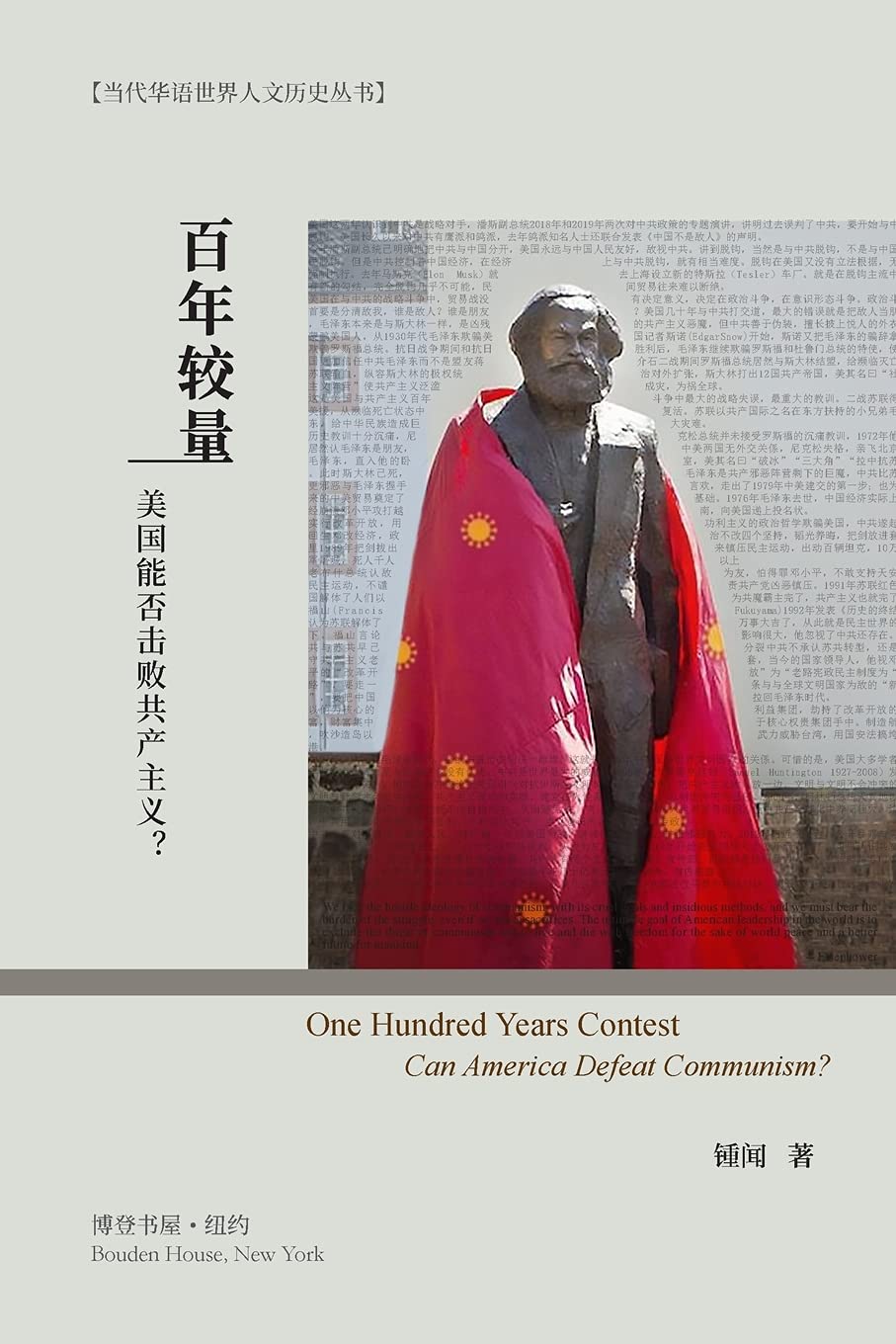
Appendix IV: A Bloody Utopia and the Lessons of the Red Empire — On the 100th Anniversary of the Russian October Revolution (Part 8)
XI
Only those who have endured immense suffering yet preserved a spirit of redemption, like Solzhenitsyn, can issue prophetic warnings: all oppressed peoples, including the people of Soviet Russia, cannot rely on external assistance. If a war were to break out between the deranged rulers of the Chinese Communist Party and Soviet Russia, the entire world would stand by as spectators—perhaps even feeling a secret sense of relief. The persecuted peoples of our two countries should unite and jointly resist the two communist regimes, never allowing futile ethnic hatred to cloud their vision.
We do not know how long (Marxist) communism will continue to bring disaster to the world. It is worth recalling that 135 years ago someone once warned the leaders of several great empires of the time that a small group of utopian communists in Europe would conquer the world with iron and blood. Those leaders dismissed such words as laughable nonsense. We do not know how many strange and tortuous paths human history still has to traverse. I once expressed my own conjecture: worldwide (Marxist) communist ideology may well outlast the (Marxist) communist systems of Soviet Russia and the Chinese Communist Party, and may even spread to other countries. Yet the peoples of our two nations, having suffered deeply and lost so much, are at last moving toward self-rescue and renewal. Shestov used Greek mythology to describe Russia’s fate, because Marxist-Leninist “rational philosophy attempts, through knowledge and monopoly of necessity, to demand that people find happiness in the Bull of Phalaris.”
In the sixth century BCE, Phalaris, the tyrant of Sicily, invented a cruel torture: victims were locked inside a hollow bronze bull and heated to death; their screams passed through bronze pipes and turned into the bellowing of a bull. Shestov called this a simple truth: it is impossible to find happiness in the Bull of Phalaris. The Soviet Union, this bull, imprisoned Russia for seventy-four years, forcing the Russian people to endure enslavement and misery. The history of the Soviet Union’s rise and fall shows that Russians were once seduced by utopian visions, yet still possessed the spiritual strength and moral courage to resist tyranny and abandon empire. To cite another Greek myth: the hero Heracles cleaned the foul, reeking Augean stables—untouched for thirty years—in a single night. Russia produces tyrants, villains, and criminals, but it also produces heroes, champions, and saints. After a cataclysm soaked in blood, Russia needs its own Heracles.
XII
In 1982, Solzhenitsyn delivered a speech at Taipei’s Zhongshan Hall entitled “A Letter to Free China.” Thirty-five years later, the wisdom of this twentieth-century Russian prophet still shines brightly. He warned Taiwan’s eighteen million people: when you face existential peril, you will have the strongest allies in the world—hundreds of millions of Chinese people; their sympathy and support will be your greatest source of spiritual strength and morale.
The Kuomintang ignored this warning and chose ignominious complacency; the Democratic Progressive Party, even more, has been petty and self-deluding. Solzhenitsyn also warned the Chinese people: all oppressed peoples, including the people of Soviet Russia, cannot rely on external aid—only on their own strength. The persecuted peoples of China and Russia should unite to resist the two communist regimes. Let our two peoples maintain mutual understanding, sympathy, and friendship, and never allow futile ethnic hatred to cloud our judgment. Today, Russia has broken free from the nightmare of Marxism-Leninism but has not yet entered the light of freedom and redemption; China, intoxicated by red-imperial ambitions, has become a source of global crisis.
For China, the rise and fall of the Soviet Union carries a particular lesson: any nation, no matter how profound its suffering or how brutal the tyranny it endures, may yet welcome the dawn of civilization so long as it does not abandon the pursuit of truth, remains faithful to traditional values and inner ideals, and cherishes human justice and innate human rights. The immense price paid by countless individuals will condense into a tragic epic of humanity’s resistance to darkness and its quest for happiness.
As the Russian October Revolution approaches its centenary, the Russian people will commemorate this day with deeply complex emotions. In the world today, there is only one country still attempting to resurrect Marx, Lenin, and Stalin, still dreaming of a Soviet empire’s revival—and that country is China. In his report to the 19th National Congress of the Chinese Communist Party, Xi Jinping reaffirmed Mao Zedong’s 1949 pledge of allegiance to Stalin: “The October Revolution fired a single shot and brought Marxism-Leninism to China.” Xi Jinping ought to know that the dark wind of Marxism that blew from the West in the nineteenth century, together with its Russian offshoots—Leninism and Stalinism—cost Russia and Eastern Europe sixty million lives; Marxism-Leninism and its Chinese variant, Mao Zedong Thought, caused eighty million unnatural deaths; North Korea, Cambodia, and other countries have endured hellish suffering. By daring to raise once more the blood-soaked banner of communism, Xi Jinping is pushing China and the world toward a new catastrophe. As people watch closely, they might also repeat Mao Zedong’s next sentence: “To follow the path of the Russians—this is the conclusion.” Lenin and Stalin imposed tyranny, yet were ultimately defeated by the conscience and courage of the Russian people. It can be asserted that if the Chinese Communist Party persists in its crimes, there is only one outcome: utter and irreversible ruin.
October 23, 2017
NEXT: Postscript
 正义钟声 Voice of Justice