
A Century-Long Contest
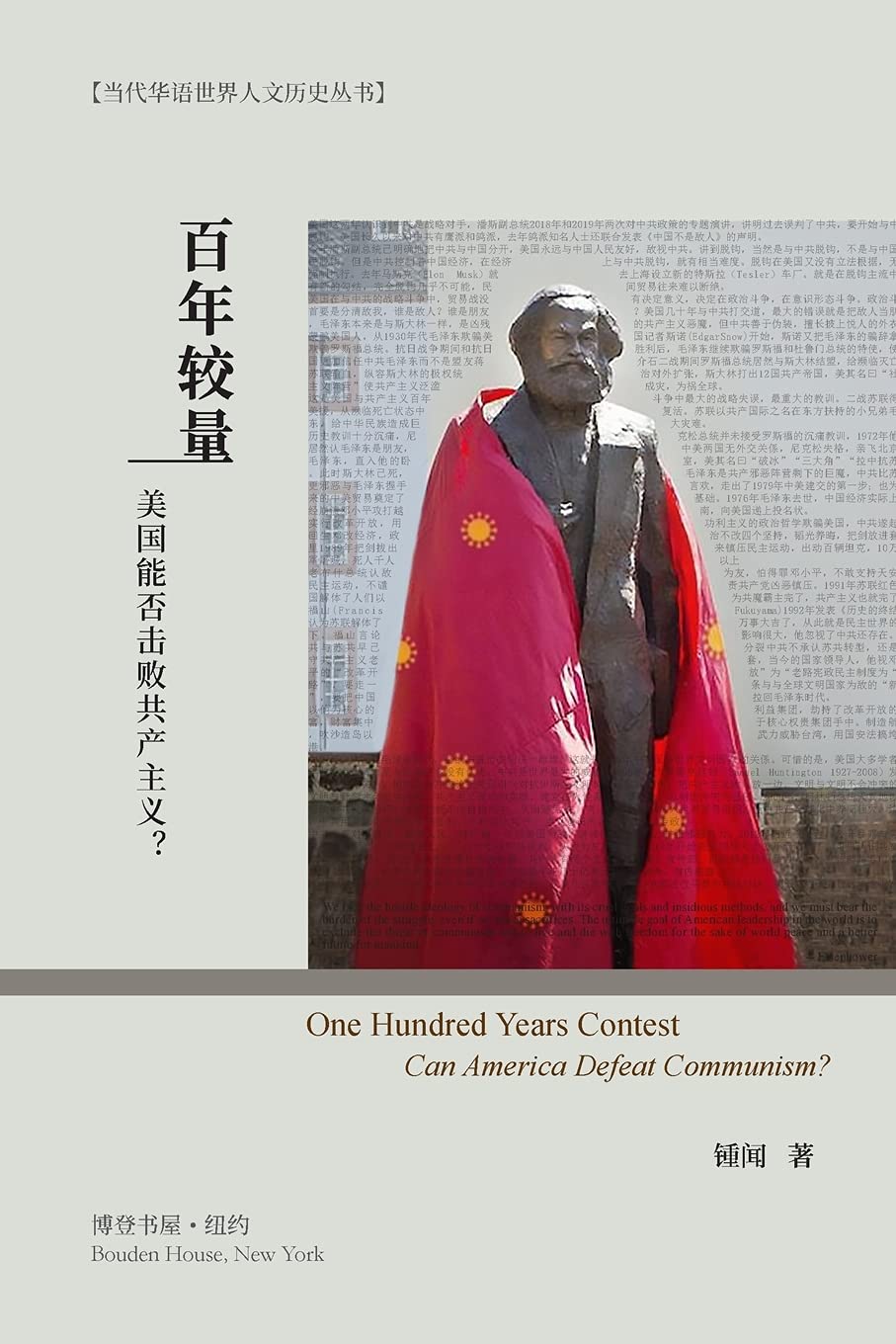
Appendix IV: A Bloody Utopia and the Lessons of the Red Empire — On the 100th Anniversary of the Russian October Revolution (Part 1)
Wang Kang
[This article was written in 2017, on the 100th anniversary of the Russian October Revolution, by the Chinese “independent thinker” Mr. Wang Kang. It has never been published.]
Russian communism is a transformation and deformation of the ancient Russian messianic idea: on the one hand, it seeks the complete unity of God’s kingdom and truth; on the other hand, it harbors the danger of state dictatorship and centralization, contempt for human rights. Resistance to this danger can rely only on the spiritual redemption of the human being.
— Nikolai Alexandrovich Berdyaev (Russia), The Religious Interpretation of the Russian Idea, 1946, Paris.
I
Almost all major events are unexpected; the speed and scale of historical change often surpass humanity’s boldest predictions. The Russian October Revolution and its legacy—the Union of Soviet Socialist Republics—over the three-quarters of a century of its eruption and existence, were both fervently yearned for and passionately embraced, and at the same time intensely hated and resisted. Countless people fought and sacrificed for it; countless others died because of it. Several generations of humanity were actively or passively entangled with this revolution. A hundred years have passed in the blink of an eye, and only now can people look back on and evaluate the Russian Revolution with a relatively greater degree of objectivity and fairness.
In 1844, when Russia and the United States were still twenty years away from abolishing serfdom, the French historian Alexis de Tocqueville predicted that there were two great nations in the world—Russia and America—which started from different points and followed different paths, yet both seemed appointed by a secret decree of Providence to one day hold in their hands the destinies of half the world. The twentieth century that followed verified this prophecy with an unusually clear trajectory and a complete historical panorama.
What brings glory to historical science is not the prediction of the rise of great powers, but the prediction of their decline—for only the latter more shockingly reveals the limits of what can be expected of human nature and the bottom line of what the course of world history can bear. The English writer George Orwell and the Russian-Soviet writer Andrei Amalrik both fixed their gaze on the year “1984” for the Soviet Union. The former predicted that a Soviet-style totalitarian system would engulf the entire world, plunging humanity into irreversible catastrophe, where police, secret agents, and surveillance devices would annihilate the last remnants of conscience and wisdom. The latter firmly believed that Christianity had delayed the fall of the Roman Empire but could not save it from inevitable collapse; likewise, Marxism postponed the disintegration of the Russian Empire—the Third Rome—but was powerless to prevent its ultimate defeat.
One year after Orwell wrote his bleak and despairing 1984 in 1948 (that is, in 1949), the Soviet Union detonated its first atomic bomb. One year after Amalrik wrote the much-ridiculed Will the Soviet Union Survive Until 1984? (1970), five Soviet aircraft carrier battle groups were simultaneously cruising the world’s five oceans to commemorate the 100th anniversary of Lenin’s birth.
Compared with the discovery of the New World and the course of American history, the Soviet Union, upon stepping onto the stage of world history, immediately made unprecedented promises: to build a paradise on earth. Never before had a country, from its very beginning, claimed in the name of humanity and the world to establish such a strange state—one without geographic or national concepts, yet saturated with ideology: the Union of Soviet Socialist Republics.
The “achievements” of the Soviet Union are well known to the world. It repudiated three hundred years of Western modern civilization’s accomplishments and experience and openly declared itself an enemy of the West. It brought a new “gospel” of human liberation to the world, boasting that it had taken a great step closer than ever before, since the Old Testament, to the utopian other shore of a paradise on earth. In thirty years it completed the industrialization that had taken the West two hundred years, transforming an ignorant, backward, decayed third-rate country into a superpower. It played a special role in the world war against Nazi Germany. It launched the first artificial satellite into space and delivered nuclear warheads directly to America’s backyard. Its national philosophy, social system, and way of life became models admired and emulated by countless nations. Its atomic and hydrogen bombs were sufficient to destroy the world many times over. Its final replacement and victory over the West seemed only a matter of time.
At one point, the Soviet Union became the embodiment of humanity’s hope—not only the spiritual homeland of the oppressed classes and oppressed nations worldwide, but also the object of sympathy and admiration from thousands of outstanding Western intellectuals, including the British playwright George Bernard Shaw, science fiction writer H. G. Wells, German dramatist Bertolt Brecht, American writer Theodore Dreiser, French physicists Frédéric and Irène Joliot-Curie, the founder of relativity Albert Einstein, Spanish modern art master Pablo Picasso, French literary giants Romain Rolland and André Gide, among many others.
In the United States alone during the 1920s, intellectual leaders such as John Dewey, Max Eastman, Edmund Wilson, Chamberlin, and Stephens crossed the oceans with pilgrim-like devotion to pay homage to Moscow. They brought back to America novel, challenging, and exhilarating messages. Compared with the gloomy, depressing, and terrifying economic crises and apocalyptic devastation in the United States and the West, Soviet society appeared vibrant, energetic, and innocent. For the first time in history, a great people seemed to be enthusiastically building a new world. The Bolshevik Revolution was not only a natural continuation of the socialist tradition but also represented the direction of the utopian ideal society sought by Western civilization for centuries. Under socialism, the Soviet people were accomplishing what American liberals had never accomplished—and could never accomplish—under capitalism. From the Soviet experiment, the American people could glimpse hope for all humanity. They openly advocated revolution, believing that it would not only bring a new system but also a new religion at a time when Western peoples yearned for spiritual anchorage. In 1932, fifty-two prominent American intellectuals jointly signed an open letter announcing their vote for the Communist candidate William Z. Foster, declaring that only the Communists were wholeheartedly committed to comprehensive social, political, economic, and cultural revolution, and that American intellectuals must choose between a dying world and a new one being born.
A state that claimed the liberation of humanity as its mission, a radiant and advanced system like the Soviet Union, surely should not have had a shorter lifespan than the Roman Empire, the Austro-Hungarian Empire, or the Tsarist Russian Empire it replaced—yet it lasted only slightly longer than Nazi Germany, which perished in war due to its own hubris. A super-empire spanning Eurasia, not strangled in its cradle by military intervention from fourteen capitalist countries, not defeated by the war machine of Nazi Germany, collapsed dramatically at a time when there were no major crises in its economy, military, politics, culture, or diplomacy. Neither defenders nor subverters shed blood for it; there was no war—indeed, there were no longer defenders or subverters at all, only spectators and suddenly unemployed Eastern and Western “Kremlin experts.”
To destroy the world’s first socialist state, to shake such a solid people’s regime based on the worker–peasant alliance and the dictatorship of the proletariat, to bring down such a glorious, great, and correct Communist Party of the Soviet Union—there seemed to be only two possible ways: either a joint invasion by the entire Western world, or a cataclysmic natural disaster.
 正义钟声 Voice of Justice