
A Century-Long Contest
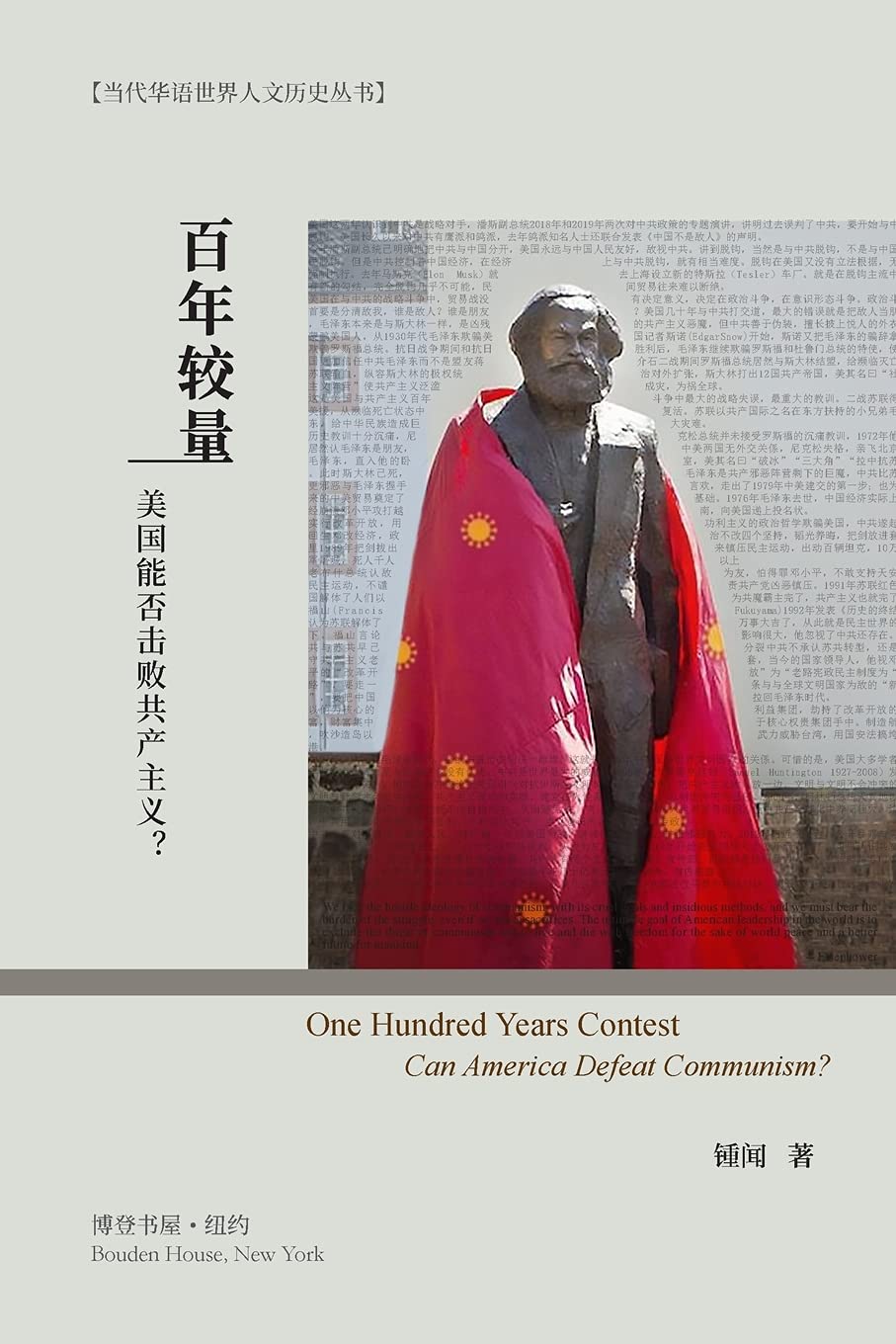
Appendix I: President Bush’s Address at the Dedication Ceremony of the Memorial to the Victims of Communism
Thank you all for joining us today at the dedication ceremony of the Memorial to the Victims of Communism. Please be seated.
Dr. Edwards, thank you for your generous words. Congressman Lantos—there has never been a greater friend of freedom than you; and Congressman Rohrabacher, the same is true of you. Members of the parliaments of the Czech Republic and Hungary, ambassadors, distinguished guests—and most importantly, the survivors of Communist oppression—on this historic day, it is a profound honor to be with you.
(Applause)
Here, at this place, in the company of those who once resisted evil and helped bring down an empire, I proudly accept, on behalf of the American people, the unveiling of the Memorial to the Victims of Communism.
(Applause)
The twentieth century will be recorded as the deadliest century in human history. The record of this brutal age is etched into the memorials of this city. Yet until now, our nation’s capital had no memorial to the victims of totalitarian communism—an ideology that claimed an estimated 100 million innocent men, women, and children.
That is why we gather here today: to remember the lives extinguished by communism, and to dedicate a memorial that will forever inscribe their suffering and sacrifice in the conscience of the world. It took more than a decade to build this memorial, and its completion here in our capital is a testament to the passion and determination of two extraordinary Americans—Lev Dobriansky, whose daughter Paula is with us today
(Applause)—please convey our warmest wishes to your father—and Dr. Lee Edwards.
(Applause)
Along their journey, they faced setbacks and challenges, yet they never gave up, because in their hearts they heard the cries of the victims calling out: “Please remember us.”
Those voices call out to all of us. They are countless. The sheer number of souls who perished in the name of communism is staggering, making it nearly impossible to calculate the exact toll. Scholars estimate that communism claimed tens of millions of lives in China and the Soviet Union, and millions more in North Korea, Cambodia, Africa, Afghanistan, Vietnam, Eastern Europe, and elsewhere around the world.
Behind these numbers lie human stories—families torn apart, dreams shattered, lives ruthlessly destroyed by those seeking totalitarian power. Some victims of communism are well known. Among them was Raoul Wallenberg, the Swedish diplomat who saved 100,000 Jews from the Nazis, only to be secretly arrested on Stalin’s orders and imprisoned in Moscow’s Lubyanka prison, where he vanished without a trace. Another was Father Jerzy Popiełuszko, the Polish priest who turned his Warsaw church into a refuge for members of the Solidarity movement, and who was ultimately kidnapped, beaten, and drowned by the secret police in the Vistula River.
The ghosts of these victims haunt history—and behind them stand millions more, anonymous and unnamed, who died at the hands of communism. They include innocent Ukrainians who starved to death in Stalin’s man-made famine; Soviet citizens killed in Stalin’s purges; Lithuanians, Latvians, and Estonians forced from their homes, loaded onto cattle cars, and deported to the Arctic—Soviet communist death camps. They include Chinese who perished during the Great Leap Forward and the Cultural Revolution; Cambodians slaughtered in Pol Pot’s killing fields; East Germans shot while trying to dig their way to freedom beneath the Berlin Wall; Poles murdered in the Katyn Forest; Ethiopians killed during the Red Terror; Miskito Indians murdered under Nicaragua’s Sandinista dictatorship; and Cubans who drowned at sea while fleeing tyranny.
We may never know the names of these victims. But in this sacred place, the names of the unknown victims of communism are consecrated to history and remembered forever.
We dedicate this memorial because we owe a debt to the dead—to honor their lives and preserve their memory. The Czech writer Milan Kundera once described the struggle against communism as “the struggle of memory against forgetting.” Communist regimes not only took the lives of their victims; they sought to steal their humanity and erase their memory. With the dedication of this memorial, we restore their humanity. We restore their memory. With this memorial, we affirm that the innocent, unknown victims of communism live on in our hearts and will never be forgotten.
(Applause)
We dedicate this memorial because we have a duty to teach future generations about the crimes of the twentieth century—and to ensure that they are never repeated. In this sacred place, we recall the great lessons of the Cold War: that freedom is precious and must never be surrendered lightly; that evil is real and must be resisted; and that given the opportunity, those driven by cruelty and hatred will commit unspeakable crimes and take countless innocent lives.
These lessons matter today, because the evil and hatred that brought such devastation in the twentieth century still exist in our world. We saw their face on September 11, 2001. Like communism, the terrorists and extremists who attacked our nation are followers of a cold-blooded ideology. They despise freedom, suppress dissent, and seek totalitarian control. Like communism, our new enemies believe that murdering the innocent will advance their radical goals. Like communism, they hold free people in contempt, claiming that those who live in freedom are weak and lack the resolve to defend their way of life. And like communism, the violent followers of Islamic extremism are destined to fail.
(Applause)
We will advance the cause of freedom with resolve. And we will ensure that no future American president ever has to stand in this place to dedicate a memorial to the millions murdered in the twenty-first century by extremists and radicals.
We believe in the power of freedom, because we have seen it triumph over tyranny, despotism, and fear. Dr. Edwards mentioned President Reagan’s visit to Berlin. He remembers President Reagan’s words clearly: “Tear down this wall.” Two years later, the Berlin Wall fell. The people of Central and Eastern Europe were finally freed from suffocating oppression. As we mark the twentieth anniversary of that speech, we dedicate this memorial—a reflection of our confidence in the power of freedom.
The designers of this memorial could have chosen an image of repression—a replica of the Berlin Wall, a grim Soviet gulag, or the bone-strewn killing fields of the Khmer Rouge. Instead, they chose an image of hope: a goddess holding the torch of freedom. She reminds us of the victims of communism—and of the force that defeated it.
Like our Statue of Liberty, she reminds us that the flame of freedom burns in every human heart. She is a beacon that no brutal terrorist or authoritarian tyrant can extinguish. She reminds us that as long as an ideology responsible for the slaughter of tens of millions still exists—so long as it clings to life—the struggle against a force stronger than death itself must continue.
(Applause)
She reminds us that freedom is the gift of our Creator, that freedom is the birthright of all humanity, and that freedom will ultimately prevail.
(Applause)
I thank each of you for your contributions to this memorial and to the cause of freedom. I thank you for helping preserve the memory of those who perished under communist terror. May the souls of the victims of communism rest in peace. May those who continue to suffer under communism find their freedom. And may God bless this great memorial—and all who come to visit it.
God bless you all.
(Applause)
June 12, 2007
 正义钟声 Voice of Justice