
A Century-Long Contest
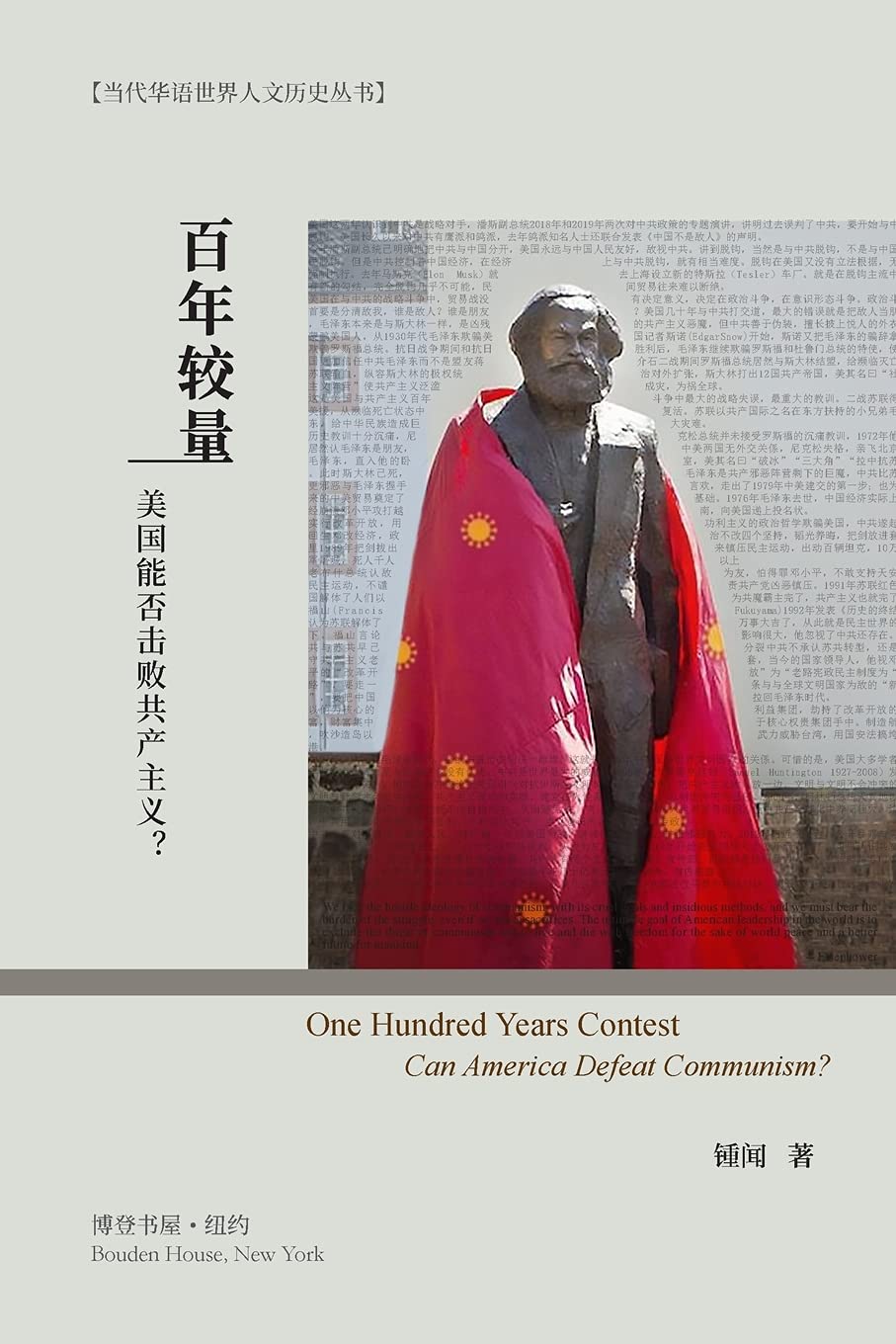
Chapter 33: America’s Anti-Communist Lessons (Part 9)
V. Eradicating the Communist Virus
The Communist Manifesto ends with the call: “Workers of the world, unite!” Communism is an international movement. From its inception, it has been global in nature, not confined to any single country. From the First International to the Second International, its aim was to overthrow governments across Europe. The export of international communism and totalitarianism began with Lenin, was continued by Stalin, and was further developed by Mao Zedong into the theory of “continuous revolution under the dictatorship of the proletariat.” Mao exported communism to Indochina, Albania, and multiple African countries. During the 1970s and 1980s, the Chinese Communist Party funded students from the Third World—especially Africa—to study at Chinese universities. Mao’s most prized disciple abroad was Pol Pot. Under the rule of the Khmer Rouge in Cambodia, millions were slaughtered.
Mao Zedong’s most favored disciple within China is Xi Jinping. As the saying goes, “if old faults are not corrected, they become entrenched vices.” Xi Jinping has inherited and promoted Mao Zedong Thought. Domestically, he has launched a “Second Cultural Revolution,” purging political rivals and eliminating ideological dissent. Internationally, through the Belt and Road Initiative, he has advanced a communist diplomatic strategy aimed at global conquest. Since Xi consolidated power at the end of 2012, the CCP’s communism and totalitarianism have been greatly “carried forward.”
After taking office, Xi has pursued authoritarian expansion on two fronts. On the one hand, through land reclamation and militarization in the South China Sea, military intimidation of Taiwan via the East China Sea, and the global Belt and Road Initiative, the CCP has sought economic and military domination of the world. On the other hand, through massive external propaganda efforts, it has infiltrated democratic countries with communist ideology. The CCP’s increasingly aggressive foreign policy has laid bare its ambition to replace democracy with authoritarian rule.
On December 1, 2017, at the CCP–World Political Parties High-Level Dialogue held in Beijing, Xi Jinping promoted his concept of “building a community of shared future for mankind.” He claimed that China’s development model offers other countries a “new option” and that the China model can help solve humanity’s problems. China put forward a so-called “Beijing Initiative,” emphasizing that the CCP under Xi Jinping’s core leadership has made important contributions to building a shared future for mankind, and calling on political parties worldwide to lead this effort and become promoters of partnership with the CCP.
A specter—the specter of communism—is once again ravaging China. Communist catastrophe originated in Germany, arose in Russia, and flooded China. From small beginnings to massive expansion, American isolationism bears inescapable responsibility. The rise and growth of communism has in fact been decisively shaped by America’s attitude.
From the emergence of the Bolsheviks, President Woodrow Wilson adopted a policy of containment and refused to recognize the Soviet regime, limiting its international influence during the 1920s. In the 1930s, President Franklin D. Roosevelt recognized the Soviet Union. In the 1940s, in order to resist the Axis powers, Roosevelt allied with Stalin, massively transfusing resources into the Soviet system and allowing communist forces to grow unchecked. As a result, communism soon devoured Eastern Europe and the Republic of China. America played a decisive role in the rise of communism. Without Roosevelt’s indulgence, Stalin could not have risen to such power.
The Chinese Communist Party is the final stronghold of communism and totalitarian socialism. Over the past forty years, the CCP state has become the world’s second-largest economy, a rise inseparable from America’s decision to open its doors to the thief by allowing China to join the World Trade Organization. After gaining economic strength, the CCP did not move toward political liberalization as the American “panda-hugging” school had hoped. Instead, economic growth became the material foundation for consolidating and strengthening totalitarian rule.
Sino-foreign cooperation and high-tech development have further provided technical support for the CCP’s “high-tech totalitarianism.” The CCP has inflicted harm on China for seventy years. Domestically, repression and control are airtight. Political dissent is crushed, and with the aid of advanced technology and big data, authoritarian domination has become ever more rampant.
Ending communism requires the United States as the main force. Domestic resistance within the CCP state alone cannot terminate totalitarian rule. External force is required to strike and detonate change—internal resistance combined with external pressure, attacking from within and without—only then can CCP rule be ended and a peaceful transition to democracy achieved.
Following the COVID-19 pandemic of 2020, American political and social elites began to gain firsthand understanding of a communist system that treats human life as expendable. The CCP’s concealment of the virus triggered the largest global pandemic since 1918, resulting in countless deaths worldwide. Regardless of whether COVID-19 was deliberately released from a laboratory, American virologist David Ho has stated that it is an artificially synthesized virus created in a laboratory, a conclusion that scientists no longer dispute. The COVID-19 pandemic of 2020 will stand as a landmark event marking the decline of the communist system.
The urgent task, however, is to eradicate the communist virus. The communist virus is a political version of COVID-19. The Wuhan-origin pandemic that erupted in 2020 spread across the globe, allowing the world to taste the bitter consequences of deception and concealment under a communist authoritarian system. To eliminate this political COVID virus, action must begin in the following three areas:
 正义钟声 Voice of Justice