
A Century-Long Contest
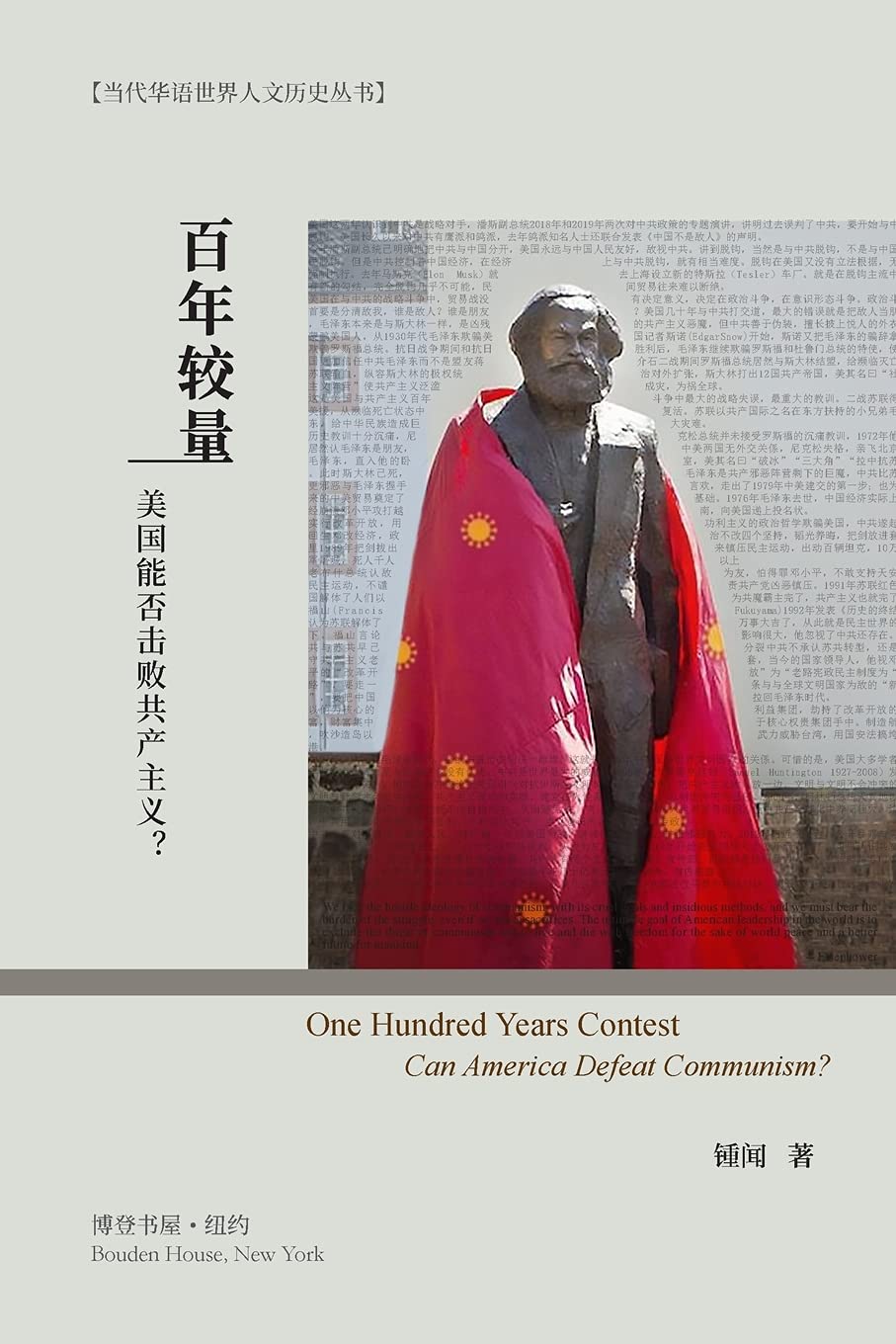
Chapter 33: America’s Anti-Communist Lessons (Part 1)
Looking back over a hundred years, communist man-made disasters have plagued the world. Today, a specter—the specter of communism—has shifted from haunting the European continent to haunting the Asian continent. This communist specter still refuses to dissipate and continues to harm the world. In confronting communism, the United States has sometimes intervened and sometimes withdrawn; sometimes stood aside, sometimes joined forces. By reviewing a century of U.S.–communism confrontation, what lessons can the American political establishment and society draw from this history?
I. The United States Cannot Practice Isolationism
In the eighteenth century, at the founding of the United States, President Washington, considering the nation’s infancy and unstable footing, advocated a foreign policy focused primarily on itself, paying little or no attention to European affairs. Washington’s approach was correct at the time. The United States did not even possess a respectable standing army—how could it have had the capacity to exert influence abroad?
In the 1820s, under President Monroe, the United States not only had secured its footing but also gained the power to exert influence in the Americas. The “Monroe Doctrine” emerged accordingly, proclaiming that “the Americas are for the Americans.” It rejected interference by European powers and signaled that the United States now had the strength to influence other countries in the Western Hemisphere, beginning to assume the role of regional leader. This shift was commensurate with America’s growing national power and marked a departure from the early Washington-era model of focusing solely inward.
At the end of the nineteenth century, the Spanish–American War broke out, involving Cuba and the Philippines. The United States defeated Spain and acquired Cuba and the Philippines. At this point, American global influence extended beyond the Americas into the western Pacific. Yet Washington’s diplomatic tradition still exerted strong influence in Congress. Nearly half of Congress opposed occupying the Philippines, arguing that it violated Washington’s legacy. Nevertheless, a slim majority approved the occupation. In practice, American power extended beyond the Western Hemisphere. By 1890—before the Spanish–American War—U.S. economic strength had already surpassed that of Britain, ranking first in the world. As the world’s leading power, the United States was expected to exert influence globally rather than confine itself to the Americas.
President Theodore Roosevelt was a leader with a global outlook. After the Spanish–American War, he seized the opportunity to exert influence during the Russo–Japanese War. In 1905, he invited plenipotentiary representatives from both Japan and Russia—then deadlocked—to the United States to negotiate a peace treaty. When the talks stalled, Roosevelt warned Japan not to be overly greedy, declaring that Russia still retained the capacity to counterattack. Under U.S. pressure, Japan withdrew its excessive demands, and a treaty acceptable to both sides was finally reached. Roosevelt was awarded the Nobel Peace Prize for this mediation. His actions demonstrated America’s position as a leading global power and earned international praise. Even the Qing Dynasty of China was relatively satisfied with the handling of the Russo–Japanese peace settlement.
Two years later, in 1907, President Roosevelt built on this momentum by dispatching a fleet of sixteen state-of-the-art battleships on a year-long voyage around the world. This display of American strength served to warn nations against pursuing national interests through force. Roosevelt deliberately arranged for the fleet to stop in Japan, allowing the Japanese public to witness U.S. naval power firsthand. The intention was to caution Japan against excessive arrogance following its victory over Russia and against seeking further expansion. This move successfully restrained Japan and compelled it to moderate its ambitions.
After Roosevelt, during President Wilson’s administration, constraints from American public opinion led the United States to retreat from active engagement in international affairs. Wilson pursued a neutral foreign policy and refrained from intervening in European disputes. As a result, tensions among European powers accumulated without resolution and ultimately erupted into war. In 1914, the First World War broke out, yet the United States continued to adhere to an isolationist policy, maintaining neutrality and hoping to avoid entanglement.
Germany’s submarine blockade warfare, however, struck American merchant ships, forcing the United States to enter the war. The turmoil of the real world demonstrated that America’s desire to remain detached was a one-sided illusion. The world had long since become interconnected; no nation could isolate itself as a self-sufficient paradise. Least of all could the United States—the leading global power—retreat into isolationism.
Wilson then rose to the occasion, actively engaging in the war and striving to conclude a peace settlement. He personally spent months in Europe conducting negotiations, ultimately achieving the Treaty of Paris, which brought the First World War to a relatively swift end. Yet Wilson recognized that many underlying European conflicts had not been fully resolved by the treaty. Anticipating the possibility of renewed wars, he proposed the establishment of the League of Nations to mediate disputes among states. Wilson’s proposal was accepted by European countries. Unfortunately, the U.S. Congress did not support American participation in the League, and public opinion once again pushed for a retreat into isolationism—focusing only on itself and neglecting Europe. Deprived of America’s leadership and mediating power, the League of Nations proved ineffective. Unresolved tensions accumulated, and twenty years later, the Second World War erupted once again.
 正义钟声 Voice of Justice