
A Century-Long Contest
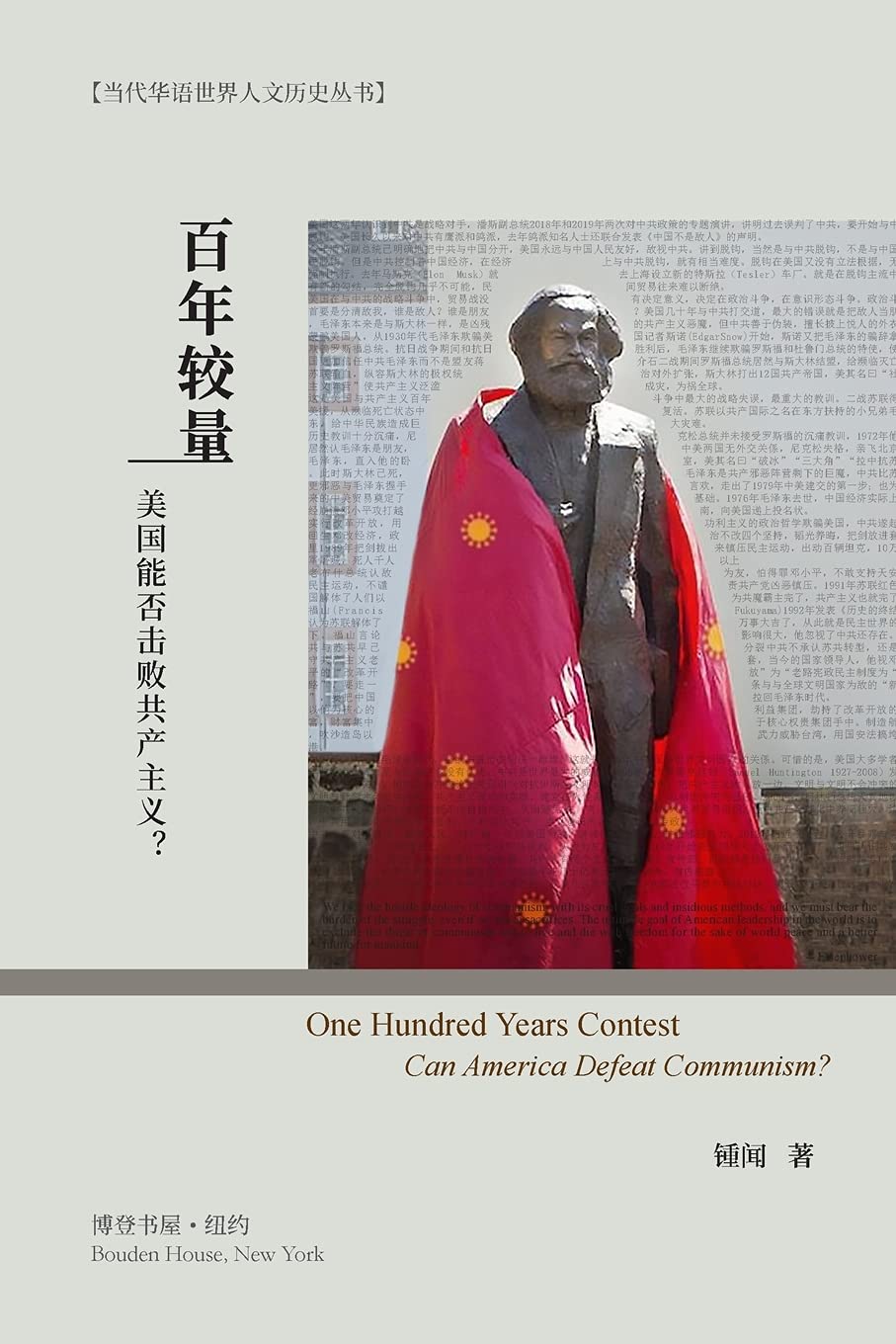
Chapter 31: The CCP Is Not a “Paper Dragon” (Part II)
This is a systemic paradox. On the one hand, from the perspective of the economic system, for the sake of commercial interests one must deal with CCP totalitarianism and engage in trade. On the other hand, from the perspective of the political system, for the sake of national interests one must draw a clear line against CCP totalitarianism and wage a “war between political systems.” This is indeed a war, as Pompeo put it: “Either you eat me, or I eat you.” The inherent and irreconcilable conflict between economic systems and political systems will inevitably continue to manifest itself in U.S.–China relations. The clash between the Xinjiang human rights issue and the cotton trade starkly exposes the unavoidable conflict between economic interests and political systems.
The Biden administration should not offer China carrots, nor should it do as China demands—improving bilateral relations and building trust before addressing problems. The United States should not proceed this way. It should address the problems both sides face—including human rights—and build trust through the process of addressing those problems. With communist totalitarianism, cooperation can no longer come first, only to be deceived again by the CCP. Change must come first, cooperation second. No change, no cooperation; cooperation only after change under supervision. Only after genuine change and transformation into a free and democratic country can cooperation truly be discussed. It is hoped that at this turning point in U.S.–China relations, Blinken will not lose direction, nor take a step backward.
As the U.S. Interim National Security Strategic Guidance states: “This is a turning point. We are in the midst of a debate about the future direction of our world. To succeed, we must demonstrate that democracies can still deliver for our people. It will not happen by accident—we must defend, strengthen, and renew our democracies. That means rebuilding our economic foundations to be more resilient, reclaiming our place in international institutions, reinvigorating our values at home and defending them loudly around the world, modernizing our military capabilities, and exercising leadership through diplomacy—revitalizing the network of American alliances and partnerships that make the world safer for us all.” “At this moment of accelerating global challenges—from pandemics to climate change, from nuclear proliferation to the Fourth Industrial Revolution—one thing is certain: to prevail, we must sail together with our closest allies and partners, defend U.S. interests, uphold universal values, and renew the sources of our national strength.”
Historically, the United States adhered for a long time to an isolationist foreign policy. In both World War I and World War II, it adopted a passive stance of neutrality rather than opposing unjust aggression from the outset. Appeasement ultimately brought the flames of war to its own doorstep. Regarding today’s international flashpoint—Taiwan—the United States must not indulge the CCP’s provocations. It must stand on the right side of history and actively respond to the challenge posed by a rising totalitarian power to the international order established after World War II.
On how to engage in a long-term contest with the CCP, Chas Freeman offers sound advice: “To maintain an advantage in competition with China, the United States must enhance its competitiveness by building a society that is better governed, better educated, more equal, more open, more innovative, healthier, and freer.” “To pacify external threats, one must first put one’s own house in order.” As a democracy, the United States finds it difficult to forge social consensus. However, enhancing national hard power is the material foundation for competing with totalitarian states. While democracies may struggle in peacetime to match the whole-of-nation systems of totalitarian regimes, once a wartime footing is reached, America’s democratic system unleashes a creativity that totalitarian systems cannot hope to match. This creativity was demonstrated with astonishing effect during World War II.
However, the United States must not return to the isolationist foreign policy of the Trump era under the slogan “Make America Great Again.” The Trump administration quibbled with allies over economic matters, struck out on all fronts, and launched a unilateral “trade war” against China that scarcely qualified as a strategy. Attempting to rely solely on U.S. power and ever-escalating “maximum pressure” to weaken and contain China not only fails to undermine totalitarianism, but also stirs nationalist sentiment within China—sentiment that Xi Jinping can manipulate to consolidate his power and one-man rule.
Restoring and strengthening relations with allies and partners is one of the strategic pillars proposed by the Atlantic Council. This strategy would further separate Xi Jinping from the CCP, narrow the focus, and take the most critical step by supporting democratic reformers to come to power. The Atlantic Council’s new strategy would help awaken the people of mainland China, promote internal differentiation and reorganization within the CCP, and accelerate the dismantling of totalitarian rule. It is hoped that the new Biden administration will adopt this strategy, formulate a comprehensive plan to accelerate the dismantling of CCP totalitarianism, and hasten the decline of communism.
Zhong Wen concludes: The United States is the final external force pushing communism toward extinction in China. Communism has plagued the world for a century, and the tide of history has reached the moment to bring it to an end. Those panda-huggers who fear the CCP still talk about the 21st century being the CCP’s century. Ending communism is the shared theme and mission of all humanity today. The CCP is the last, weakened fortress of communism. Its transformation has already been delayed by 30 to 40 years. The most urgent task now is to abandon communism and transform into a democratic state—abandon communism and integrate into the historical current of God-centered civilization and universal values. In this historic task, the United States bears an inescapable responsibility and mission.
 正义钟声 Voice of Justice