
A Century-Long Contest
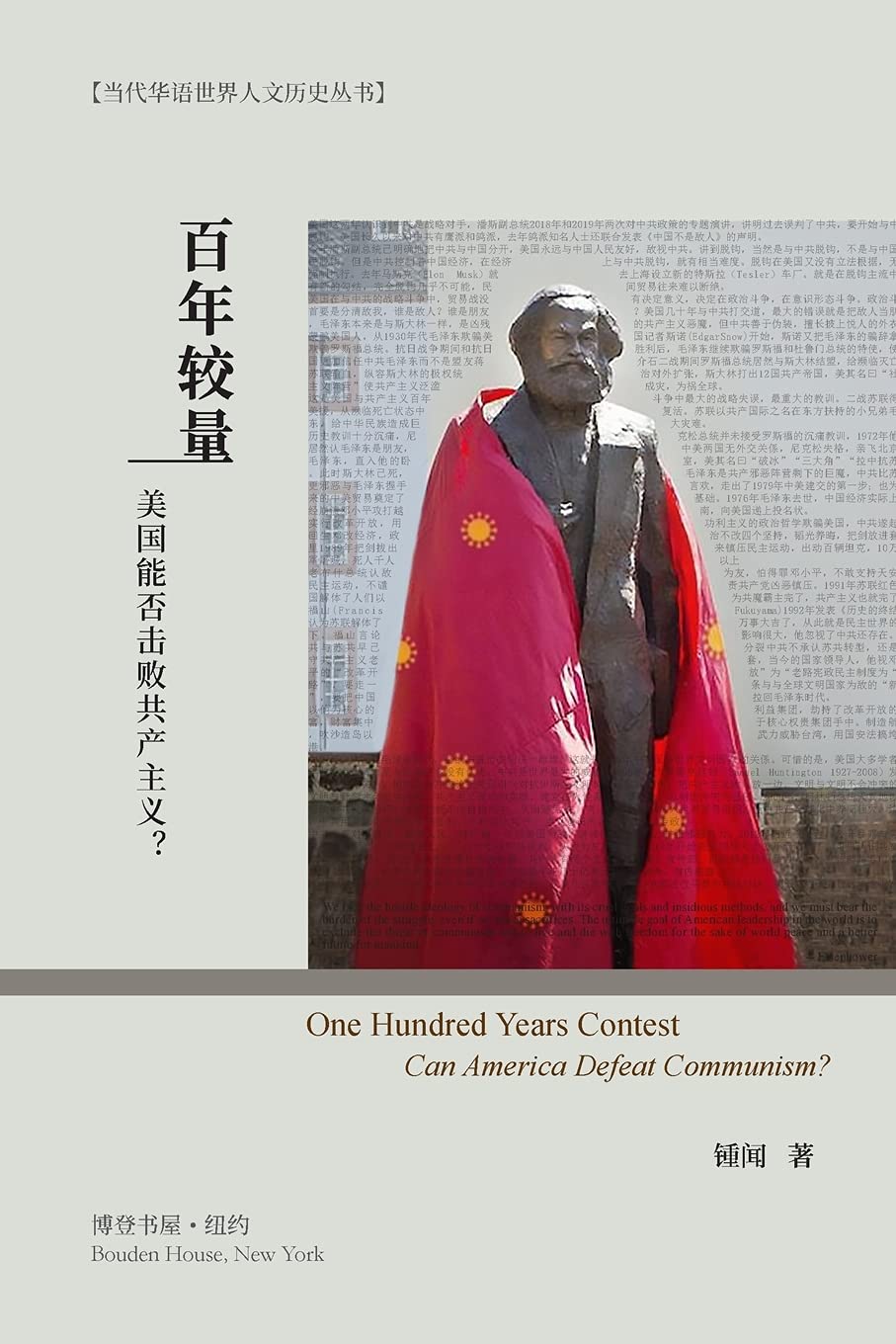
Chapter 27: Exercising America’s Moral Power (Part I)
Since the early 1900s, the United States has been the decisive power in the world, the global leader whose every action not only influences but can determine the fate of other nations. The U.S. is recognized worldwide for three main reasons: first, its power is truly formidable, with the strongest military and economy; second, it harbors no intention of invading other countries; third, it was founded on a belief in God, giving it moral authority and credibility, which earns the trust of nations. This point is crucial—military and economic strength alone are insufficient.
History shows that during World War I, Europe was in chaos, and once the U.S. entered, the conflict was resolved in just over a year. The U.S. engaged decisively, suffering 110,000 deaths, yet gained almost nothing. In World War II, after two to three years of stalemate, U.S. intervention for three years determined the outcome. America lost 400,000 lives but again gained little; even the Philippines, previously under U.S. control, was granted independence. After the war, during the U.S.-Soviet Cold War (sometimes considered the “third war”), the collapse of the Soviet Union marked American victory. Today, in the confrontation with China (the so-called “fourth war”), the outlook is already visible: the Chinese Communist Party will decline, and the United States will prevail.
Historical lessons show that the three great “monsters” of the last century were all closely tied to mistakes in U.S. foreign policy.
Lesson One: Ignoring Wilson led to Hitler and World War II. After World War I, the United States withdrew from global affairs; Congress mistakenly rejected Wilson’s proposal and refused to join the League of Nations, allowing chaos to return to Europe and leaving disputes unresolved. Hitler rose to power, and war followed. Had the U.S. followed President Wilson’s plan to continue engaging in European affairs, mediate disputes, judge right from wrong, and maintain peace, Hitler might never have emerged to launch World War II.
Lesson Two: Roosevelt “fattened” Stalin. Hitler and Stalin, these two great monsters, jointly triggered World War II, and Roosevelt mistakenly aided Stalin against Hitler. The American people worked tirelessly, ramping up military production, tightening their belts, and sacrificing material comforts, while providing massive military support to the Soviet Union through the Lend-Lease Act. This empowered Stalin, who then grew stronger and wreaked havoc across Eastern Europe and the globe. Just two years after the European victory in World War II, Stalin turned against the U.S., blockaded West Berlin, and sought to drive American forces out. President Truman, weak and indecisive, responded only with airlift operations and dared not confront Stalin directly. In China, Stalin also assisted Mao Zedong against Chiang Kai-shek, transferring a massive amount of U.S.-supplied weapons to the Communist forces, allowing the CCP to seize all of China within four years.
Lesson Three: Truman’s weakness allowed Mao Zedong to rise as the Asian “monster.” Continuing Roosevelt’s flawed diplomacy, Truman feared the Communists and retreated, ultimately losing the entire Chinese mainland. Without the errors of Roosevelt and Truman, China would not have fallen under Mao’s enslaving rule. Due to America’s mistakes in World War II—failing to contain Stalin—the Communist bloc expanded, with twelve countries falling under Communist control.
Just five years after World War II, in 1950, North Korean leader Kim Il-sung launched an invasion of South Korea. The United Nations passed a resolution to repel the aggression, and sixteen nations, including the United States, sent troops. Mao Zedong even dared to send Chinese forces to fight American troops, backed by Stalin. Truman, at a critical moment, removed General MacArthur from command simply because MacArthur wanted to fight the Communist army with full force. MacArthur returned to New York to a hero’s welcome from millions, while Truman lost public support and could not run for re-election in 1952, leaving office in disgrace. It took the U.S. seven years after World War II to awaken. Eisenhower was elected president, rejecting Roosevelt’s wartime collusion with Stalin and taking a firm anti-Communist stance to confront Stalin and Mao. However, U.S. anti-Communist policy still prioritized the Soviet Union, placing China, the Soviet “junior partner,” in a secondary position in opposing Communism. From a geopolitical perspective, the U.S. even allied with the CCP to counter the Soviet Union.
In confronting the CCP, the United States must once again stand on the moral high ground, strongly condemning Communism for its dehumanizing actions, which have killed tens of millions over decades. The CCP continues to conceal and block all truthful information to maintain Communist autocratic rule, persisting in Mao Zedong’s murderous policies. In Mao’s eyes, millions of deaths were just numbers; he did not even read reports, burning them instead. Mao even stated, “It is good that people die; they can be used as fertilizer. For the victory of the world revolution, I am prepared to sacrifice 300 million lives.”
In the 1960s, faced with the Great Famine, Mao ignored the mounting deaths and concentrated all resources on accelerating the production of atomic bombs, valuing bombs over human lives. Jin Yong, then chief editor of Hong Kong’s Ming Pao, sharply criticized this policy with the remark: “Better a nuclear bomb than pants,” condemning the CCP for neglecting the lives of the people and pursuing a policy of militarism.
For decades, the CCP concealed the reality of the Great Famine, with only scattered reports reaching overseas. It was not until forty years later that former Xinhua reporter Yang Jisheng, after ten years of nationwide investigation, compiled an 1,100-page record of the famine, Tombstone, published in Hong Kong in 2006, revealing to the public that 40 million people had died of starvation. In 2013, writer Yi Wa published a 600-page collection of survivor interviews, Survivors of the Great Famine, in the United States.
Mao Zedong engineered a man-made famine, binding the hands and feet of hundreds of millions of farmers through policy. Farmers were forbidden to cultivate their own land to survive, were not allowed to leave their villages to forage, and attempts to capture those fleeing famine were blocked, leaving people trapped to die in their villages. Entire villages perished—a tragedy unprecedented in history. These investigative records remain unpublished in China and are blocked online; 1.4 billion people continue to be deceived.
Mao Zedong’s crimes under Communism in China caused 40 million deaths in the 20th century. In the 1960s, the United States could not know the real situation of the Great Famine and could not speak out. China blocked all information, and foreign observers could not access rural areas. When foreign leaders asked Mao about the famine during multiple meetings in the 1960s, he categorically denied that anyone had starved to death, leaving the international community unable to provide aid or condemnation.
 正义钟声 Voice of Justice