
A Century-Long Contest
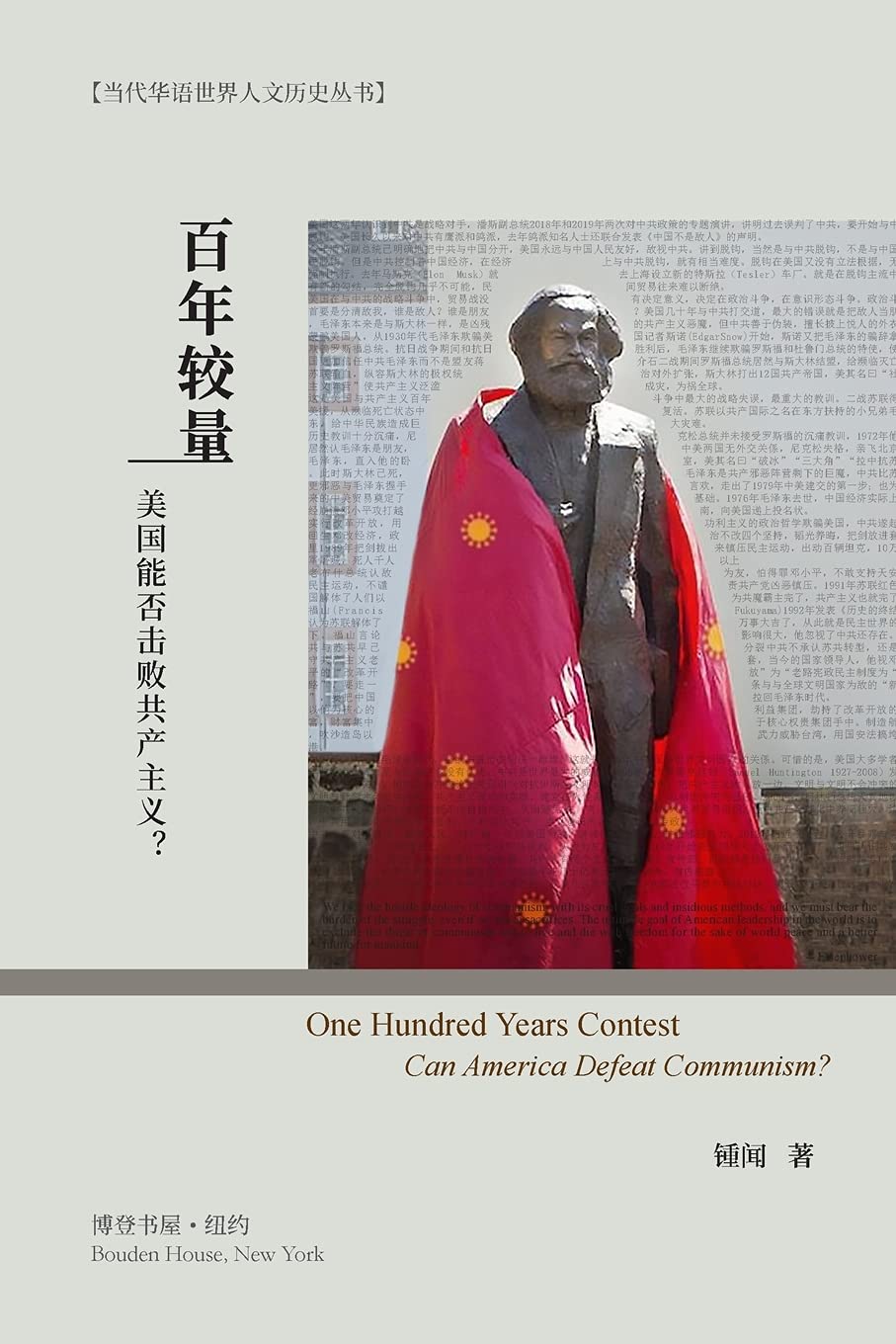
Chapter 26: Pressuring the CCP to Transform and Bury Communism 2020 (Part II)
During the Berlin Crisis of 1947–1948, the Soviet Union blockaded West Berlin in an attempt to force the United States out of Germany. President Truman rejected the U.S. military’s recommendation to escort convoys with armed force to break the blockade, fearing that doing so would trigger a U.S.–Soviet war. Instead, he responded with the comparatively weak measure of an airlift. Stalin tested Truman and concluded that he was soft. He then launched the Korean War, urging Kim Il-sung to swallow South Korea in one move. Truman was forced to respond. General MacArthur led United Nations forces to drive the Chinese “volunteer army” back to the Yalu River and was even prepared, if necessary, to use atomic weapons against three million CCP troops. Truman, however, fearing the outbreak of a third world war, removed MacArthur at the decisive moment between victory and defeat.
After the Korean War, Mao Zedong became convinced that the United States was a “paper tiger.” In the 1960s, he again dared to deploy troops to assist North Vietnam against South Vietnam, escalating the Vietnam War and dragging the United States into a quagmire. From Berlin to Korea to Vietnam, these episodes all illustrate the failed lessons of fearing war and avoiding war—only to provoke war. When dealing with rogue communists skilled in deception—whether Stalin, Mao Zedong, Kim Il-sung, or today’s Xi Jinping and Kim Jong-un—the result of appeasement and war-avoidance is the escalation of war. Pompeo’s warning still rings clearly: only strength can deter bad actors; weakness only invites war.
Counting from the 1930s, when American leftists represented by Edgar Snow were deceived by Mao Zedong, the United States has made several major mistakes over the past eighty years in confronting Soviet and Chinese communism. These mistakes enabled Stalin and Mao to push the communist movement forward worldwide, advancing step by step. Communism brought disaster upon the world, while pro-CCP “China hands” and the panda-hugging school were duped by the CCP’s united front tactics. Not until 2015 did China experts long influenced by CCP united front efforts begin to awaken and recognize the CCP’s true face. The CCP is a wolf warrior; sending pandas to other countries is merely one of its united front tactics to conceal its wolfish nature. Domestically, the CCP also spends lavishly to buy off foreign students—especially African students—cultivating “wolf warrior black aristocrats” under CCP command, extending its influence across the entirety of sub-Saharan Africa.
Today, the United States possesses powerful deterrent military capabilities and fully holds the initiative. It is not intimidated by threats or war rhetoric, stands firm, and makes no concessions to adversaries. Should the CCP recklessly resort to force, it will be resolutely countered and punished. Once the PLA launches an attack on Taiwan, U.S. forces will certainly join the defense. Once hostilities begin, the war will not be confined to the Taiwan Strait; U.S. forces would likely strike deep into the CCP’s rear areas. If the CCP were to use nuclear weapons, the United States would inevitably respond in kind, employing sufficiently precise missiles to comprehensively destroy the CCP’s entire command system in a short time, paralyzing all of its armed forces and leaving them unable to resist. This is an outcome no one wishes to see. Yet the very nature of communist economic and political systems dictates that without expansion, they cannot satisfy the ever-growing hunger for wealth and power among the ruling elite. Once the United States is drawn into the final showdown with communism, there can be only one outcome—just as Nazism in Germany and militarism in Japan were ultimately eradicated in World War II, communism too will be彻底 eliminated.
Over the past hundred years, the United States has won three major wars. The first was World War I in the 1910s; the second was World War II in the 1940s; the third was the nuclear Cold War against the Soviet Union in the 1980s. Roughly speaking, there has been a major war every thirty years. Now, the economic and trade war with China is developing into a comprehensive Cold War—what may become the fourth great war, one that will affect the entire world and determine the final burial of the communist system.
The United States is not a typical imperialist power bent on outward aggression. Its involvement in World War I and World War II came only after it was attacked, forcing it into war as a late responder. The third Cold War against the Soviet Union was likewise forced upon it. Brezhnev reversed Khrushchev’s reforms, backsliding toward Stalinism, treating the United States as an enemy and engaging in massive nuclear expansion to surpass America. The United States had no choice but to respond, entering a nuclear arms race that ultimately exhausted the Soviet Union and led to the collapse of the Soviet bloc.
Today’s fourth confrontation—the economic and trade war with China—is also a forced, reactive struggle. For more than thirty years after Deng Xiaoping’s reform and opening, through the eras of Jiang Zemin and Hu Jintao, the United States exercised great restraint, allowing China to enjoy a “strategic opportunity period” of peaceful development. It accepted massive Chinese exports, enabling China to make vast profits, pursued a policy of “engagement and integration,” and maintained relative peace and stability—allowing China to grow smoothly into the world’s second-largest economy.
Since Xi Jinping came to power, however, the CCP has changed course from Deng Xiaoping’s outward opening and regressed toward the Mao era. Domestically, it has reinstated Mao-style authoritarianism and personality cults; internationally, it seeks to become a global leader, confront the United States, and challenge American primacy. In the South China Sea, it abandoned Deng’s principle of “shelving disputes and maintaining the status quo,” unilaterally militarizing islands and threatening neighboring countries and the security of vital sea lanes. It has aggressively expanded cyber forces, stolen U.S. intelligence and technological secrets, pursued the Belt and Road Initiative for outward economic expansion, and ensnared other countries with debt. CCP spies have infiltrated the United States, stolen intellectual property, conducted cyber theft of technological intelligence, and pushed 5G penetration—constantly threatening the security of the international community.
 正义钟声 Voice of Justice