
A Century-Long Contest
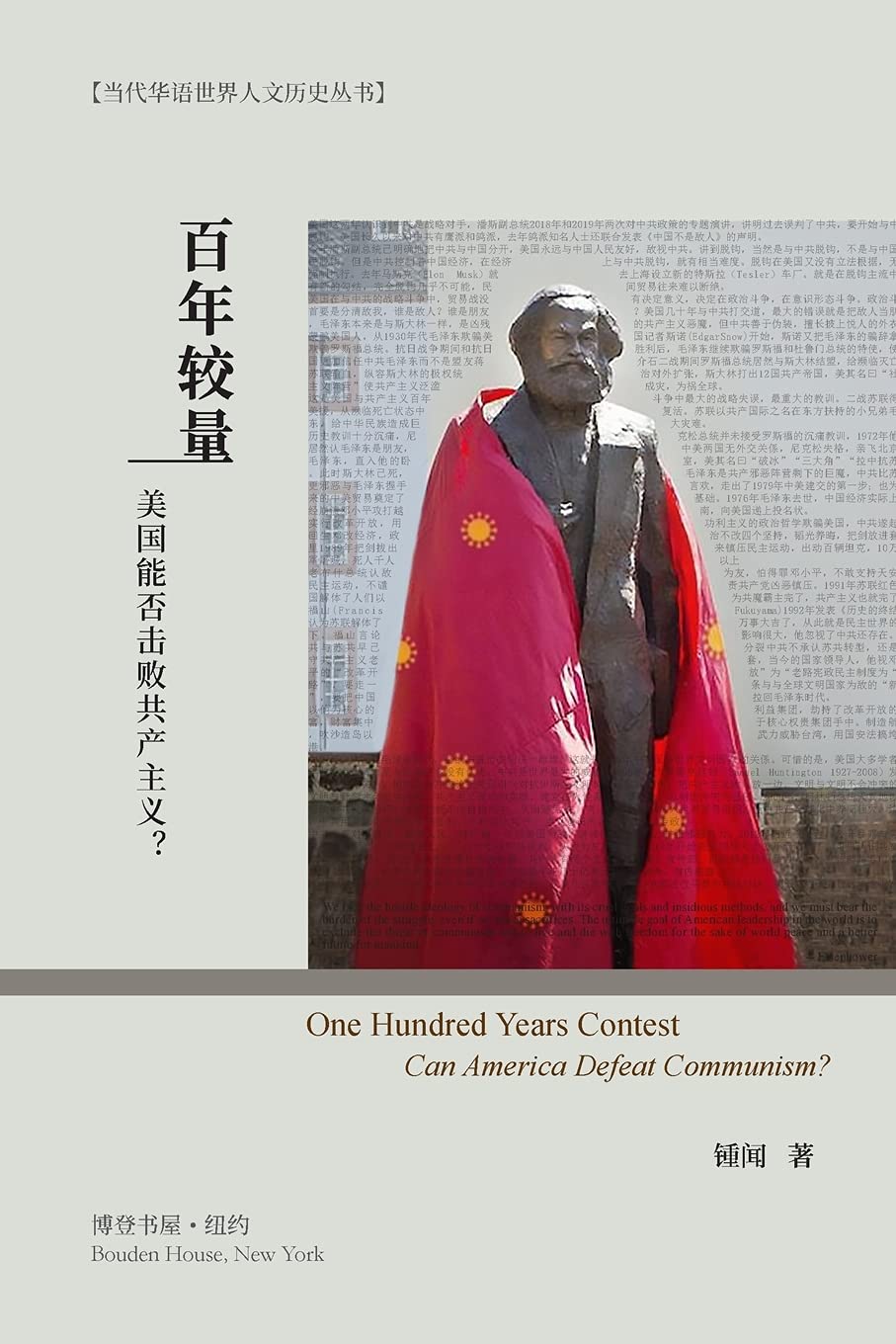
Chapter 25: Pompeo: Changing the “Flawed Framework” 2020 (Part I)
On July 23, 2020, U.S. Secretary of State Mike Pompeo delivered a major speech titled “Communist China and the Future of the Free World” at the Nixon Presidential Library in Los Angeles. In firm and principled language, he called for the establishment of a new global democratic alliance to jointly change the Communist Party. Pompeo emphasized, in stark terms: “If the free world doesn’t change the Chinese Communist Party, the CCP will change us.”
Fifty years earlier, Nixon had broken the ice with Mao Zedong. In 1971, Nixon went to Beijing and effectively saved Mao, allowing the CCP to revive from near collapse. He also handed the lawful United Nations seat of the Republic of China to the CCP, marginalizing Taiwan. Exploiting American naivety, the CCP drove America’s ally—the Republic of China—out of the United Nations and took its place, enabling Mao to recover from the chaos and loss of authority during the Cultural Revolution.
Fifty years later, Pompeo chose the Nixon Presidential Library as the venue for his speech. He did not criticize Nixon. Instead, he said Nixon went to Beijing with good intentions, hoping to guide the CCP toward change. Pompeo quoted Nixon’s 1967 remark: “The world cannot be safe until China changes.” Yet Nixon made no real effort to change the CCP. He accepted Mao unconditionally and was deceived by him.
President Reagan once said of the Soviet Union: “Trust, but verify.” Today’s CCP, Pompeo argued, is more evil than the Soviet Communist Party was. Dealing with the CCP requires a tougher approach than Reagan’s stance toward the USSR. Pompeo declared that with the CCP, the policy must be “distrust and verify.” He stated unequivocally: “The CCP cannot be trusted; it must be changed.” Pompeo sought to close the door that Nixon had opened to the CCP.
Pompeo exposed the CCP’s disguise by separating the Party from the Chinese people, stressing that the CCP does not represent them. The CCP’s biggest lie, he said, is its claim to represent 1.4 billion Chinese. In reality, the CCP represses and surveils the Chinese people, instilling fear so they dare not speak or reveal the truth of their enslavement. Pompeo emphasized that the Chinese people are energetic, hardworking, talented, and freedom-loving. The United States must engage with them, empower them, and work together with them to fulfill the historic mission of changing the Communist Party.
When speaking of Xi Jinping, Pompeo deliberately referred to him as the General Secretary of the CCP, not as China’s head of state, and directly described him as a believer in a bankrupt totalitarian ideology. Pompeo pointed out that the CCP is not a normal state and that the People’s Liberation Army is not a normal military. Reviewing decades of U.S. engagement with the CCP, he concluded that communism is a toxic virus. He further stated that the CCP is more evil than the Soviet Communist Party ever was: whereas the Soviet Union was isolated from the United States, the CCP has already penetrated American society—stealing secrets, sending large numbers of personnel to the U.S., bribing Chinese American citizens, building espionage networks, and infiltrating the fabric of American life.
CCP official propaganda labeled Pompeo “China’s number-one public enemy,” revealing the depth of the Party’s hatred toward him. Pompeo’s “anti-communist declaration” was not a personal opinion. In the month prior to his speech, White House National Security Advisor Robert O’Brien, FBI Director Christopher Wray, and Attorney General William Barr had each delivered speeches sharply condemning the CCP. Pompeo’s address synthesized these positions into a comprehensive anti-communist declaration, reflecting the consensus of the entire U.S. cabinet under the president.
The U.S. presidential election took place in November 2020. Regardless of whether Democrats won or Republicans retained power, Pompeo’s anti-CCP declaration would remain a political legacy accepted by both parties, as it reflected a broad bipartisan consensus.
Henry Kissinger, Nixon’s top adviser, traveled to Beijing in 2019 to pay homage to Xi Jinping and muddledly stated that the United States should “coexist and co-prosper” with the CCP. Kissinger, Nixon’s secretary of state, forged an inseparable relationship with the CCP through his role in opening China to the United States. He became the spiritual leader of America’s “panda-hugging” faction. Under the influence and manipulation of pro-CCP China hands like Kissinger, U.S. policy toward China went astray for decades, only beginning to be corrected in 2020.
On July 23, 2020, at the Nixon Library, Secretary of State Pompeo issued a world-shaking call to “change the Communist Party.” For fifty years, many U.S. presidents had been deceived by the CCP, naively believing that engagement would guide it toward freedom and democracy.
Pompeo summarized decades of painful lessons from U.S. dealings with the CCP and recognized communism as a toxic virus. The mission of the free world is to “change the Communist Party.” Freedom and communism are fundamentally incompatible: if you do not change it, it will change you. Unless the CCP changes, the world will not be safe. And in what direction must the CCP change? Toward freedom and democracy. Today, Xi Jinping clings stubbornly to the decaying temple of communism as its high priest—a believer in communism and totalitarianism. All free nations must unite to force the CCP to change and turn toward universal values and liberal democracy.
Pompeo’s landmark speech solemnly called for “changing the Communist Party,” warning again: “If you don’t change it, it will change you.” To change the CCP, the United States must take many actions. In supporting human rights in China, it must strongly back all courageous democratic fighters on the mainland who dare to speak out against CCP tyranny.
Pompeo pointed out that the CCP demands that American companies entering China remain silent about the Party’s trampling of human rights. Many U.S. companies submit to this pressure for the sake of doing business, leaving courageous opponents of CCP tyranny isolated and ruthlessly persecuted. Numerous American airlines have bowed to CCP pressure by removing Taiwan’s name to satisfy Beijing’s appetite for suppressing Taiwan. Hollywood, which styles itself as an arbiter of freedom and social justice, practices self-censorship by silencing speech unfavorable to the CCP. When American companies submit in this way, the practice spreads globally. Corporate appeasement of the CCP is driven by profit-seeking, yet it ignores the Party’s primary objective: plundering the United States. The CCP steals intellectual property and trade secrets from American companies, inflicting massive losses and costing millions of workers their jobs.
The United States must engage with the Chinese people and empower them. Every year, China experiences hundreds of thousands of “mass incidents,” as people bravely rise to defend their rights and collectively resist the CCP. They love freedom and are full of vitality, yet their struggles are often isolated and brutally suppressed. The United States must support their resistance to communist tyranny in every possible way.
The Communist Party excels at lying. It claims to speak for 1.4 billion people, but in reality it surveils, represses, and intimidates them, making them afraid to speak or tell the truth. For a long time, U.S. leaders ignored or downplayed the voices of China’s brave dissidents—voices that had long warned Americans of the evil nature of communist totalitarianism.
 正义钟声 Voice of Justice