
A Century-Long Contest
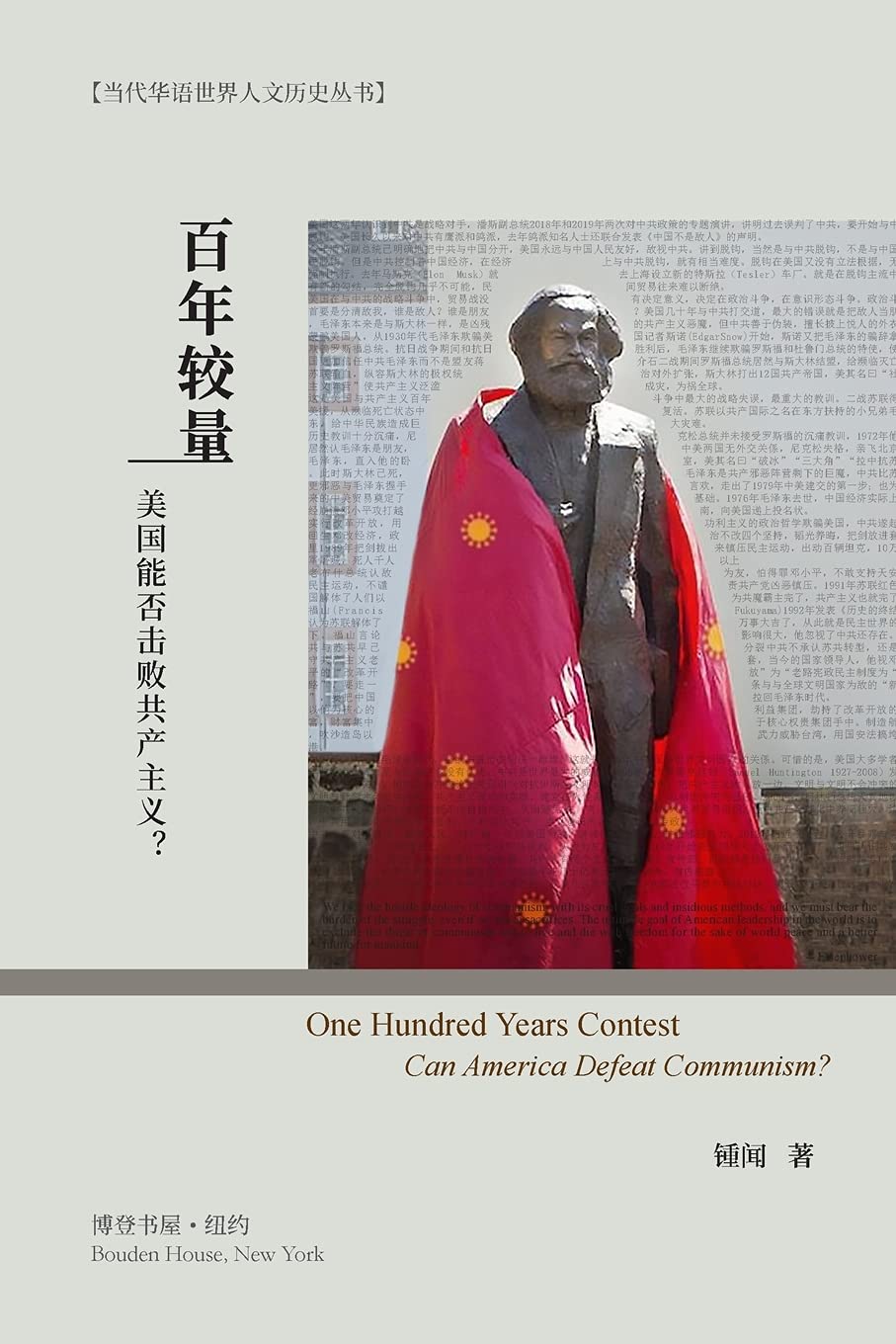
Chapter 17: George H. W. Bush’s Mistaken Support for Deng Xiaoping, 1989 (Part II)
The Soviet Union pursued policies of Russification under which the political, cultural, and economic elites of many ethnic groups were executed, while minority languages, cultures, and national consciousness were systematically destroyed. Brutal ethnic cleansing and forced population transfers were carried out against minority peoples. The Great Purge of the Soviet Union slaughtered and persecuted party members, intellectuals, military personnel, and countless innocent civilians. The seeds of collapse had long been embedded within the very body of the Soviet state. Decades of arms racing imposed an enormous burden, living standards remained poor, and public dissatisfaction accumulated. The absence of democracy fostered bureaucratic privilege and corruption. Beginning in 1989, failed reforms combined with severe inflation led to further austerity imposed on the lower classes. Mining regions suffered acute shortages of consumer goods, triggering massive coal miners’ strikes. Gorbachev proposed “reform and new thinking,” attempting to fundamentally rebuild socialist values and political institutions, completely discard the Stalinist legacy, and establish a humane and democratic socialism. Against this backdrop, Boris Yeltsin made decisive moves that ultimately brought about the dissolution of the Soviet Union.
Regarding the collapse of the Soviet Union—one of the major events in human history—many naturally stepped forward to claim credit. The first to do so was former U.S. President Ronald Reagan. He asserted that his Strategic Defense Initiative, the so-called “Star Wars” program, triggered an arms race that worsened the Soviet economy and ultimately provoked popular discontent. Others argue that the Star Wars program was largely a bluff, essentially a propaganda strategy by the U.S. government designed to drag down the Soviet Union.
It must be said that Gorbachev also played a crucial role. His work New Thinking propelled Soviet reform. However, the reforms did not unfold according to Gorbachev’s own logic and expectations and ultimately led to the collapse of the Soviet Union—an outcome he had not anticipated. Gorbachev summarized the causes of the collapse in two points: first, the reforms began too late; by the time he assumed power and initiated substantive reforms, the deeply entrenched Soviet system was already beyond saving. Second, he was overly eager for rapid results; once reforms began, a series of measures intensified social contradictions, while Soviet society was not prepared for such sweeping changes. This analysis is largely accurate.
The official explanation of the Chinese Communist Party is that Gorbachev’s “reform and new thinking” fundamentally abandoned socialist values and political institutions. Under the banner of completely discarding the Stalinist political legacy and establishing a humane and democratic socialism, it removed Marxism from its guiding position, abolished the Soviet Communist Party’s legally enshrined ruling status, and weakened state control over the public-ownership-based economy. This led to ideological and political chaos within the party and the state, economic deterioration, and provided opportunities for Western countries to promote capitalism and attack communism, thereby facilitating the disintegration of the Soviet Union. In this context, political forces represented by Yeltsin, with the support of Western countries led by the United States, exploited the chaos created by reform and steered the Soviet Union in a direction favorable to themselves, ultimately resulting in its collapse. (Baidu Encyclopedia: “Gorbachev’s Reforms”)
From this line of thinking, heroic narratives have become the mainstream explanation within the Chinese Communist Party for the collapse of the Soviet Communist Party. “Why did the Soviet Union disintegrate? Why did the Soviet Communist Party collapse? One important reason was the wavering of ideals and beliefs,” Xi Jinping said. “With a casual remark from Gorbachev announcing the dissolution of the Soviet Communist Party, such a huge party was gone. In the end, there was not a single real man—no one stood up to resist.” The phrase “not a single real man” comes from a seven-character quatrain by the Five Dynasties–period poetess Lady Huarui, which reads: “On the city wall the king raised the surrender flag; / In the deep palace how could I have known? / Fourteen hundred thousand men laid down their arms, / Yet not a single one was a true man.” Xi Jinping believes that if even one “true man” had stood up to resist, the Soviet Union would not have collapsed. He portrays himself as someone who would dare to stand up and fight should the Chinese Communist Party ever face disintegration.
The collapse of the Soviet Union did not result from external pressure, nor from “new thinking,” nor from the absence of men willing to stand up. It collapsed because of the internal political genes and design inherent in a totalitarian system. The lifespan of this genetic design was diagnosed at seventy years by the British philosopher Bertrand Russell. Russell once said that “no dictatorial fascist regime can survive beyond seventy years.” During the Cold War era, he asserted that all totalitarian regimes would last no longer than seventy years. No one knows how Russell calculated this number. What astonishes people today is how repeatedly precise this so-called “Russell Law” has proven to be.
Some argue, based on the historical fact that no autocratic dynasty in China since the Qin Empire has lasted more than three hundred years, combined with the reproductive capacity of the Han population, that over two to three centuries a nonproductive imperial clan system would multiply to some 500,000 to one million people. Once the parasitic population of imperial relatives reached such a scale, it would exhaust the empire’s GDP and inevitably intensify social contradictions. This represents the maximum carrying capacity of the land for an imperial ecological system. Today, the parasites are no longer royal relatives but an ever-expanding privileged class. With five hundred such families reproducing simultaneously, the cycle shrinks to just seventy years. (Li Yi, “The Seventy-Year Limit”) Whether this argument is valid remains to be tested.
With the collapse of the Soviet Union, Europe—long subjected to Soviet military threats—finally breathed a sigh of relief and accelerated the process of integration. Two years later, the European Union was formally established and gradually expanded eastward into Eastern Europe.
Zhong Wen concludes: George H. W. Bush’s firm confrontation with the Soviet Communist Party contributed greatly to the collapse of the Soviet empire. However, his mistaken support for Deng Xiaoping and failure to support the Tiananmen democratic movement constitute an unforgivable error. Bush’s mistake gave the Chinese Communist Party a new lease on life. After Deng Xiaoping’s Southern Tour in 1992, the Party revived from near death and thus survived beyond the seventy-year limit, breaking Russell’s seventy-year rule. The People’s Republic of China has now existed for more than seventy years, and the Chinese Communist Party marks its centenary this year. The rise and fall of dynasties follow both patterns and unpredictability, but decline itself is a law. Whether it comes at seventy years or seventy-three years is not important. As an old bystander munching on popcorn, I have plenty of patience to wait.
 正义钟声 Voice of Justice