
A Century-Long Contest
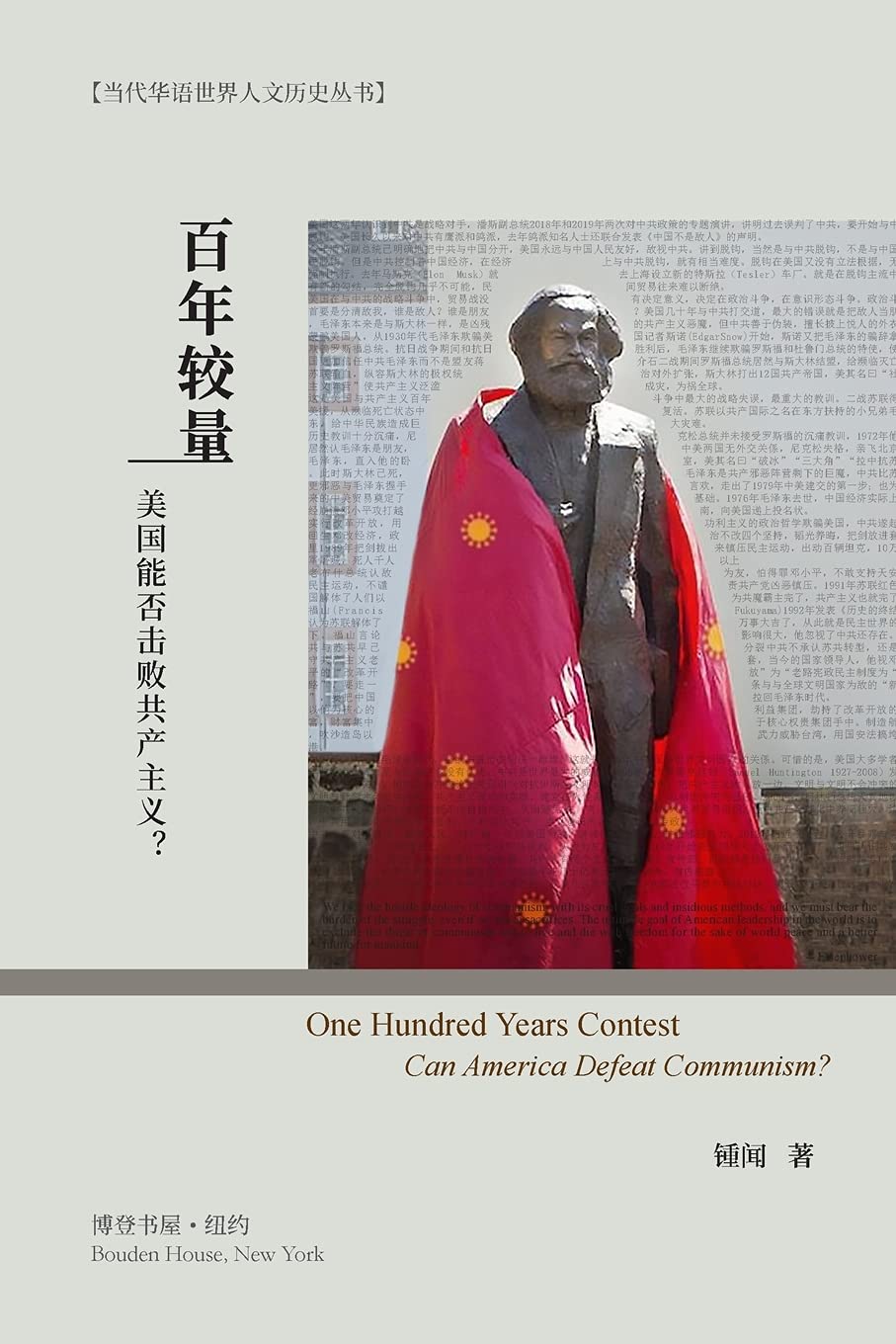
Chapter 05: Roosevelt’s Indulgence of Stalin’s Communist Expansion, 1942–1945 (Part II)
In accordance with the spirit of the meetings of the Big Three, Western media busied themselves with shaping Stalin’s image, expressing gratitude to the Soviet Red Army and portraying Stalin as the embodiment of courage and glory. Roosevelt and Churchill could originally have exerted greater pressure on Stalin, but Roosevelt was far too lenient toward him. Churchill, though more resolute, failed to unite with Roosevelt to confront the true enemy. America’s Lend-Lease Act became Stalin’s lifeline.
At 3:35 p.m. on April 12, 1945, Roosevelt died of a cerebral hemorrhage at the age of 63. Elected president in 1932, he implemented the New Deal and led the United States out of the economic crisis of the Great Depression. In 1936, he was reelected by an overwhelming margin. He then broke precedent by winning reelection again in 1940 and 1944, serving four consecutive terms as president—an unprecedented record in American history, surpassed only by Chiang Kai-shek. Some have commented: Roosevelt was “the greatest man of our time. He died as a hero of this war, truly fighting for the American people to his very last breath.” It may indeed be said that he devoted himself utterly until death. Roosevelt is regarded as one of the most outstanding presidents in American history. However, his lack of clarity regarding communism led him to commit grave strategic errors. His diplomatic misjudgment in supporting Stalin contributed to the unbroken expansion of communism, the consequences of which persist to this day.
Roosevelt’s greatest mistake lay in his China policy. His approach to China was shaped half by personal affection for the country and half by his perception of the global situation. These two impulses intertwined to form his distinctive China policy. He even regarded himself as the savior of the Republic of China and directly intervened in Chiang Kai-shek’s military command authority. In April 1944, Japan achieved complete control of the Beijing–Hankou Railway in its campaign against China, opening up continental transportation routes. Roosevelt was furious with the Nationalist government and demanded that Chiang Kai-shek transfer command of the Chinese theater forces to General Joseph Stilwell. Roosevelt dispatched special envoy Patrick Hurley to Chongqing to coordinate the transfer. Stilwell’s official title was designated as “Commander-in-Chief of the Chinese Theater Army and Air Forces,” placing him in direct command of Chinese ground and air forces in the war against Japan. Stilwell thus became the supreme commander of the Nationalist armies. However, Chiang Kai-shek did not relinquish real power to him. Roosevelt sent Chiang a telegram stating: “Please immediately turn over command to Stilwell. Do not hesitate for even a moment.” That same day, Chiang wrote in his diary: “This is truly the greatest humiliation of my life.” Ultimately, after Hurley’s mediation, Roosevelt decided to compromise and recalled Stilwell.
During the War of Resistance against Japan, the United States dispatched a military observer group to Yan’an, hoping to use the Chinese Communist Party to fight Japan jointly. Mao Zedong treated the American observers with great enthusiasm and even invited the United States to establish a consulate in Yan’an. Mao believed that the United States had the strength to provide assistance. He instructed Zhou Enlai to express willingness for the Americans to command the troops, with an American serving as commander—though Mao would secretly ensure that the troops still obeyed him. Mao also proposed that he and Zhou Enlai visit Washington, but the White House ignored him. Mao Zedong was pragmatic to the extreme: whoever fed him and helped him grow stronger and seize power was the one he acknowledged.
Roosevelt lacked a deep understanding of Mao Zedong’s determination to seize nationwide power through armed force. He indulged in the illusion that Mao and Chiang could cooperate to resist Japan and form a coalition government, akin to cooperation between the Republican and Democratic parties in the United States through democratic deliberation. In 1944, President Roosevelt sent his personal representative, Patrick Hurley, to China to negotiate with Chiang Kai-shek and Mao Zedong, but no results were achieved. After Truman succeeded Roosevelt as president in 1945, Hurley was again sent to China to mediate between the Nationalists and Communists. Hurley personally traveled to Yan’an and brought Mao Zedong and Zhou Enlai to Chongqing, initiating the Chongqing negotiations. Mao merely went through the motions, stalling for time while secretly making intensive preparations for war. On the surface, peace agreements were reached, but once Mao left Chongqing, large-scale civil war erupted.
Roosevelt infused his unique personal feelings toward China into his China policy. During his twelve years as president, he continuously sought to mediate conflicts between the Nationalists and Communists, attempting to prevent civil war and establish a coalition government of all parties. Although unsuccessful, these efforts genuinely reflected Roosevelt’s painstaking intentions.
In fact, the Roosevelt family’s relationship with China dated back to the Qing dynasty. His maternal grandfather, Warren Delano, is said to have amassed wealth through the opium trade. Beginning in 1829, Delano engaged in commerce in Shantou, Guangzhou, Hankou, and other cities, earning one million dollars—a sum that seems modest today but was enormous two centuries ago. After returning to the United States, his investments failed. In 1856, coinciding with the outbreak of the American Civil War, Warren Delano returned to China. This time, he combined commerce with official service, becoming an agent of the U.S. federal government in China.
Roosevelt’s mother, Sara Ann Delano Roosevelt, traveled to Hong Kong at the age of eight and returned to the United States three years later. Through trade with the Qing Empire, Roosevelt’s grandfather brought back many souvenirs such as porcelain. Today, visitors to Franklin D. Roosevelt’s childhood home can see Chinese paintings hanging on the walls and numerous porcelain vases displayed in cabinets. As a boy, Roosevelt often played among these Chinese antiques.
Because of this familial connection, Roosevelt strongly promoted the international status of the Republic of China, supporting its elevation to a permanent seat on the United Nations Security Council. This deeply irritated Churchill, who found it “utterly intolerable” to place China on par with the British Empire. Stalin likewise remarked that he “could not see how China deserved the status of a great power.” Yet Roosevelt had his own vision of a new world order, one in which the Republic of China would stand alongside the United States, the Soviet Union, and Britain as an equal great power. Insisting on this view, Roosevelt ensured that China became one of the four major powers at the Cairo Conference and a founding member of the United Nations.
Zhong Wen concludes: that China today has become a world power owes much to Roosevelt’s efforts. However, the China Roosevelt championed was the Republic of China. With the passage of time, the Republic of China retreated to Taiwan and was expelled from the United Nations it had helped to found. What the world hopes for is a peaceful, serene, rational, and just China—a red dragon. The birth of this red dragon, from a historical perspective, was the result of American foreign policy misjudgments; and its growth into the world’s second-largest economy was an even greater failure of America’s “embrace the panda” policy. Tracing the roots of this failure leads back to Roosevelt’s indulgence of the expansion of Stalin’s Communist International. In particular, the Lend-Lease Act saved the Soviet Union and allowed it to survive for another seventy years. The growth and rise of the Chinese Communist Party likewise depended on the nourishment and support of the Soviet Union as its nursemaid. The CCP’s political system carries an innate genetic imprint of Soviet totalitarianism—and this is no coincidence.
 正义钟声 Voice of Justice