
The COLLAPSE OF THE AMERICAN DREAM
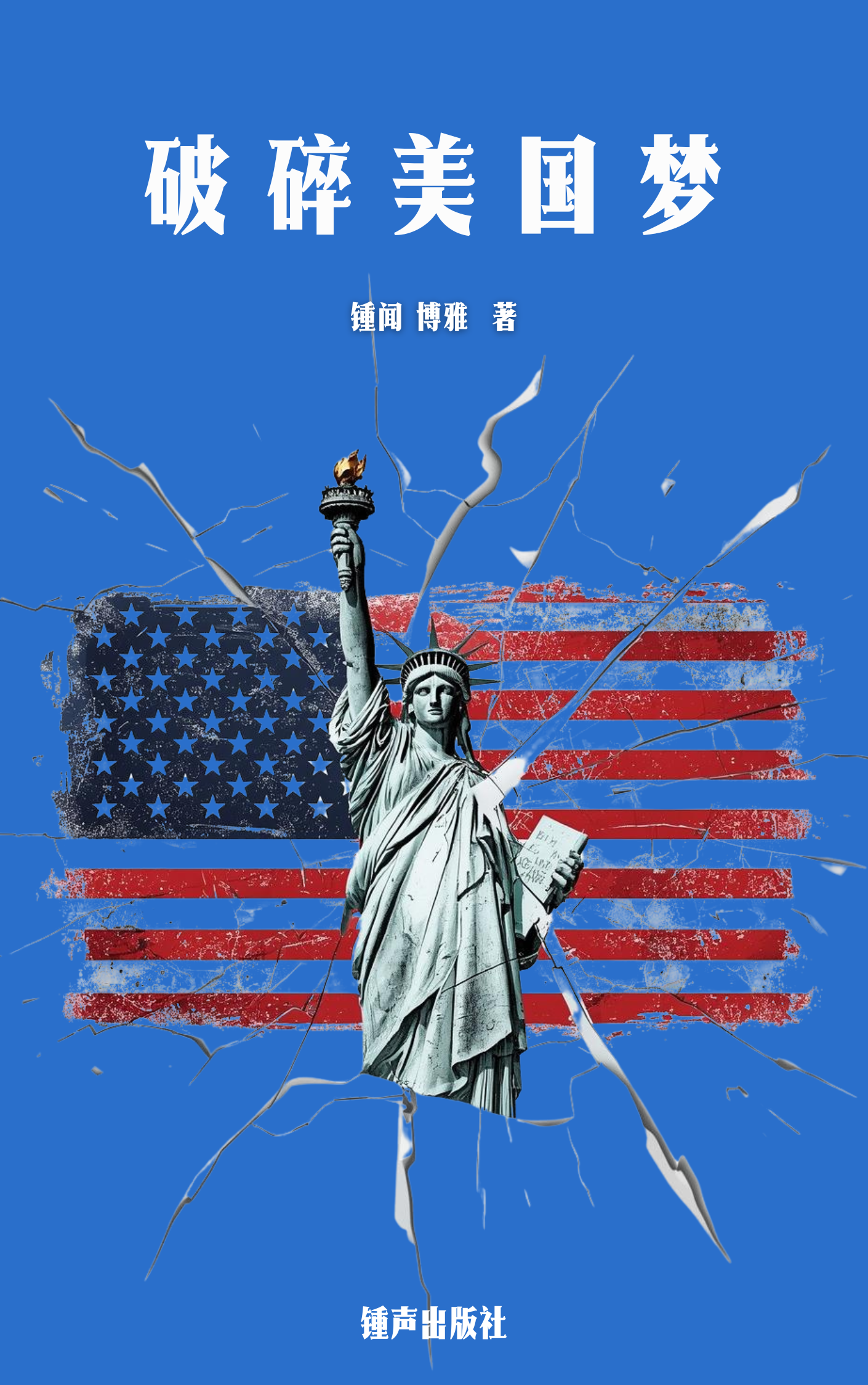
Introduction: The Broken American Dream — The First Fracture: The Legacy and Curse of Civil War
In the sacred narrative of the United States of America, the ringing of the bell in Philadelphia in 1776 symbolized the “awakening of spring”—the most perfect institutional experiment of the Enlightenment. Yet, less than a century later, this great dream of liberty and human rights encountered its most brutal “summer thunderstorm.” This thunderstorm was not a cleansing shower, but a hurricane aimed at uprooting everything.
The Civil War (1861-1865) was not merely a geographic division; it was the first deep fracture in the American Dream. It marked the arrival of a cruel reality: when the institutions designed to “protect private property” and “balance power” faced ultimate value conflicts (slavery and states’ rights), the proud mechanisms of debate, voting, and legal process crumbled to dust. The fine porcelain known as the “American Dream” suffered its first irreparable chip in the cannon fire at Fort Sumter in 1861.
(1) Democracy’s Blood Sacrifice: The Institutional Turning Point Where “Ballot Boxes” Yielded to “Ammunition Boxes”
I. The Silence of Institutions: Voting as a Weak Rhetoric
In exploring the “shattering of the American Dream,” we must confront a deeply ironic reality: the original intent of American democracy was to “prevent violence.” The essence of the 1787 Constitutional Convention was to create a complex system of checks and balances, allowing ambition to counter ambition and interests to find equilibrium through compromise in the corridors of Congress.
Yet the tragedy of 1861 proved that this system had a fatal logical blind spot. When conflicting parties no longer shared the same definition of “justice,” the ballot box lost its meaning.
The Evaporation of Consensus: In the 1850s, from the Kansas-Nebraska Act to the events of “Bleeding Kansas,” democratic processes had degenerated into tools for inciting violence. When voters found their ballots powerless to prevent opponents from changing their way of life, their faith in the system began to crumble.
The Impotence of the Constitution: The Second Amendment, intended to prevent tyranny, became the technical foundation for fratricide in 1861. The system could not resolve the fundamental question of “whether a human being could be property” within the framework of law, ultimately forcing the Supreme Court and Congress to cede interpretive authority to bayonets.
II. The Altar of 850,000 Lives: Quantifying the “Cost of Democracy”
For a long time, we were misled by the figure of 620,000 as the upper limit of American tragedy. But according to the latest 2024 academic research, when civilian deaths and war-induced secondary casualties are included, the death toll reaches as high as 850,000.
We must understand the terrifying implications of this number. Based on a total U.S. population of approximately 31 million in 1860, the mortality rate approached 2.7%. If transposed to today’s America of 340 million people, this would mean over 9 million Americans dying in a four-year internal conflict.
This is not just an accumulation of numbers; it is a “blood sacrifice of democracy”:
A Lost Generation of Elites: A vast number of educated young men who should have led the nation during its period of expansion (Autumn) perished at Antietam and Gettysburg.
The Complete Bankruptcy of Social Trust: 850,000 funerals meant that nearly every American family harbored a blood debt against “the other half of America.” This blood debt was not erased by Lincoln’s speeches; it transformed into a century of resentment.
III. The Victory of the Ammunition Box: Hegemony Replaces Contractual Logic
The Civil War established a dangerous precedent: in America, ultimate unity was not achieved through legal persuasion but imposed through force.
Lincoln, the “Great Unifier,” exacted a price: the extreme expansion of executive power. To win the war, Lincoln suspended habeas corpus, closed opposition newspapers, and even used military tribunals to try civilians. Within the framework of The Broken American Dream, this marked the shift from the free contract of “Washington’s Spring” to the domestic hegemony of “Lincoln’s Summer.”
The “Leviathanization” of Federal Power: After the war, while states’ rights legally persisted, they had effectively become subordinates to federal authority.
The Legitimization of Violence: When the “ammunition box” succeeded where the “ballot box” failed, the underlying logic of American politics quietly changed. It taught later politicians: if institutions obstruct your goals, violence (or force) is a viable and effective option.
IV. The Institutional Turning Point: From “Voluntary Union” to “Coercive Bondage”
Before 1861, America was viewed as a “voluntary compact”; after 1865, America became an “inescapable cage.”
This blood sacrifice proved the fragility of American democracy—it could only handle distributive questions of “how much interest,” not existential questions of “moral bottom line.” When Northern industrial civilization and Southern plantation civilization could no longer coexist under the constitutional roof, the rigidity of institutional design (see Chapter 11) left war as the only exit.
The shadow of this “institutional bankruptcy” directly points to what we see today: when the American left and right again find themselves unable to reach consensus through the ballot box on issues of identity politics, gun control, and immigration, the ghost of 1861 begins to haunt Washington once more.
V. Conclusion: The Beginning of a Shattered Dream
The 850,000 victims of the Civil War were the first enormous “penalty” paid by the American Dream. Though it physically stitched the nation back together, it left a vast void in the soul.
When the “ammunition box” first triumphed over the “ballot box,” the American Dream ceased to be merely a promise of liberty and became a story of power and obedience. This fracture was concealed by the illusion of prosperity during the expansion period (Autumn), but with the arrival of “Winter,” old wounds are reopening.
(2) Scorched-Earth Politics: Sherman’s Fire and the South’s “Twenty-Five Years of Stagnation”
If the main battlefields of the Civil War were democracy’s blood sacrifice, then William Tecumseh Sherman’s “March to the Sea” was a targeted demolition of the American Dream’s foundations. This war was no longer merely soldier against soldier; it became the physical erasure of one civilization by another.
Within the narrative logic of The Broken American Dream, Sherman was not just a military commander; he was an institutional executioner. By burning Atlanta, he ended the early republic’s political fantasy of “equal states’ rights,” carving into the ruins of the South a chilling message of power: “submit or be destroyed.”
I. The Fires of Atlanta: Physical Destruction as Political Metaphor
On November 15, 1864, the night sky over Atlanta blazed as if daylight. Before evacuating this Southern supply hub, Sherman ordered the destruction of all facilities of military value. Yet “military value” was interpreted expansively. Factories, warehouses, train depots, even homes, were consumed in the flames.
The Firehouse as an Island: In historical accounts, Atlanta was almost completely destroyed, with only a few structures, such as the firehouse, standing in the ruins. This was more than surviving architecture; it symbolized the complete collapse of the Southern social contract—the government’s fundamental function of protecting citizens’ property proved utterly impotent against the “total war” strategy of the Northern commander.
From “Limited War” to “Terror Politics”: Sherman famously said, “War is hell.” His goal was not merely to defeat the Confederate army but to instill terror in Southern civilians, crushing their will to resist. This systematic destruction of non-military targets marked the complete collapse of the “civilized competition” that the American Dream represented.
II. The Burning of Equal States’ Rights: The Psychological Death of Federalism
The original intent of the U.S. Constitution was “shared sovereignty.” In the blueprint of “Washington’s Spring,” Virginia, Georgia, New York, and Massachusetts were equals in legal personality. Sherman’s torch reduced this “equality” to ashes.
Psychological Humiliation from Physical Destruction: When Northern troops freely burned crops, slaughtered livestock, and destroyed railroads (creating the famous “Sherman’s neckties”—heated rails wrapped around tree trunks), they sent a clear political signal: the South was no longer a partner in the Union but a conquered province.
The End of Contractual Spirit: Federalism was a “voluntary compact,” but scorched-earth tactics proclaimed to all America: there was only entry into this compact, no exit. If you attempted to leave, your cherished homes, traditions, and civilization would be utterly erased. This psychological trauma led Southern states for the next 160 years to engage in federal affairs with a “victim mentality,” becoming the deep psychological root of the “internal struggle between states’ rights and national policy” discussed in Chapter 20.
III. “Twenty-Five Years of Stagnation”: The Sociological Death of a Region
After the war, the South entered a quarter-century of profound paralysis. This stagnation was not accidental but the inevitable result of infrastructure and social credit being utterly destroyed.
The Crushing of the Economic System: With the collapse of the cotton trade and the abolition of slavery, the South’s capital stock instantly zeroed out. Sherman’s destruction of railroads and ports meant that even if the South produced goods, it could not ship them.
The Vacuum of Finance and Credit: Confederate currency became worthless; Southern banks collapsed collectively. For 25 years without liquidity, the South transformed from an engine of the American economy into the “rust belt” of the American body, paving the way for Northern capital to enter and engage in predatory “Carpetbagger” rule.
Third-World Infrastructure: As discussed in Chapter 70, the South’s roads, bridges, and drainage systems remained in primitive condition for decades after the war. This extreme regional developmental imbalance directly led to the wealth gap and class solidification that America cannot resolve to this day.
IV. The Cruel Turn of Power: Administrative Hegemony Replacing the Rule of Law
Sherman’s success fundamentally validated the principle that “efficiency of violence” trumps “legal process.” During the war, he operated almost free from civilian oversight from Washington. This absolute power of the “field commander” prefigured the “presidential strongman politics” discussed in Chapter 12.
The Violentization of Executive Orders: Sherman’s scorched-earth policy was not subject to any legal trial; it was pure executive command. This extra-legal violence in the name of “national unity” violated the highest principle of the American Dream: “inviolability of private property.”
A Lost Generation of Civilization: A whole generation of Southern elites perished in the war; the survivors struggled for existence amidst ruins. Building civilization takes centuries; destroying it requires only a torch. This artificially created civilizational gap drove the South culturally toward closure, conservatism, and hostility to progress, forming the “bastion” of today’s American culture wars.
V. Conclusion: Can the “American Dream” Be Restored on the Ruins?
When Sherman left Atlanta, he may have believed he had burned the cradle of rebellion, but he had actually burned the “consensus” of the Union.
Scorched-earth politics left behind not only 25 years of economic stagnation but also a class and regional divide that could never be bridged. As Southern children grew up amidst ancestral ruins, they absorbed narratives of Northern “tyranny.” This hatred, repackaged through identity politics a century later, evolved into the force tearing America apart today.
The second fracture of the American Dream is clearly visible along this 300-mile scar. It tells us: a union maintained by fire and sword forever harbors the seeds of division within.
(3) False Freedom: The Geographic Trap from “Cotton Fields” to “Urban Ghettos”
Though the smoke of the Civil War had dissipated by 1865, the most enduring and destructive “hidden war” quietly shifted into the fabric of American cities. Lincoln’s Emancipation Proclamation legally ended “chattel slavery,” but sociologically, it merely released Black people from the “open-air prisons” of Southern plantations into the “vertical cages” of Northern urban ghettos.
From the comprehensive perspective of The Broken American Dream, this process was not accidental migration but institutional expulsion. It spread the racial conflict once confined to the South like a virus to the industrial heartlands of New York, Chicago, Detroit, forming “urban cancer zones” that remain unhealed today, becoming the ultimate footnote to the complete shattering of the American Dream.
I. The Great Migration: Escaping the Gallows, Falling into the “Concrete Trap”
The failure of Reconstruction after the Civil War quickly reimposed de facto racial enslavement in the South—Jim Crow laws and lynching became the Damoclean sword hanging over Black heads. To survive, millions of Black Americans began migrating to Northern industrial cities.
From “Labor” to “Superfluous”: On Southern cotton fields, Black people were essential tools of production; in increasingly mechanized Northern factories, they were often “last hired, first fired” cheap substitutes.
The Formation of the Geographic Trap: This migration was not free choice but flight from despair. When hundreds of thousands of Black people poured into Northern cities, they found “freedom” there had strict boundaries—not fences, but invisible walls built by “redlining” and racial covenants.
II. The Culture Medium for Urban Cancer: Redlining, Segregation, and Targeted Resource Deprivation
Though the Civil War abolished physical shackles, Northern cities perfected segregation through administrative and financial means.
Redlining: In the mid-20th century, the Federal Housing Administration created infamous rating maps, marking Black neighborhoods as “red” (high risk) and denying mortgage support. This meant Black communities could never access capital for improving infrastructure or buying homes.
Resource Desertification: As Black populations grew, white middle classes fled to the suburbs with their capital, causing urban tax bases to shrink instantly. Schools closed, trash piled up, policing became hostile—once-vibrant city centers began to rot in institutional indifference.
The Tragedy of Detroit and Chicago: In Detroit, the former “industrial capital of the world” became ruins; in Chicago’s South Side, neighborhoods became war zones. This “blight” was not due to Black laziness but to capital and policy systematically abandoning these areas.
III. False Freedom: The Generational Lock-In from “Slave Status” to “Second-Class Citizen”
The core of the American Dream is “upward mobility,” but for Black children trapped in urban ghettos, mobility was frozen.
Educational Segregation: Because school funding is tied to local property taxes, children in ghettos were born losing the race. The post-Civil War social contract promised “equality,” but reality delivered “separate and profoundly unequal.”
Victims of Judicial Fragmentation: Corresponding to Chapter 72, the prison-industrial complex precisely harvests these areas. For young people in ghettos, the path to social advancement had two options: enter the high-risk underground economy (drugs, gangs) or enter the vast prison system.
Psychological Ulceration: This prolonged oppression gave rise to the extreme “identity politics” discussed in Chapter 67. When a person is permanently exiled geographically and economically, their only means of resistance is to hyper-racialize their identity, leading to the complete collapse of American social consensus.
IV. The Spillover Effect of “Urban Cancer”: Modern Manifestations of Civil War’s Smoke
Today, the Bronx in New York, the ruins of Detroit, the ghettos of Philadelphia are not merely symbols of poverty—they are living fossils of American institutional failure.
Breeding Grounds for Political Gridlock: These blighted areas become laboratories for radical left-wing policies and targets for right-wing populist attacks on “urban corruption.” The North-South divide of the Civil War has become a cultural civil war between “suburbs/rural” and “inner cities.”
Economic Liability: This “cancer” consumes trillions annually in social welfare, policing, and healthcare, never addressing the underlying logic of poverty. It is an unfillable black hole swallowing the last credit of the American Dream.
V. Conclusion: An Unfinished Civil War, An Unhealed Fracture
Looking back from the vantage point of 2026, we must acknowledge a harsh truth: the Civil War did not resolve the conflict between race and institutions; it merely changed its geometry.
From cotton fields to urban ghettos, Black Americans completed a tragic transition from “slaves” to “pariahs.” This “false freedom” is not only a betrayal of Black people but the ultimate mockery of the American constitutional spirit. As long as these blighted Black neighborhoods parasitize the heart of American cities like cancer, the American Dream will remain an unfulfilled promise.
This first fracture, beginning with the cannon fire of 1861, ends in the sighs of today’s Detroit ruins. It is the longest poison tail of “Lincoln’s Summer” and the hardest ice to melt in the “Winter of Stalemate.”
(4) The Transcription of Violence: Internal Consumption After Colonial Expansion
In the historical periodization of The Broken American Dream, the Civil War is often viewed as a sudden “institutional fever.” But if we delve into the underlying logic of American civilization, we find this fratricidal conflict was not accidental—it was a “transcription” of a violent gene. From the landing of the Mayflower in 1620 to the outbreak of the Civil War in 1861, the American Dream’s foundation was always a mixture of settlers’ sweat and Native Americans’ blood.
When the momentum of violence directed at “the other” (Native Americans and Black slaves) reached its geographic limit, it inevitably turned inward, consuming fellow citizens. This established the most brutal survival rule in American politics: “winner takes all, loser is destroyed.”
I. The Settler’s Bayonet: Violence as the “Prime Mover” of Social Construction
The “spring” of the American Dream did not sprout from virgin soil but was built on the systematic dismantling of Native American civilizations.
The Logic of Killing: In westward expansion, violence was not merely a means but a sacralized “Manifest Destiny.” When colonists cleared Native peoples for land, they established a logic: anything opposing “progress” and “development” had the justification for physical erasure.
Accumulation of Violent Inertia: The killing skills and psychological hardness honed on the frontier were transcribed into the American political gene over two centuries. When North and South could not reach consensus on their conflicting visions in the mid-19th century, they instinctively invoked the solution they knew best from the frontier—total annihilation of the opponent.
II. The Beginning of Internal Consumption: From “Depriving Others” to “Slaughtering Kin”
The turning point of 1861 was that violence, once directed outward, lost its external targets and found new “heretics” within America.
Psychological Rehearsal of Dehumanization: In the process of killing Native Americans and enslaving Black people, American society learned how to “dehumanize” opponents. The South saw Northern abolitionists as “destroyers of civilization”; the North saw Southern slaveholders as “obstacles to progress.” This dehumanization made the slaughter of the Civil War (such as the carnage at Antietam) psychologically acceptable.
Transcription of the Violent Gene: The “total war” strategy of the Civil War was essentially an upgrade of the “scorched-earth” tactics used against Native Americans. Sherman’s destruction of the South was logically continuous with the army’s campaigns against Indian tribes: not only destroying the enemy’s army but also the foundation of their existence.
III. “Winner Takes All”: Establishing the Underlying Logic of Zero-Sum Politics
The most lethal legacy of the Civil War was its permanent transformation of American politics from “consensual” to “jungle.”
Complete Destruction of the Loser: In traditional European wars, losers often retained some dignity and contractual rights. But in the Civil War, the entire social structure, financial capital, and cultural pride of the losing South were utterly crushed. This “annihilative victory” taught future American political participants: political competition is not for coexistence but for survival; if you lose, you lose everything.
Trend Toward Authoritarian Power: The winner not only won the war but also exclusive interpretive rights over the Constitution. This “winner-takes-all” mentality evolved into the root of today’s extreme polarization—if the other side wins, it is not merely policy change but the “destruction of America itself.”
IV. Modern Manifestations of the Violent Gene: From Civil War to Culture War
This “internal consumption” gene did not dissipate with the smoke of war; it merely found different outlets in different eras.
From Guns to Weaponized Judiciary: In modern times, this “loser destruction” logic has transformed into judicial warfare and extreme executive orders. Each election is like a mini-“Civil War,” with winners trying to erase the losers’ legacies (as Chapter 15 describes the Supreme Court becoming the final battlefield).
The Collapse of the Social Contract: When a nation no longer believes in a “loyal opposition” but sees opponents as “cancerous cells” to be eliminated, its social contract has rotted from within.
V. Conclusion: The Fate of Genes and the Shattering of the Dream
The tragedy of the American Dream lies in its inability to escape the violent primitive accumulation of its “settler” origins. The “jungle law” refined in the killing of Native Americans ultimately consumed the foundations of the Union.
This fracture of the Civil War essentially represents America’s attempt to transform into a “rule-of-law society” being forcibly dragged back to barbarism by its internal “violent gene.” When politics ceased to be the art of compromise and became a contest of “who kills whom,” the American Dream had already lost its core moral light in that fratricidal internal consumption.
(5) The Unclosable Wound: The “Ghostly Return” of the Civil War in Modern Red-Blue State Divisions
In Chapter 114 of The Broken American Dream, we touched upon a phenomenon that chills contemporary political scientists: if you overlay the map of the 1860 presidential election, the alignment of states in the 1861 Civil War, and the results of 21st-century presidential elections, you find a geographic overlap that transcends time.
This is not coincidence but a profound metaphor for an “unfinished Civil War.” This “ghostly return” reveals a harsh truth: the United States has never truly healed psychologically, culturally, or institutionally. The bleeding fracture from 160 years ago remains the ultimate boundary of today’s American politics.
I. The Topology of History: The Overlap of Battlefield Maps and Ballot Maps
When we look at today’s American political landscape—the pattern of “urban vs. rural,” “coastal vs. inland,” “deep blue vs. deep red”—it is a modern variant of Civil War geopolitics.
The Color Shift of the “Solid South”: In the 19th century, the South was a Democratic stronghold; in the 21st century, the South is the core of the Republican Party. Though party labels have reversed, the geopolitical demands remain constant: extreme fear of federal power expansion, and a stubborn clinging to traditional social order (whether based on race or religion).
The Shadow of Appalachia: From West Virginia to Alabama, these former mountain battlegrounds remain the hottest land for populism today. The hostility of their voters toward Washington elites is eerily similar in spiritual content to the hostility of Southern farmers toward Boston abolitionists in 1861.
II. States’ Rights and Identity: The “Confederate Will” Never Truly Died
The core debate of the Civil War—the primacy of “states’ rights” over “federal authority”—has been resurrected in ghostly form in today’s debates over abortion, gun control, and immigration policy.
Soft Secession: Today’s red states (such as Texas) frequently use legal challenges to resist federal executive orders, even deploying state National Guard units against the federal government on border issues. This is essentially a modern legal version of 1861 secessionism.
Roots of Identity Politics: Corresponding to Chapter 67, today’s white nationalism is tightly intertwined with the Confederate flag, proving that “Southern identity” is not merely geographic but a cultural totem resisting modernity and globalization. This totem transforms today’s culture wars into a rehearsal for a “Second Civil War.”
III. The Electoral College: A Political Zombie Frozen in the 19th Century
Why can’t this fracture close? The answer lies in the Electoral College discussed in Chapter 16.
The Preservative Function of Institutions: The Electoral College was originally a compromise designed to balance the interests of Southern slave states. Yet today it acts as a “preservative,” forcibly retaining 19th-century geographic divisions into the 21st century. It allows voters in a minority of states to determine the nation’s direction, intensifying geographic polarization.
The Negative Feedback of Winner-Takes-All: As described in “Transcription of the Violent Gene,” this institutional design encourages “winner-takes-all.” Red states grow redder, blue states bluer; the middle ground (the soil of compromise) is completely eliminated.
IV. The Fault Line in the Psychological Map: Two Mutually Exclusive “American Dreams”
The most dangerous manifestation of this “ghostly return” is that Americans no longer share a “common story” (corresponding to Chapter 8).
Blue State Narrative: The Civil War was the victory of progress over backwardness, the legitimate expansion of federal power, a righteous judgment.
Red State Narrative: Subconsciously, it remains the “War of Northern Aggression,” the federal government as an external oppressor. This psychological structure determines that when Trump (or any anti-Establishment figure) appears, he will be seen by Southern and Midwestern voters as an “avenger.”
This psychological “nation within a nation” prevents America from forming a unified national will in the face of global challenges (Chapter 91).
V. Conclusion: Waiting for the Next Eruption in History’s Cycle
The wound of the Civil War has never healed; it has merely been temporarily concealed by layers of industrial prosperity and Cold War victory. When the wealth increment of the “American Dream” could no longer cover the costs of social conflict, when the cold winds of “Winter” blew away the false consensus, the battlefield boundaries of 160 years ago emerged clearly.
Today’s red-blue state confrontation is essentially the unresolved soul-searching within the United States. If institutions (as described in Chapter 24) cannot provide a path to self-repair, this “ghostly return” will ultimately lead to physical collapse. The end of the American Dream may begin with this ancient quarrel that cannot be settled: “who is truly American.”
(6) The Illusion of Reconstruction: A Social Suture Intercepted by Vested Interests
In the chronicle of The Broken American Dream, the Reconstruction era (1865-1877) was supposed to be the “Second Founding” and the soul-suturing of the United States. Yet this surgery not only failed but, before the wound could heal, was intercepted by nascent capitalist giants and corrupt politicians.
The profound significance of this failure lies in that it not only failed to establish a just social contract but also gave birth to the first true “vested interest groups” in American history. From infancy, American institutional reform carried a serious “resistance to money-power transactions,” directly leading to the origin of “legalized bribery” discussed in Chapter 54.
I. Stagnant Suture: From “Justice Seeking” to “Spoils Sharing”
The post-Civil War South was a power vacuum and a vast, undeveloped “colony.” The political blueprint intended to guarantee Black rights and transform Southern social structures was quickly replaced by greedy economic speculation.
Dirty Contracts of the Carpetbaggers: Northern speculators poured into the South, ostensibly to assist reconstruction but actually to plunder land and railroads using federal appropriations. Colluding with Southern collaborators (Scalawags) and manipulating local elections, they turned post-war social mobilization into pure interest distribution.
Capital Buying Out Justice: Radical Republicans had hoped to achieve racial reconciliation through land redistribution (“forty acres and a mule”). But Northern industrial capitalists soon realized a poor, chaotic South providing cheap labor served their interests better than a South with an independent small-farmer class. Thus, social justice was traded for capital profit.
II. The Rise of the First Generation of “Vested Interest Groups”: The Fusion of Railroads, Finance, and the State Apparatus
Reconstruction was the cradle of American “plutocracy.” It was during this period that the state apparatus was first captured on a large scale by private capital, forming the “Fourth Power” discussed in Chapter 21.
The Embryo of Railroad Hegemony: To connect a nation fractured by civil war, the federal government granted vast lands and loans to railroad companies. This process spawned astonishing corruption, such as the Crédit Mobilier scandal. This model of “state investment, private profit” established the standard template for interest groups controlling public policy for the next century.
Financial Elites Cashing Out: The settlement of war debts and the establishment of the gold standard gave Wall Street financiers enormous influence during Reconstruction. Through lobbying, they ensured policies favored creditors at the expense of Southern farmers and Northern laborers.
Institutional “Resistance”: When reformers tried to legislate against these interest groups, they found the giants had infiltrated every pore of Congress. Institutions were no longer for correction but became shields protecting vested interests.
III. The Compromise of 1877: The Ultimate Betrayal of the American Dream
The formal termination of the “Reconstruction surgery” marked a political transaction where the American elite completely abandoned moral bottom line—the Compromise of 1877.
Power for Land: To secure the presidency (Rutherford B. Hayes’s election), Republicans agreed to withdraw federal troops from the South. This meant the federal government completely abandoned protection of Southern Black people, casting them back into a century of racial discrimination.
The Alienation of Federalism: This compromise was not for national unity but to allow elites from North and South to jointly plunder the dividends of the Industrial Revolution without interference. This “suturing” merely covered the wound while allowing rot to fester inside. This logic of “sacrificing principle for interest” was the beginning of the “zero-sum game” discussed in Chapter 111.
IV. Historical Legacy: From “Spoils System” to “Establishment Corruption”
The failure of Reconstruction planted the deepest latent dangers in the American Dream:
Legalized Bribery: If the presidency could be traded, then laws, tariffs, and industry permits could be as well. This evolved into the “campaign finance” system discussed in Chapter 54—private interests legally controlling public policy through legal loopholes.
Overdrawn Reform Credit: Every subsequent generation’s “major social reform” faced similar obstruction from vested interests. From Roosevelt’s New Deal to modern healthcare reform, the shadow of this Reconstruction-era “resistance” looms.
Loosening Social Foundations: When ordinary people discovered that “national reconstruction” was merely a feast for the powerful, their trust in government and institutions began a century-long decline (corresponding to Chapter 82: The Collapse of Trust).
V. Conclusion: A Future Intercepted
The failure of Reconstruction was the most serious “medical malpractice” in American history. It had the opportunity to transform the slaughter of the Civil War into a new, fairer social contract, but it chose the quickest and most despicable path: quelling political turmoil through interest collusion.
This left the American Dream, at its moment of greatest need for deep suturing, intercepted by the first generation of vested interests. From then on, America was no longer a nation simply pursuing ideals but evolved into a vast corporation operating under precise capital algorithms. This fracture made all subsequent repairs seem pale, for the foundation had long been corroded by the greed of interests.
(7) Equivalent Ruins: By Today’s Population, America Is Enduring 7-8 Million Funerals
To understand the structural damage the Civil War inflicted on the “American Dream,” it is insufficient to stare at yellowed photographs. We must conduct a numerical translation across time. In Chapter 3 of The Broken American Dream, we noted that the Civil War reshaped federalism, but this reshaping was built on demographic “scorched earth.”
Using the latest full-census estimation model published in 2024 by the Proceedings of the National Academy of Sciences (PNAS), we reach a chilling conclusion: that war was not just numbers in history books but a “mandatory excision surgery” on American society. Proportionally projected onto today, America is enduring seven million funerals.
I. Data Correction: From “Vague Tragedy” to “Precise Cataclysm”
For a long time, American textbooks used the 19th-century estimate of 620,000 deaths. But modern data science and demography (based on gap analysis between the 1860 and 1870 censuses) reveal a crueler truth.
PNAS 2024 Revised Estimate: Considering wartime non-combat deaths, lost Confederate records, and post-war secondary mortality, the most reliable estimate of soldier deaths is revised to 698,000.
Civilian Blood Debt: Adding the 50,000 to 150,000 civilians killed in Sherman’s scorched-earth policy, siege famines, and epidemics pushes the total death toll to between 750,000 and 850,000.
This is not merely a larger number; it means that in the 1860s, in a nation of 31 million, one in every ten adult men of working age disappeared forever on the battlefield. This demographic loss is incomparable to even the “most cruel” World War II.
II. Historical Translation: The Sociological Weight of 7-8 Million Funerals
To help modern voters understand that institutional trauma, we must project this proportion onto today’s America (population ~340 million).
The Disappearance of 7-8 Million People: If a comparable internal conflict occurred today, the death toll would be 7.5 to 8 million. This would mean the entire populations of Los Angeles and Chicago combined slaughtered in four years.
Permanent Psychological Disablement: A death toll of this magnitude means no family would be spared. When a society holds 7 million funerals in a short period, its underlying tone shifts permanently from “hope” to “mourning” and “resentment.” It explains why post-Civil War America developed a morbid sense of religious redemption and a deeply entrenched, incommensurable dehumanization of the opposing side.
III. A Lost Generation: The Pinched Growth Points of “Autumn”
In the historical “Theory of Four Seasons,” the Civil War was supposed to be the transition to the expanding “Autumn.” Yet these 7-8 million equivalent funerals created a vast demographic and intellectual vacuum.
Lost Innovation Capacity: Countless young people who should have become scientists, engineers, educators were buried in the soil of Gettysburg in their most creative years. This led to 19th-century American expansion being, though large in scale, characterized by barbarism and crudeness in quality (corresponding to Chapter 4: Corruption of Power).
Absence of Father Figures: Hundreds of thousands of single-parent families struggled in poverty, transmitting generational trauma through poverty and educational deficit. This “demographic fracture” was especially severe in the South, directly preventing the emergence of a rational middle class capable of balancing the North for a century.
Loss of Political Compromise Capacity: When your father, your brother died on the other side’s bayonets, you no longer believe in “political compromise.” This led to the “zero-sum game” mentality of Chapter 111—still flowing in the blood of today’s red and blue state voters 160 years later.
IV. Souls in the Ruins: Why the American Dream Gained a Bloody Hue
This massive blood sacrifice fundamentally changed the definition of the “American Dream.” Before, it was a personal contract for the “pursuit of happiness”; after, it became a story about “power competition necessary for survival.”
Legitimization of Violence Worship: If the blood of 850,000 could buy Union, then in subsequent capital accumulation and social governance, smaller-scale violence and deprivation seemed “insignificant.”
Institutional Indifference to Life: This vast death toll accustomed American institutions to treating later crises—the Great Depression, healthcare crises, the drug crisis (Chapter 77)—with a chilling indifference, as if the nation had grown accustomed to progress paid for by mass sacrifice.
V. Conclusion: A Shadow That Never Departed
When we speak of the “broken American Dream,” we speak of a giant that has never fully recovered spiritually. The grief generated by those “7-8 million equivalent funerals,” though concealed by later skyscrapers, has never dissolved from the bones beneath the foundation.
This demographic-scale destruction ensured America could not achieve social reconciliation through gentle repair. The “life-or-death” desperation in today’s American politics is the psychological aftershock of the Civil War’s slaughter. When a nation becomes accustomed to using hundreds of thousands or millions of lives to calibrate its course, it finds it difficult to learn peaceful negotiation through warmth and reason.
(8) Constitutional Fission: From “Anti-Tyranny Blueprint” to the Paradox of “Forced Unity”
In the institutional diagnosis of The Broken American Dream, the Civil War was not merely a physical contest but a “nuclear fission” of the Constitution. The blueprint left by the 1787 Constitutional Convention was intended to “lock up the Leviathan” through intricate checks and balances. Yet the cannon fire of 1861 forced this blueprint to undergo an irreversible genetic mutation.
Through Abraham Lincoln’s iron will, the U.S. government completed a magnificent and brutal transformation from “contractual federation” to “administrative hegemony.” While preserving the nation’s territorial integrity, this transformation foreshadowed the unlimited expansion of executive power in “Autumn” and laid the groundwork for the vicious cycle of “presidential strongman politics” and “lame duck government” explored in Chapter 12.
I. Suspending Habeas Corpus: When “Rule of Law” Was Sacrificed to “Administrative Convenience”
Lincoln’s most controversial action in the early war was his unilateral suspension of habeas corpus. This constitutional power belonging to Congress was violently seized by the president, marking the first great defeat of “procedural justice” in the American Dream.
Confrontation Between Judge and General: When Chief Justice Roger Taney ruled the president’s action unconstitutional, Lincoln’s response was not compliance but disregard, even threatening to arrest the justice. This precedent of “bayonets over gavels” shattered the delicate balance of separation of powers.
“Severing Limbs to Save the Body”: Lincoln argued that it was pedantic to obey a single law if it meant the destruction of the entire nation. This logic of breaking legal boundaries in the name of “emergency” became the master key for the expansion of American executive power. From Roosevelt’s executive orders to surveillance programs in the War on Terror, the origins can all be traced back here.
II. From Voluntary Union to Coercive Bondage: The Physical Reshaping of Constitutional Nature
Before 1861, whether a state could leave the Union was a legal gray area. The Civil War forcibly wrote into the Constitution an “irrevocable” clause through violence.
The Death of Contract: The original federation was more like a “voluntary marriage,” with each state retaining ultimate control over its own destiny. But the Civil War transformed it into a “life sentence.” While this transformation brought superficial unity, it destroyed the most important “competitive balance” of federalism.
The Cost of “Forced Unity”: When an organization maintains membership through force rather than attraction, it begins to slide toward totalitarianism. This explains the “internal struggle between states’ rights and national policy” mentioned in Chapter 20: when states cannot counterbalance the federal government through exit or deep autonomy, they resort to hysterical obstruction and paralysis internally, forming today’s “gridlock” in American politics.
III. Conscription and Taxation: The State’s Deep Appropriation of Individual Body and Wealth
During the Civil War, the U.S. government implemented large-scale compulsory conscription for the first time and levied the first income tax in American history. These two measures fundamentally changed the relationship between citizen and state.
Nationalization of the Body: Conscription meant the state had ultimate authority over citizens’ lives, diametrically opposed to the American Dream’s original intent of “life, liberty, and the pursuit of happiness.”
Fiscal Centralization: The war gave rise to a vast bureaucracy and fiscal demands, transforming the federal government from a “night watchman” into the “general manager” of society. Once initiated, this expansion of the administrative apparatus gained self-reinforcing momentum, directly leading to the embryonic form of the “Deep State” discussed in Chapter 23.
IV. The Paradox of Constitutional Fission: Saving the Nation, Wounding the Soul
Lincoln’s greatness lay in preserving the Union, but his legacy was a “poisoned fruit.”
Abuse of Precedent: He opened a dangerous line of reasoning—for “national security” or “supreme interests,” the president could tear up the Constitution at will. This logic was infinitely magnified during the expansion period of “Autumn,” ultimately leading to the overdrawing of governmental credit (corresponding to Chapter 82).
The Failure of Checks and Balances: This forced unity led to excessive concentration of power. When power originally scattered among the states was concentrated in Washington, and Washington itself became paralyzed by partisan polarization, the entire nation fell into a strange state of “hyperactive brain but necrotic limbs.”
V. Conclusion: Aftershocks of the Fission
The Civil War’s “suturing” of the Constitution was more like a crude steel nail fixation. It stopped the bleeding but permanently stiffened the limbs. From “anti-tyranny blueprint” to “forced unity,” the legal soul of America experienced its most violent alienation.
This is the deepest irony in The Broken American Dream: to preserve the American Dream geographically, Lincoln had to kill the American Dream institutionally. The radioactive fallout from this fission still drifts through the debate halls of Congress and within every extreme executive order.
(9) The Shadow of Chicago’s South Side: The Unfinished Business of the Civil War Transformed into “A Century of Internal Attrition”
In the geographic map of The Broken American Dream, if Gettysburg was the end of the Civil War’s physical combat, then Chicago’s South Side, Detroit’s Cass Corridor, and New York’s Harlem are the infinite extensions of the war’s unfinished business.
Though the Civil War physically destroyed the plantation system, it failed to provide the liberated with a true economic foothold. This absence over the following century evolved into a massive “geographic imprisonment.” The shadow of Chicago’s South Side is not merely a concentration of poverty but the most concrete microcosm of the shattered American Dream, an inexhaustible fuel depot for today’s “cultural civil war” and identity politics.
I. Vertical Plantations: From Geographic Migration to Institutional Cage
In the early 20th century, millions of Black Americans, harboring delayed fantasies of “Lincoln’s Summer,” crossed the Mason-Dixon Line. They believed Chicago was the promised land, only to find it had transformed the “horizontal enslavement” of the South into the “vertical segregation” of the North.
The Scientization of Segregation: Unlike the crude lynchings of the South, Northern white elites used capital and planning tools (such as redlining, exclusionary zoning) to draw an impassable boundary around Chicago’s South Side. Black people were confined to extremely crowded housing areas, forming a “nation within a nation.”
The Urbanization of Second-Class Citizenship: This segregation was not merely spatial but about life chances. When Black people were trapped in these “urban islands,” they were effectively cut off from participating in the dividends of American industrialization (Autumn expansion). This was essentially the unresolved “evolution of slave status”—from legal slaves to permanent economic pariahs.
II. A Century of Internal Attrition: The Self-Replication of Poverty and Institutional Punishment
The shadow of Chicago’s South Side is called “cancer” because, with the connivance of institutions, it fell into a desperate dead cycle.
Decoupling of Tax Base and Education: America’s unique education funding system (dependent on local property taxes) ensures schools in poor areas remain perpetually dilapidated. This lock-in of “intergenerational poverty” made “liberation” a cruel joke for the third and fourth generations of Black Americans.
Toxic Side Effects of Welfare: Remedial welfare designed to maintain social stability, in ghettos lacking employment opportunities, instead dismantled family structures. The surge in single-parent households and the rise of gang culture made these neighborhoods the heaviest burden on American national strength.
The Spiral of Public Safety Costs: The nation invests astronomical sums annually in policing and judicial resources (Chapter 72: The Prison-Industrial Complex) to “manage” these shadow zones. This enormous fiscal expenditure, intended for infrastructure construction (Chapter 70), is instead consumed entirely in internal stabilization, forming a typical “century of internal attrition.”
III. The Fuel Depot of Identity Politics: Resentment and Weaponization in the Shadows
The shadow of Chicago’s South Side is not just an economic problem; it is the ideological birthplace of today’s American social fragmentation.
The Embodiment of Victimhood Narrative: When progressive politicians need to prove “systemic corruption in the American system,” these blighted neighborhoods are the most irrefutable evidence. This moral critique based on historical debt transformed into radical identity politics, attempting to remedy geographic injustice by overturning traditional values.
The Right’s Mirror of Fear: Meanwhile, the high crime rates and decay of these areas are repeatedly broadcast by conservative media (Chapter 104) to intensify suburban white fear of urbanization, thus solidifying the psychological soil of the “Great Replacement Theory.”
IV. The Ultimate Shattering of the American Dream: When “Striving” Loses Physical Space
The most captivating charm of the American Dream is that through effort, one can climb the ladder. But in the shadow of Chicago’s South Side, this ladder was institutionally removed.
Geography as Destiny: When a person’s ZIP code predicts their future more than their talent and effort, the fairness of the American Dream collapses completely.
Ulcers of Civilization: The existence of these “blighted areas” is a continuous drain on America’s moral legitimacy as a superpower. It proves that even with the world’s most powerful military, America cannot accomplish the most basic civilizational integration internally.
V. Conclusion: Unquenched Flames
Every gunshot in Chicago’s South Side is an echo of bullets never fired in the Civil War 160 years ago.
This transfer from “cotton fields” to “urban ghettos” is essentially America’s collective evasion in handling the Civil War’s legacy. We constructed an extremely sophisticated legal and financial system solely to “contain” the conflict within these shadow zones. Yet with the arrival of the “Winter of Stalemate,” these long-ignored shadows are consuming the entire nation, dragging the once-promised land into an endless moral and economic civil war.
(10) Assassination and Collapse: Lincoln’s Death as the End of Institutional Self-Repair Capacity
In the grand tragedy of The Broken American Dream, the gunshot in Ford’s Theatre on April 14, 1865, not only ended Abraham Lincoln’s life but also precisely shattered the last possibility of institutional “self-repair” in America.
Lincoln’s death was not a mere criminal assassination; it was a violent watershed where American politics shifted from “negotiation and compromise” to “confrontation and retribution.” This unnatural transfer of power turned the potentially gentle reconstruction surgery into a brutal political spoils system, opening the one-way road to today’s “Winter of Stalemate.”
I. The Absence of the “Chief Suturer”: The End of the Art of Compromise
Lincoln was an extraordinarily rare political genius who understood both the “logic of war” and the “logic of peace.” His second inaugural address, with its “malice toward none, charity for all,” was not weakness but a highly sophisticated strategy for institutional repair.
The Only Common Denominator: With his prestige as a victor and flexible interpretation of the Constitution, Lincoln was the only leader who could restrain Northern radicals (who demanded vengeance) and pacify Southern surrender factions (who feared retribution). His presence was the only common ground between North and South.
The Funeral of Compromise: With Lincoln’s departure, this art of political negotiation that transcended partisanship and blood debts disappeared. Successor Andrew Johnson lacked both Lincoln’s prestige and political skill, causing the balance of power to quickly tilt toward “revenge and plunder.”
II. The Unnatural Rupture of Power: Opening the Malignant Precedent of “Politics of Retribution”
On the night of April 14, 1865, Lincoln was shot by John Wilkes Booth at Ford’s Theatre, dying the next day. Lincoln was the first U.S. president to be assassinated.
Lincoln’s assassination opened a bloody precedent for the unnatural transfer of America’s highest power, which psychologically undermined the stability of American institutions.
Catalyst for Polarization: Assassination itself is the ultimate expression of “resolving differences through violence.” It taught later political participants: if you lose at the ballot box or in court, you can still turn things around by eliminating the opponent’s physical body (or reputation). This “logic of physical destruction” evolved a century later into the psychological basis of “cancel culture” and “weaponized judiciary.”
Mutation of Reconstruction Surgery: After Lincoln’s death, reconstruction was no longer repair but one-sided colonization. The blueprint for guiding the South back to civilization became a license for Northern interests to plunder wealth. This power vacuum created by “unnatural transfer” was filled by the greediest, most radical forces, directly leading to the collapse of social consensus described in Chapter 6.
III. The Loss of Institutional Repair Capacity: From “Flexible Elasticity” to “Rigid Deadlock”
When Lincoln lived, his personal prestige allowed him to operate in constitutional gray areas (Chapter 8), giving institutions the elasticity to respond to crises. After his death, this elasticity solidified into rigid legal statutes and trenches of partisan interest.
The First Rupture Between Congress and President: Johnson’s impeachment (the first in American history) marked separation of powers transforming from “mutual checks” into “mutual paralysis.” This legislative-executive deadlock, 160 years later, has evolved into the “lame duck government” we see today.
The Twilight of Consensus Politics: Lincoln had hoped to build an inclusive new America based on citizenship. His death deprived American politics of this “upward aspiration,” plunging it instead into a century of “downward descent” over race and region.
IV. The One-Way Road to “Winter”: Irreversible Structural Collapse
If we think of the American Dream as a living organism, Lincoln’s assassination was the complete collapse of its immune system.
Loss of Moral High Ground: Lincoln’s sacrifice, though deifying him, made realpolitik dirtier than ever. As Chapter 21 describes, interest groups took over Washington from then on.
Inevitable Fragmentation: The end of this repair capacity meant that in every subsequent major crisis—the Great Depression, the Civil Rights Movement, the impact of globalization—America could no longer produce a Lincoln-like figure capable of uniting the nation through systemic consensus. We could only patch the old cracks until the patches themselves became part of the cracks.
V. Conclusion: The Dream Left Forever in the Theatre
The smoke of the Civil War finally settled in Lincoln’s blood. This fracture remains “unclosable” because the person most likely to suture it had his skull pierced beside the operating table.
Lincoln’s death marked the leap of American politics from the “expansion” of Spring, skipping the “prosperity” of Summer, and prematurely rehearsing the “gridlock” of Winter in a violent pulse. From then on, the American Dream ceased to be a narrative of continuous self-correction and perfection, becoming instead a tragic process of cracking and falling under the weight of immense historical inertia, lacking consensus.
Conclusion of the Introduction: The Foundational Color of All Crises
At this point, we have thoroughly explored the ten dimensions of the Civil War as the “First Fracture.” From the blood sacrifice of 850,000, to Sherman’s torch; from urban ghetto cancer, to the fission of constitutional genes; ending with the final note of Lincoln’s assassination.
This first fracture established the foundational color of all subsequent American crises: a civilization built on violence and injustice.
 正义钟声 Voice of Justice