
The COLLAPSE OF THE AMERICAN DREAM
Afterword: Part Three — Roosevelt and Trump: A Historical Comparison of Personal Arbitrariness and Lawlessness
This is an extremely complex and sensitive comparison, requiring in-depth analysis from multiple dimensions: historical context, institutional frameworks, personal motivations, and actual consequences. We will compare President Franklin D. Roosevelt’s expansion of executive power in response to national crises with President Donald J. Trump’s personal arbitrariness in challenging democratic norms, examining the essential differences in the degree of “arbitrariness” and “lawlessness” between the two, as well as their long-term impact on the American constitutional system.
I. Introduction: Crisis Expansion of Power and the Boundaries of Democracy
In American constitutional history, the expansion of presidential executive power has often occurred during periods of national crisis. Roosevelt faced economic collapse (the Great Depression) and global war (World War II); his actions primarily represented “executive prerogative” in response to existential threats. Trump, by contrast, operated in a non-existential crisis period, exhibiting “arbitrariness” and “lawlessness” in his challenge to democratic norms and legal constraints.
This analysis will compare the two across three core dimensions:
Motivation and Context: National survival vs. personal political survival.
Institutional Arbitrariness: Expansion of executive power vs. challenges to separation of powers.
Lawlessness and Consequences: Contempt for legal processes vs. destruction of democratic norms.
II. Motivation and Context: Crisis, Mandate, and Intent
Comparing Roosevelt and Trump requires first distinguishing the fundamental motivations behind their power expansions and the historical contexts they faced.
A. Roosevelt: “Arbitrariness” in Response to Existential Crisis — Nation First
Roosevelt’s arbitrary actions occurred primarily between 1933 and 1945, against the backdrop of America’s most severe economic and military crises.
1. Scale of Crisis and Basis of Mandate
The Great Depression (1933): Upon taking office, the American economy was on the verge of collapse, with unemployment reaching 25%. This provided him with immense popular mandate to take “decisive action,” even if it meant operating at the constitutional margins.
World War II (1941-1945): This was an absolute existential threat to the nation. Wartime presidents were granted unprecedented command and mobilization powers.
“Crisis Prerogative”: Roosevelt’s arbitrariness followed the concept of executive prerogative described by Locke: when Congress cannot act swiftly or effectively, the executive takes necessary action for the national welfare. His goal was to save the liberal democratic system itself.
2. Intent and Goals of Arbitrariness
Roosevelt’s arbitrariness, though sometimes criticized as authoritarian, was consistently aimed at restoring economic stability and winning the war. He sought national renewal through executive power.
B. Trump: “Arbitrariness” in Challenging Institutional Norms — Personal First
Trump’s arbitrary actions occurred during a period of relative peace and prosperity, against the backdrop of political polarization and ideological cultural civil war.
1. Nature of the Crisis and Limits on Power
Non-Existential Crisis: During Trump’s presidency, America faced no external existential threat comparable to the Great Depression or World War II. Thus, he lacked the constitutional and popular “crisis mandate” that Roosevelt possessed.
“Personal Prerogative”: Trump’s arbitrariness largely manifested as challenges to laws and democratic norms, with motivations widely criticized as serving personal political narratives, retribution against opponents, and the maintenance of power.
2. Intent and Goals of Arbitrariness
Trump’s arbitrariness was consistently aimed at self-defense, consolidation of personal power, and punishment of political opponents. He sought not national renewal through institutions but challenging and reshaping institutions to conform to his personal will.
III. Institutional Arbitrariness: Expansion of Executive Power and Challenges to Separation of Powers
Both presidents pushed the expansion of executive power to extremes, but the modes and degrees of their challenges to separation of powers differ fundamentally.
A. Roosevelt’s “Lawlessness”: Direct Confrontation with Legislature and Judiciary
Roosevelt’s “arbitrariness” manifested as strong, institutional suppression of legislative and judicial power.
1. Absorption of Legislative Power
Blank Check Authorization: In the early New Deal, Congress, driven by the sense of crisis, passed numerous laws granting the executive vast, vague authority (such as the National Industrial Recovery Act), allowing Roosevelt to effectively legislate through executive orders.
Expansion of Administrative Agencies: The establishment of numerous New Deal agencies gave the executive unprecedented power over economic regulation, labor policy, and social welfare, effectively absorbing some of Congress’s legislative and regulatory powers.
2. Direct Confrontation with the Judiciary: The “Court-Packing” Crisis
Roosevelt’s challenge to judicial power took the form of open, institutional confrontation.
Declaring War on the Supreme Court: After the Supreme Court struck down multiple New Deal programs (such as the NRA and AAA), Roosevelt proposed the notorious “Court-Packing Plan,” attempting to add justices to change the ideological balance of the Court.
Nature: This was one of the most severe direct, institutional challenges to judicial independence in constitutional history. Although ultimately unsuccessful, the threat caused the Supreme Court to shift its stance (the so-called “switch in time that saved nine”), effectively acquiescing to the constitutionality of subsequent New Deal measures.
B. Trump’s “Lawlessness”: Contempt for and Destruction of Democratic Norms
Trump’s “arbitrariness” manifested as sustained contempt for legal processes and democratic norms—a destruction of the “spirit” of institutions.
1. Contempt for Legislative Power: Marginalizing Congress
Abuse of “Emergency” Declarations: Trump repeatedly declared or threatened to declare “national emergencies” to bypass Congress’s appropriations power to implement his policies (such as the border wall), encroaching on Congress’s fiscal authority.
Extreme Claims of Executive Privilege: The Trump administration’s claims of executive privilege reached unprecedented extremes, attempting to block executive branch officials from testifying before Congress, obstructing Congress’s oversight function.
2. Attacks on Judicial Independence: Personalized Pressure
Public Attacks on Judges: Trump repeatedly and publicly attacked judges who ruled against him, personalizing and politicizing judicial decisions. These actions aimed to undermine public trust in judicial impartiality.
Instrumentalization of the Justice Department: Broad criticism held that Trump sought to treat the Justice Department as his personal legal team for punishing political opponents, subjecting judicial independence to unprecedented executive pressure.
IV. Lawlessness and Consequences: Contempt for Legal Process and Destruction of Democratic Norms
“Lawlessness” refers not only to open violation of laws but also to contempt for legal procedures and spirit. On this dimension, both presidents left controversially significant legacies, but the nature of their negative impacts on morality and constitutional governance differs fundamentally.
A. Roosevelt’s “Lawlessness”: Sacrifice of Morality and Human Rights
Roosevelt’s “lawlessness” primarily manifested as sacrificing minority groups and basic human rights, albeit in the name of wartime necessity.
1. Moral Original Sin: Japanese American Internment
Executive Order 9066: Roosevelt signed Executive Order 9066, which detained over 110,000 Japanese American citizens and residents without due process.
Nature: This was one of the most flagrant violations of basic civil rights in American history. It violated due process and equal protection principles and was later formally apologized for by the U.S. government.
2. Coercive Intervention in Property Rights
Some New Deal measures, such as confiscating gold and forcibly slaughtering livestock to raise prices, constituted major interventions in citizens’ property rights and were legally controversial, criticized as severe violations of capitalist free market principles.
Motivation: Despite legal controversies, these actions were motivated by collective, public goals: saving the economy and winning the war.
B. Trump’s “Lawlessness”: Destruction of Electoral and Institutional Integrity
Trump’s “lawlessness” primarily manifested as sustained, systematic destruction of democratic processes and institutional integrity.
1. Destruction of Electoral Process Integrity
The “Stolen Election” Narrative: Trump systematically promoted the false narrative of a “stolen election,” attempting to overturn the 2020 election results. These actions directly attacked the core of democratic systems—peaceful transfer of power.
Pressure on Election Officials: Trump and his allies exerted enormous pressure on state and local election officials, demanding they “find votes” or overturn results. This caused irreversible damage to the integrity of the electoral process.
2. Encouragement of Political Violence and Institutional Delegitimization
The Capitol Riot: Trump’s rhetoric and actions were widely considered to have directly or indirectly encouraged the violent assault on the Capitol—the first time in American history that a sitting president incited violence against the legislative branch.
Nature: These actions were no longer disputes over individual laws but an open, violent negation of the constitutional democratic system itself. This was political “lawlessness.”
V. Final Judgment: Essential Differences Between Two Forms of Arbitrariness and Their Long-Term Legacies
Both Roosevelt’s and Trump’s arbitrary actions severely tested the resilience of American democracy, but their essential nature, motivations, and long-term legacies differ fundamentally.
A. Essential Differences in Arbitrariness
Dimension Roosevelt’s Arbitrariness and Lawlessness Trump’s Arbitrariness and Lawlessness
Motivation and Purpose Instrumental: To address existential national crises (economy, war), serving the system. Personal: For personal political survival and retribution, challenging the system.
Attitude Toward Law Adversarial: Open, institutional constitutional debate with the Supreme Court. Contemptuous: Sustained attacks on the legitimacy of individual judges, the Justice Department, and intelligence agencies.
Violation of Human Rights Morally significant singular violation (Japanese internment), later legally corrected post-war. Sustained, politicized violations (such as immigration and border policies) aimed at deepening political division.
Ultimate Impact on Democracy Transformation and expansion of the system: Transformed America into a welfare state with a strong social safety net. Delegitimization of the system: Weakened citizens’ basic trust in core institutions: elections, judiciary, media.
B. Legacy and Historical Judgment
Roosevelt’s arbitrary actions represented “deviating to save the system.” Historical judgment, though complex, largely acknowledges his contributions to saving the nation from the brink of collapse. His “lawlessness” involved enormous sacrifices of human rights and constitutional principles but ultimately did not endanger the basic structure of democracy.
Trump’s arbitrary actions represented “using the system to undermine the system.” His goals are widely viewed as fundamentally challenging constitutional democratic norms. His “lawlessness” constituted direct attacks on democratic processes, integrity, and peaceful transfer of power, causing long-term, likely irreparable damage to public trust.
Final Judgment: Roosevelt’s arbitrariness, though dangerous to constitutional governance and human rights, was fundamentally motivated by the preservation of the commonwealth. Trump’s arbitrariness represents an anti-system, personality-centered political logic—a fundamental ideological threat to the American constitutional order. Both tested the rule of law, but Trump’s pattern of behavior inflicted deeper wounds on the democratic spirit, pushing the United States into the final stage of “cultural civil war.”
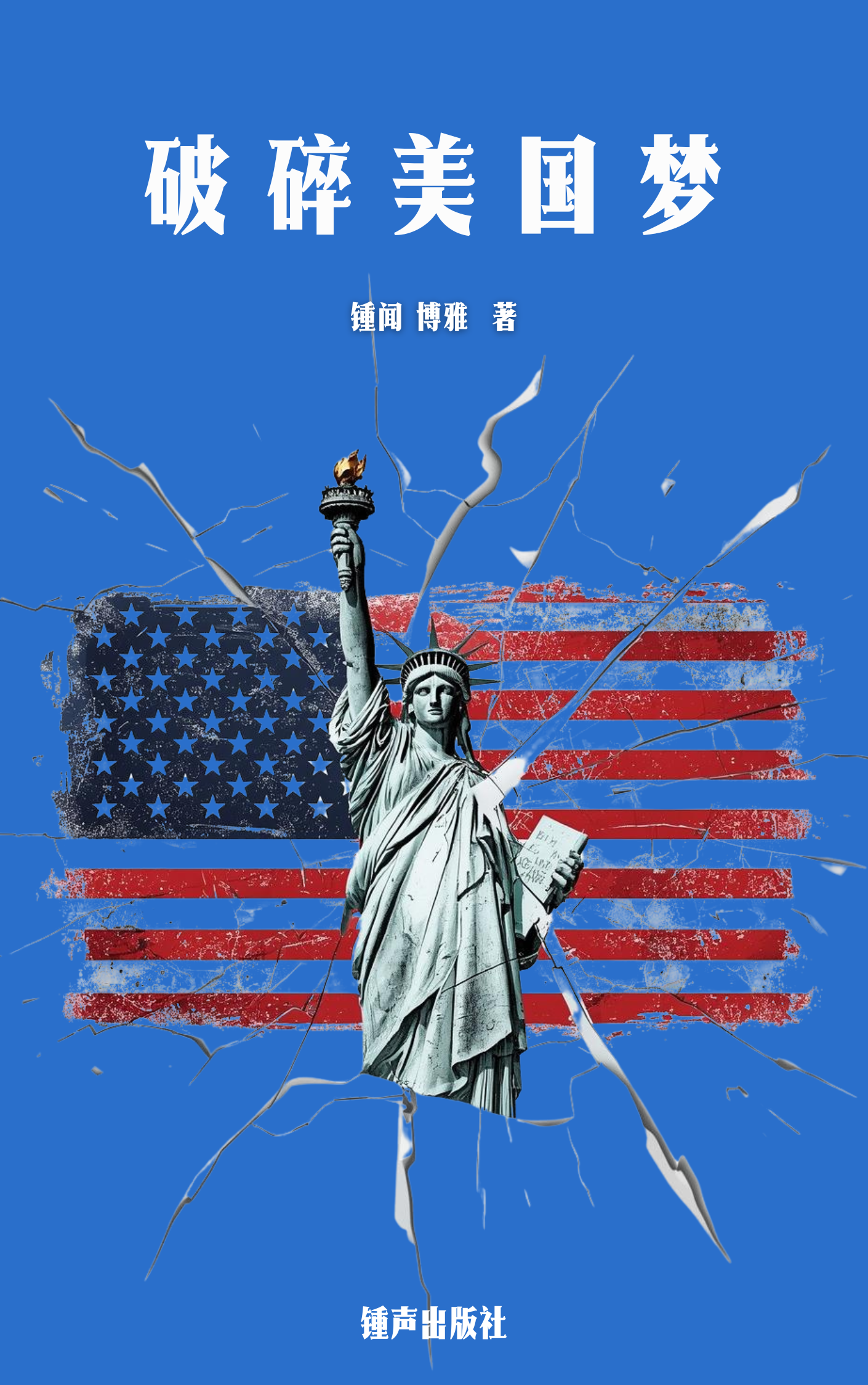
The shattered American Dream thus proclaims itself to the world.
C. The Latest Proof of the Broken American Dream
The Trump administration’s release of the 2025 National Security Strategy on December 4, 2025, constitutes the latest evidence that “the American Dream has shattered.”
Core Argument: When a national security strategy document places “protecting America itself” before “shaping the world,” it signifies that the internal conditions of the American Dream are no longer considered stable. The 2025 NSS precisely reflects this shift.
Evidence One: National Security Shifts from Global Leadership to Domestic Repair
The traditional American Dream assumed that America’s prosperity and confidence would naturally flow outward to the world. The 2025 NSS focuses on borders, supply chains, industrial revitalization, domestic security, and Western Hemisphere defense. This indicates that America no longer assumes its prosperity is secure, but fragile and in need of repair.
Evidence Two: Economic Security Defined as National Security
The document repeatedly emphasizes supply chain resilience, industrial revitalization, and protecting American industry. The premise of this language is that the American economy is no longer automatically prosperous. The core promise of the American Dream—upward mobility and opportunity—is replaced by “protection,” “rebuilding,” and “preventing decline.” This is a classic narrative of decline.
Evidence Three: Borders Become Central to National Security
The symbol of the American Dream is openness and opportunity, but the document elevates border security to the center of national security. This represents that the openness of the American Dream has been redefined as a risk rather than a value. When a nation makes its borders the core security issue, it effectively admits that internal order is no longer stable.
Evidence Four: Strategic Scope Contracts to the Western Hemisphere
The document emphasizes maintaining a greater military presence in the Western Hemisphere while significantly reducing discussion of global order. This represents a retreat from global aspirations to regional fortification. The global narrative of the American Dream is replaced by “protecting home.”
Evidence Five: External Threat Narrative Shifts from Shaping the World to the World Threatening America
The document’s language focuses on foreign infiltration, global supply chains threatening America, and external forces influencing the Western Hemisphere. This narrative is not confident but defensive. It reveals that America no longer sees itself as a shaper of the world but as a passive recipient of threats.
Evidence Six: National Identity Narrative Shifts from Land of Hope to Nation in Need of Protection
The core identity of the American Dream is “we are the hope of the world.” But the document’s identity is “we are a threatened homeland, needing rebuilding, needing protection.” This identity shift itself constitutes the symbolic rupture of the American Dream.
Summary
The 2025 NSS exhibits characteristics of inward orientation, defensiveness, de-globalization, border fortification, economic anxiety, and identity uncertainty. These are all signs of a nation admitting: “We are no longer that confident, prosperous, upwardly mobile America.”
When a national security document begins to repair the American Dream rather than proclaim it, it signifies that the American Dream has shattered.
A Question of History
Can the shattered American Dream truly be restored?
THE END
 正义钟声 Voice of Justice